Optimizing Granule Moisture Content in Tablet Press Machine Operations: Mitigating Sticking and Capping Defects
Do you struggle with tablet defects like sticking or capping? You adjust the pressure, change the tooling, but the problem stays. The real culprit might be hiding inside your granules.
Granule moisture content is a critical parameter that acts as a natural plasticizer and lubricant during tablet compression. If moisture is too high, you get sticking and picking; if it is too low, you face capping and lamination. Controlling this balance ensures proper hardness, disintegration, and stability.

Granule moisture effect on tablets
Industrial solid-dosage lines frequently encounter compression failures due to a systemic oversight of raw material specifications. While floor operators standardly misattribute these mechanical faults to tablet press machine failure, empirical validation confirms that uncalibrated material formulation rheology is typically the root cause. Analyzing the thermodynamic and physical influence of moisture retention is critical to stabilizing throughput.
1.Introduction: The Delicate Balance of Moisture?
A common misconception within secondary packaging and tableting facilities is that minimizing residual moisture invariably optimizes compaction. On the contrary, excessive dehydration undermines batch integrity.
Residual moisture serves as a vital structural modifier, dictating the definitive plasticity, viscoelastic recovery, powder flowability, and relative compressibility of the granulation matrix. It functions as the crucial liquid bridge required to secure permanent particle interlocking.
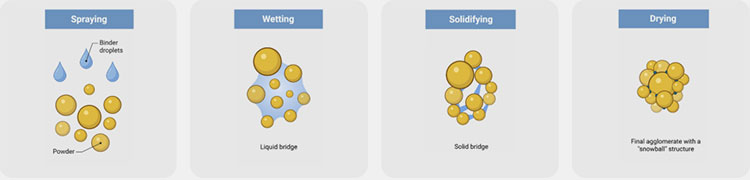
Pharmaceutical granulation process
In tablet production, moisture is a key player. It runs through the whole process. It starts with granulation. It continues through drying. It ends at the tablet press.
Moisture distribution is classified as a Critical Process Parameter (CPP) within regulatory cGMP frameworks. Analytical material testing frequently reveals that even under optimal mechanical pressure settings on an advanced rotary tablet press, soft tablet matrices occur if the residual moisture levels deviate from established tolerances. Identifying the optimal moisture equilibrium threshold is mandatory to prevent geometric defects, uneven weight variations, and fragile structural integrity.
2.The Science: How Water Facilitates Tablet Formation?
You might wonder how a tiny amount of water changes a hard rock into a smooth tablet. The answer lies in physics and material science.
Water acts as a plasticizer. It lowers the elastic recovery rate of the material. This allows particles to deform permanently under pressure rather than bouncing back. It also creates liquid bridges that increase the bonding force between particles.
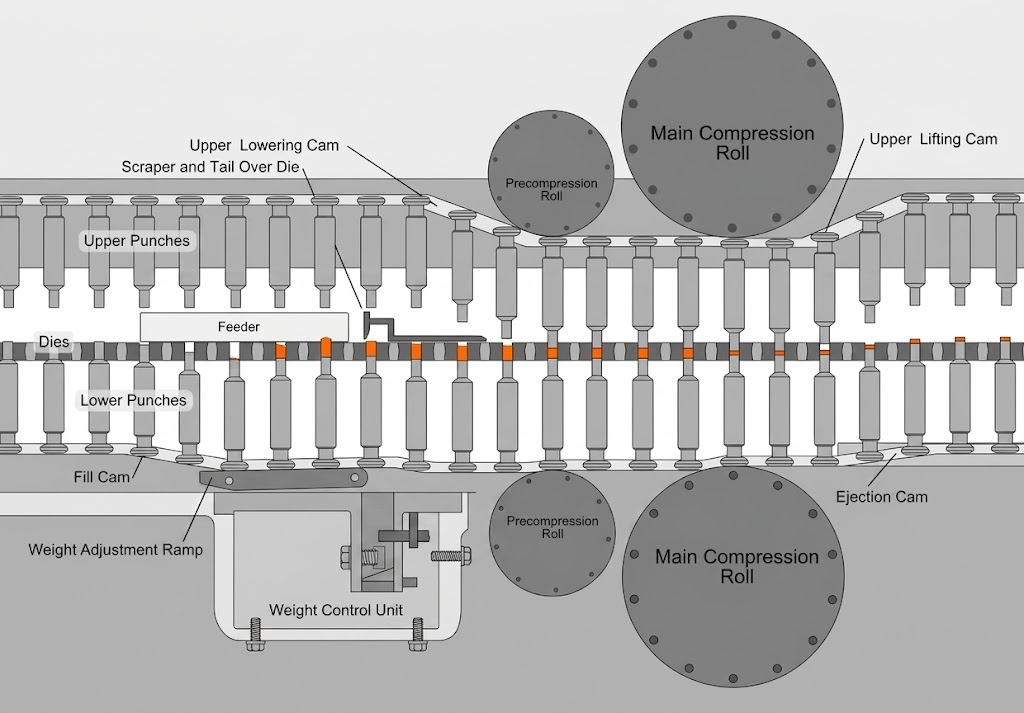
Science of tablet compression
Let’s break down the science. I want you to understand the "why." Water is a natural plasticizer.
During the compression dwell time, appropriate moisture adsorption reduces the dynamic yield pressure of the crystalline or amorphous powder particles. This physical lubrication action facilitates permanent plastic deformation under lower force thresholds.
Concurrently, moisture attenuates high viscoelastic recovery rates; unchecked elastic relaxation causes compressed material to expand vertically upon upper punch withdrawal, leading to immediate mechanical fractures inside the die cavity.
Finally, water creates bonding. It increases the binding force between particles. It acts like a glue. This improves tablet hardness. It stops the tablet from splitting. It improves flowability too. It reduces the static charge. It makes the filling process smooth. It keeps the tablet weight stable. But remember, this only works if the amount is correct.
3.Scenario A: Too Much Moisture (The "Sticky" Mess)?
Exceeding maximum moisture thresholds generates a cohesive water film across the granulated substrates, triggering high surface adhesion against the steel punch faces.
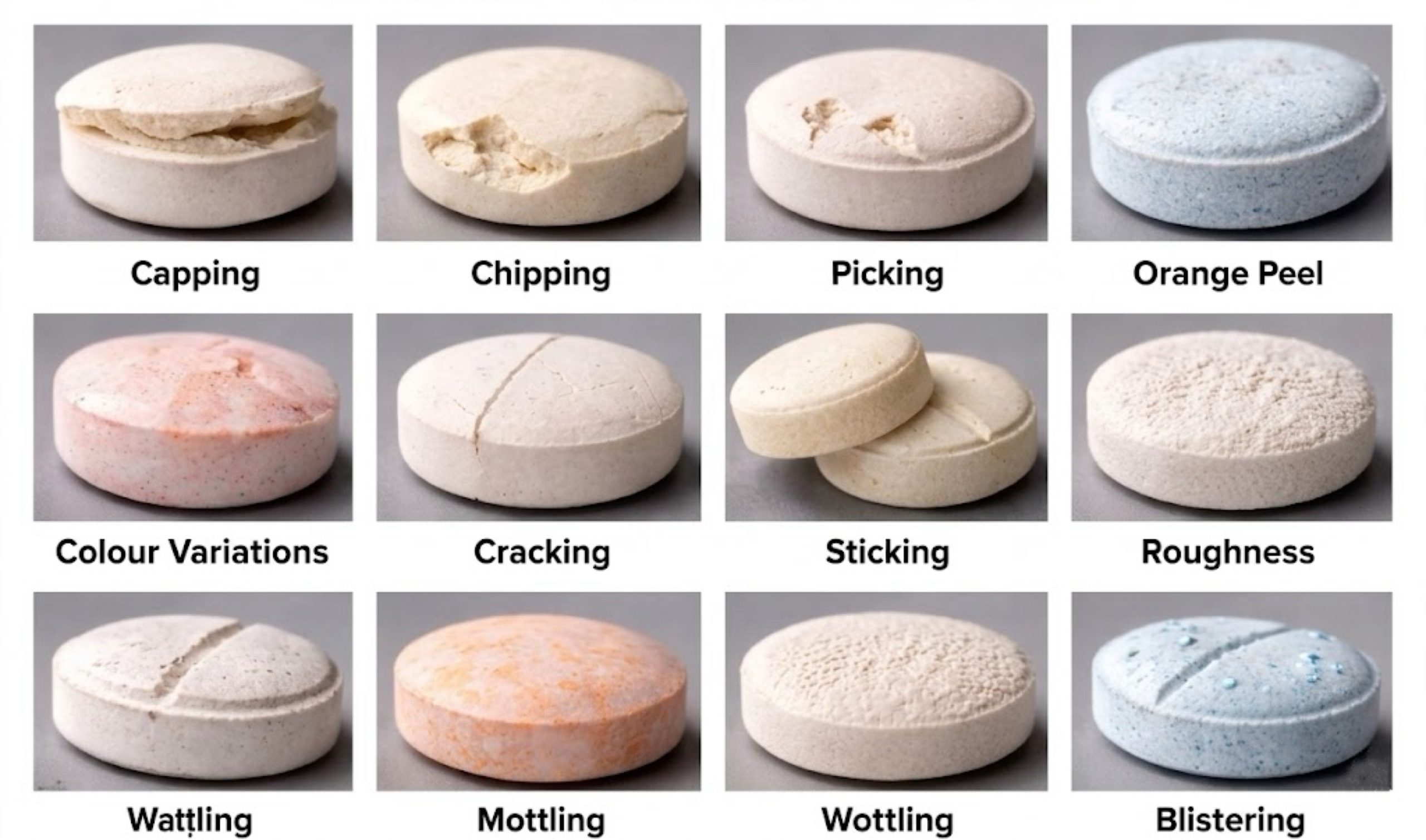
Sticking and picking defects
This rheological state induces severe sticking and picking defects, muddying debossed logos and scarring the tablet surface. Volumetrically, over-wetted granules form continuous structural capillary bridges inside the feed hopper, obstructing powder flow and provoking erratic die filling that results in unacceptable batch weight variations.Your weight variation will fail the quality check.
There is also a paradox here. You might think wet things stick together well. But high moisture can cause low hardness. The water acts as too much lubricant. The particles slide around. They do not lock together. You press it, but it stays soft. You touch it, and it crumbles. This is "loose tablet" syndrome.
Finally, consider the biology. High moisture is bad for stability. It creates a home for bacteria. It speeds up chemical degradation. Your drug might expire faster. The tablet might swell in the bottle. It is a mess for quality control.
4.Scenario B: Too Little Moisture (The "Brittle" Disaster)?
On the other hand, you might dry your granules until they are bone dry. You think this is safe, but then the tablets start popping their tops off.
Low moisture makes granules dry, brittle, and hard. The plasticity drops, and the elastic recovery rate spikes. When you compress them, they store energy like a spring and snap back when pressure is released.**
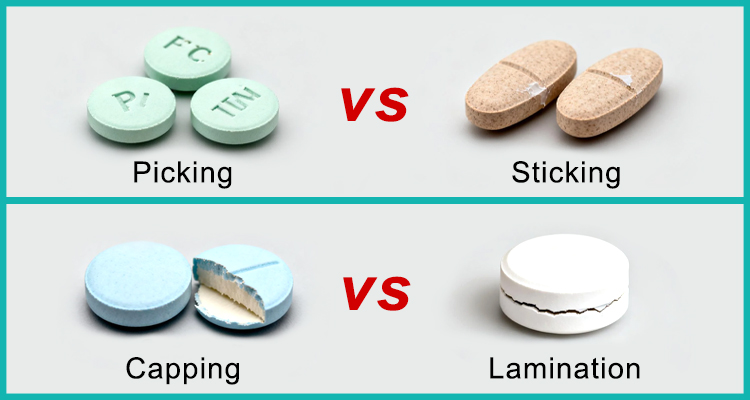
Capping and lamination defects
Over-drying the granulation bed to mitigate adhesion risks inadvertently compromises particle plasticity, yielding highly brittle, unyielding structures characterized by elevated elastic recovery properties. Upon the termination of the main compaction stroke, the internal stored kinetic energy forces rapid axial expansion, overcoming the weak interparticulate bonds and culminating in terminal capping or horizontal lamination defects.Remember the rubber ball example?
Dry granules act like strong rubber balls. You force them into a tablet shape. They are under high pressure. As soon as the upper punch leaves the die, the pressure is gone. The tablet expands quickly. The top flies off (Capping). Or the tablet splits into layers (Lamination). This is because the dry granules have a high "elastic recovery rate."
Compressibility also suffers. The granules are too hard. They do not want to change shape. You can turn the pressure up to the maximum. But the tablet is still soft. The particles do not bond. The binding force is weak. You get loose tablets again, but for a different reason.
You also get a lot of dust. Dry granules are fragile. As they move from the hopper to the feeder, they break. They turn into fine powder. This creates dust flying everywhere. It causes "segregation." The fines settle at the bottom. The coarse granules stay at the top. This leads to weight variation.
Also, dry air and dry granules create static electricity. The powder sticks to the machine windows. It clumps together due to static. It bridges in the hopper. The flow becomes erratic. The tablet surface looks rough. The edges chip off. The appearance is poor.
5.Critical Comparison: High vs. Low Moisture Table?
It can be confusing to remember which symptom belongs to which cause. I find that a direct comparison helps clear up the confusion immediately.
High moisture generally leads to sticking, weight variation, and microbial risks. Low moisture generally leads to capping, lamination, and excessive fines. Understanding these distinct profiles helps you diagnose the root cause on the production floor quickly.
| Feature / Defect | High Moisture (Over-Wetting) | Low Moisture (Over-Drying) | Ideal Range (1% – 3%) |
| Physical State | Tacky, soft granules; prone to clumping. | Brittle, hard granules; excessive "fines." | Firm granules with optimal plasticity. |
| Primary Defect | Sticking & Picking: Material adheres to punch faces and logos. | Capping & Lamination: Tablet splits or the top layer separates. | Perfect Finish: Smooth surface with sharp, clear embossing. |
| Internal Mechanism | Strong capillary bridges increase adhesion to metal tooling. | High elastic recovery causes the tablet to "spring back" and crack. | Dominant plastic deformation ensures stable permanent bonding. |
| Tablet Hardness | Low Hardness: Moisture acts as a thick lubricant, preventing interlocking. | Poor Compactability: Lack of bonding bridges leads to "soft" or friable tablets. | High Strength: Dense internal structure with low friability. |
| Weight Variation | High: Poor flowability leads to inconsistent die cavity filling. | Unstable: Static electricity and fines cause uneven filling. | Minimum: Excellent flow ensures high dosage accuracy. |
| Disintegration | Delayed: Creates a dense, waterproof matrix that resists swelling. | Inconsistent: May crumble too fast or fail to activate binders. | Standardized: Reliable dissolution according to USP/EP. |
| Ejection Force | High: Tablet swells and sticks to die walls, causing scraping. | Moderate/High: Increased friction from dry particles against the die. | Low: Smooth ejection with minimal wear on the machine. |
Comparison table of moisture effects
This analytical matrix serves as a plant-floor troubleshooting protocol to rapidly isolate moisture-induced anomalies from mechanical variance. Achieving a balanced operational window secures reliable granular flow, steady compression dynamics, and highly uniform batch yields.
6.Engineering Solutions: How to Achieve the "Golden Ratio"?
Knowing the problem is half the battle. The other half is having the right equipment to control these variables precisely.
To achieve the golden ratio of moisture, you need integrated processing solutions. This includes High Shear Mixers for uniform wetting, Fluid Bed Dryers for precise drying control, and Tablet Presses with pre-compression capabilities to handle elastic recovery.**
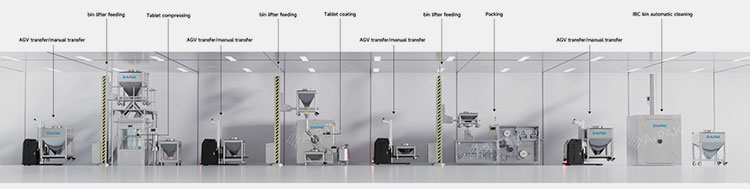
AIPAK tablet production line
Mitigating moisture-related defects requires integrated, automated solid-dosage line engineering. Initial wet granulation executed via a High Shear Mixer Granulator ensures a highly homogenous binder liquid distribution across the raw powder batch.
Downstream drying cycles must be managed via Fluid Bed Dryers utilizing automated moisture tracking to precisely terminate thermal exposure at target percentages, avoiding case hardening.
Finally, advanced rotary tablet press machines equipped with extended pre-compression stations apply a preliminary tamping force to de-aerated beds, providing the necessary dwell time to manage elastic recovery.It gives the granule time to settle. This helps with the elastic recovery issue. It reduces capping.
We also offer formulation support. Sometimes the equipment is fine, but the recipe is wrong. We help you adjust the binders. We help you optimize the process. We ensure your line is GMP compliant. We provide the full solution, from the powder mixer to the final blister pack.
Conclusion
Granule moisture is a double-edged sword that dictates tablet quality. You must strictly control it to avoid sticking, capping, and weight variation. With AIPAK's precision equipment, you can master this balance.
Frequently Asked Questions - Tablet Compaction Mechanics
References
1.FDA Guidance for Industry: Q8(R2) Pharmaceutical Development and Critical Process Parameters (CPPs)
2.United States Pharmacopeia (USP) Chapter 1217: Tablet Friability and Viscoelastic Compaction Metrics
3.Journal of Pharmaceutical Sciences: Analyzing the Effects of Granule Moisture on Elastic Recovery and Capping Defects
4.International Journal of Pharmaceutics: Evaluation of Fluid Bed Drying Kinetics vs. Static Tray Convection in Solid Dosage Lines
Don't Forget To Share Article!

Mason
Senior Pharmaceutical Automation Engineer & Fluidic Systems Specialist at AIPAK
Mason brings over a decade of hands-on technical experience in engineering high-containment fluid delivery loops, industrial water purification infrastructure (WFI), and cGMP-compliant sterile packaging lines for international markets. Specializing in the mechanical design of multi-station washing-filling-sealing production matrices, automated high-voltage leak detection (HVLD), and ATEX-certified component isolation, his validation workflows ensure that volatile and light-sensitive chemical formulations achieve complete regulatory harmony across complex ASEAN and European biopharmaceutics logistics sectors.
Tablet Press Machine Related Posts









Tablet Press Machine Related Products
Tablet Press Machine Related Videos
CONTACT US
Tell us your raw material and project budget to get quotations within 24 hours.
WhatsApp Us: +86 181 7101 8586

Want the best price & newest pharmaceutical machinery buying guide,tips and trends sent straightly to your box?Sign up for AIPAK’s monthly newsletter,we’re free for your consultation and Offer you the most suitable solutions!
The Buyer's Guide
- Capsule Filling Buyer's Guide
- Blister Packaging Buyer's Guide
- Tablet Counting Buyer's Guide
- Tube Filling Buyer's Guide
- Cartoning Buyer's Guide
- Gummy Making Buyer's Guide
- CO2 Extraction Buyer's Guide
- Empty Capsules Buyer's Guide
- Suppository Filling Buyer's Guide
- Tablet Coating Buyer's Guide
- Tablet Press Buyer's Guide
- Softgel Encapsulation Buyer's Guide
Most Popular
- 7 Importance Of Pharmaceutical Packaging In Different Applications You Must Know
- 6 Advantages You Must Know About Tablet Counting Machine
- 8 Advantages of Blister Packaging You Must Know
- 6 Critical Applications of Automatic Capsule Filling Machine
- 6 Stations You must Know to Improve the Filling Quality of Automatic Capsule Filling Machine