How to Prevent Delamination and Ensure Uniformity in Cream and Ointment Batches?
You see your cream separate into oil and water. You lose time and money. How can you stop this and keep your batches perfect?
To prevent delamination and ensure uniformity, you must control the emulsification process. You need precise heating, high-shear homogenizers, and vacuum deaeration. Proper equipment like vacuum emulsifying mixers ensures stable oil and water phases. This keeps the final product perfectly blended.
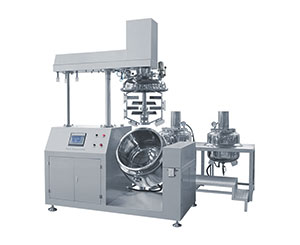
Vacuum emulsifying mixer preventing delamination
I will show you how to solve these mixing problems. We will look at the basic rules of semi-solid products. Then we will explore the best machines and steps for your production line. If you stop reading now, you might keep losing money on bad batches.
1.What Are the Basic Differences Between Ointments and Creams?
You might mix up ointments and creams. This mistake ruins your formula. Do you know how they act differently in the machine?
Ointments are oil-based and trap moisture on the skin. Creams mix oil and water together. You must choose the right base to match your medical or cosmetic goal. This choice stops the product from breaking apart.
Ointment vs cream properties
I visit many factories. I see managers use the wrong process for their product.
Ointments and creams are not the same. Ointments have a lot of oil. They have very little water. They form a thick layer on the skin. Doctors use them for dry skin or skin diseases. Creams are different. Creams mix oil and water. They feel light.
People use them for daily skin care or medicine. You must know your product type before you mix it. If you try to mix a cream like an ointment, it will fail. The water and oil will split. We call this delamination. You need to look at the chemistry of your product. You must think about the end user.
Will they put it on a dry patch of skin? Will they use it on their face? The answer changes your machine setup. You must set your machines to handle the right thickness. If you do not set the machine right, the mixer will break the structure. The ointment will turn into a liquid. The cream will turn into a hard block. You must avoid these mistakes. You must train your workers to know the difference between these two bases.
| Product Type | Main Base | Water Content | Best Use Case |
| Ointment | Very Low | Dry skin | thick skin barrier |
| Cream (O/W) | Water | Light lotion | daily wear |
| Cream (W/O) | Oil | Night cream | dry skin medicine |
2.How Does Formulation Design Stop Batch Delamination?
Your mix breaks apart because the ingredients fight each other. You waste expensive materials. How do you make them stay together?
You must choose the right vacuum emulsifying mixer based on the HLB value. You also need to add stabilizers and control how you introduce your active drugs. This locks the oil and water together. It stops the layers from separating later.
Formulation design for uniform creams
You cannot just throw ingredients into a tank. You must design the formula well. The most important part is the vacuum emulsifying mixer.
A vacuum emulsifying mixer acts like glue. It holds the oil and water together. You must look at the HLB number.
A high HLB number is good for water-based creams. A low HLB number is good for oil-based creams. If you pick the wrong number, your cream will split.
I helped a client last year. Their cream always split after one week. I looked at their formula. They used the wrong vacuum emulsifying mixer. We changed it. The cream stayed perfect. You also need preservatives. Water brings bacteria. Preservatives stop the bacteria.
You must also add your active drugs the right way. You can melt them. You can grind them into a paste. Or you can dissolve them first. The right method keeps the drug spread out evenly. If the drug clumps together, one tube will have too much medicine.
Another tube will have no medicine. This is very dangerous for patients. You must use the right stabilizers to hold the structure. Carbomer is a good stabilizer. It makes the water phase thick. It stops the oil drops from moving around and joining together.
| Ingredient Type | Function in Formula | Example Material |
| Emulsifier | Holds oil and water together | Polysorbate, Steareth |
| Preservative | Stops bad bacteria growth | Phenoxyethanol |
| Stabilizer | Keeps the mix thick and stable | Carbomer |
| Active Drug | Provides the medical effect | Hydrocortisone |
3.Which Production Steps Guarantee a Uniform Product?
A bad mixing process leaves lumps in your cream. Your customers complain about the bad texture. How do you mix it perfectly every time?
You must follow a strict process. First, prepare the water and oil phases in different tanks. Next, mix them under high shear. Then, cool the batch slowly. Finally, use a vacuum to remove air bubbles. This creates a smooth cream.
Cream production process steps
You must follow the steps in exact order. First, you test and weigh your raw materials. You put the oil parts in one tank.
You put the water parts in another tank. You heat both tanks. The temperatures must match. If one is too cold, the mix will shock and separate.
Next, you pump them into the main mixing pot. You turn on the high shear mixer. This machine cuts the drops into tiny pieces. Small drops make a stable cream. Then, you must cool the tank.
You cannot cool it too fast. Fast cooling makes the cream hard and lumpy. You must cool it slowly. At the same time, you must use a vacuum. The mixing pulls air into the cream.
Air bubbles make the cream go bad. The vacuum pulls the air out. This gives you a smooth and shiny product. You must also check the mixing time. If you mix for too long, you add too much heat. This heat damages the active drugs.
If you mix for a short time, the drops stay big. Big drops cause delamination. You must write down the exact time, speed, and heat for every batch. This recipe keeps your product the same every single day.
| Production Step | Action Required | Why It Matters |
| Phase Prep | Heat oil and water separately | Prevents temperature shock |
| Emulsification | Mix with high speed blades | Breaks droplet size down |
| Cooling | Lower heat slowly | Stops lumps from forming |
| Deaeration | Apply vacuum to the tank | Removes trapped air bubbles |
4.What Equipment Do You Need for Stable Semi-Solid Batches?
Old machines cannot mix thick pastes well. You get bad batches that fail tests. What machines will solve this mixing problem?
You need a vacuum emulsifying mixer with a high-shear homogenizer. You also need jacketed tanks for exact heat control. Later, you need a good tube filling machine. This machine packs the cream safely without adding any new air.
Vacuum emulsifier and tube filling machine
You cannot make good cream with bad machines. I see many companies use simple stirrers. These stirrers do not work for creams. You need a vacuum emulsifying mixer. This is the heart of your line. It has a special blade at the bottom.
We call it a homogenizer. It spins very fast. It forces the cream through tiny holes. This makes every drop the exact same size. You also need jacketed tanks. These tanks have double walls. Hot water or steam goes inside the walls. This keeps the heat exact.
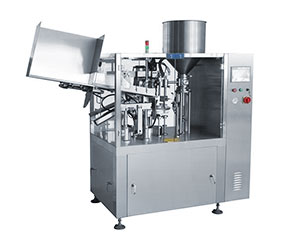
If the heat changes by one degree, the cream might ruin. After you make the cream, you must pack it. We provide tube filling machines. These machines fill plastic or aluminum tubes. They push the cream from the bottom up.
This pushes the air out of the tube. Then they seal the tube tight. Our machines can handle aluminum tubes and plastic tubes. You must choose the right tube for your product. Some medicines react with plastic. You must use aluminum for them.
The tube filling machine must also be very clean. It must meet GMP rules. We build our machines with stainless steel. This metal does not rust. It is easy to wash. Clean machines stop bad bacteria from entering your clean cream.
| Equipment Name | Main Function | Benefit for Cream |
| Vacuum Emulsifier | Mixes under vacuum | No air bubbles, smooth mix |
| High Shear Homogenizer | Cuts particles fast | Uniform droplet size |
| Jacketed Tank | Controls temperature | Prevents phase separation |
| Tube Filler | Fills and seals tubes | Protects product from air |
5.How Do You Test and Control Quality in Creams?
You send out a bad batch and face a recall. Your brand loses trust. How do you test the cream before it ships?
You must test the viscosity to ensure the right thickness. You check the pH level. You measure the particle size under one micrometer. You also test for microbes. You must ensure the active drugs are the same in every tube.
Quality control testing for creams
You must test your product before you sell it. You cannot guess. You must measure it.
First, you test the thickness. We call this viscosity. You use a machine called a Brookfield viscometer. If the cream is too thin, it will run off the skin.
If it is too thick, it will not come out of the tube. Next, you check the pH. Human skin has a pH around 5.5. Your cream should match this.
Then, you look at the particle size.
The drops of oil and water must be smaller than one micrometer. Small drops mean the cream will not separate later. You also test for germs. You do not want bacteria in your medicine.
Finally, you test the active drug. You take samples from the top, middle, and bottom of the tank. Every sample must have the same amount of drug. If the test fails, you must reject the whole batch. You cannot fix a bad batch of cream.
This is why process control is so important. Good machines stop bad batches from happening. You should also keep a sample from every batch. You put this sample in a warm room. You watch it for six months. If it separates in the warm room, you know your formula needs more work.
| Quality Test | Tool Used | Target Result |
| Viscosity | Brookfield Viscometer | Matches product standard |
| pH Level | pH Meter | 4.5 to 6.5 |
| Particle Size | Laser Diffraction | Less than 1 micrometer |
| Drug Uniformity | HPLC | ±5% variance |
Conclusion
You can prevent delamination with the right formula, exact temperatures, and high-shear vacuum machines. You must test your batches carefully. This keeps your creams uniform and your customers happy. Struggling with oil-water separation or inconsistent texture in your semi-solid production? Click here to contact AIPAK’s engineering team for a Free Vacuum Emulsification Audit and customized homogenizing strategy to ensure every batch is perfect!
Don't forget to share this post!
Vacuum Emulsifying Mixer Related Posts
Vacuum Emulsifying Mixer Related Products
Vacuum Emulsifying Mixer Related Videos
CONTACT US
Tell us your raw material and project budget to get quotations within 24 hours.
WhatsApp Us: +86 156 0710 8630
Want the best price & newest pharmaceutical machinery buying guide,tips and trends sent straightly to your box?Sign up for AIPAK’s monthly newsletter,we’re free for your consultation and Offer you the most suitable solutions!
The Buyer's Guide
- Capsule Filling Buyer's Guide
- Blister Packaging Buyer's Guide
- Tablet Counting Buyer's Guide
- Tube Filling Buyer's Guide
- Cartoning Buyer's Guide
- Gummy Making Buyer's Guide
- CO2 Extraction Buyer's Guide
- Empty Capsules Buyer's Guide
- Suppository Filling Buyer's Guide
- Tablet Coating Buyer's Guide
- Tablet Press Buyer's Guide
- Softgel Encapsulation Buyer's Guide
Most Popular
- 7 Importance Of Pharmaceutical Packaging In Different Applications You Must Know
- 6 Advantages You Must Know About Tablet Counting Machine
- 8 Advantages of Blister Packaging You Must Know
- 6 Critical Applications of Automatic Capsule Filling Machine
- 6 Stations You must Know to Improve the Filling Quality of Automatic Capsule Filling Machine