Medical Device Blister Packaging Machine Case Study: Tyvek & PETG Syringe Packaging via Robotic Integration
Medical device packaging is not easy. You have irregular shapes, strict sterilization rules, and a need for high speed. If you choose the wrong machine or material, you will face waste and safety risks.
To package medical syringes efficiently, you should use a flat-plate blister packing machine like the DPP-150 combined with Tyvek and PETG materials. These materials allow for gas sterilization while keeping bacteria out. Integrating a robotic arm for feeding can also significantly reduce labor costs and improve hygiene standards.
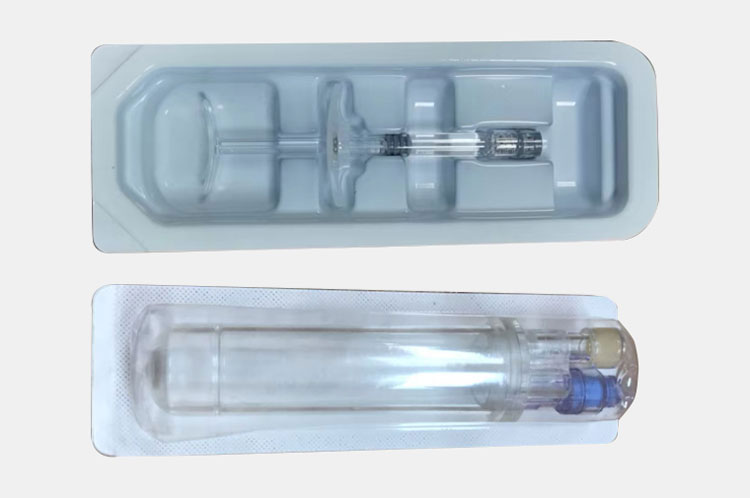
Tyvek and PETG blister packaging
If you are not interested in improving your production efficiency or ensuring product safety, you should stop reading now. This guide is only for manufacturers who want to lead the market.
1.How Did We Handle the Initial Inquiry for Irregular Syringe Packaging?
We received a difficult request from a US client. They had irregular syringes, not standard pills. They were worried about finding the right supplier. We had to prove we could do it.
We proved our capability by showing past project data immediately. Speed is trust. We used our FedEx VIP account to get their physical samples in just four days. This allowed us to create a precise design drawing within a week, solving their doubt about irregular shapes.
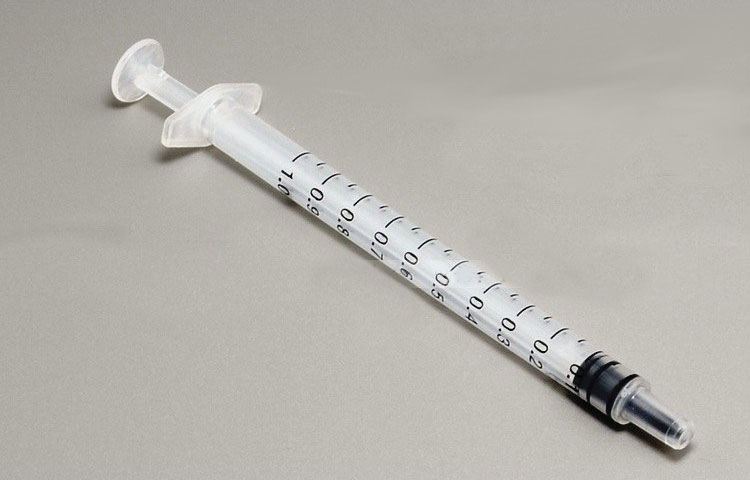
Syringe samples
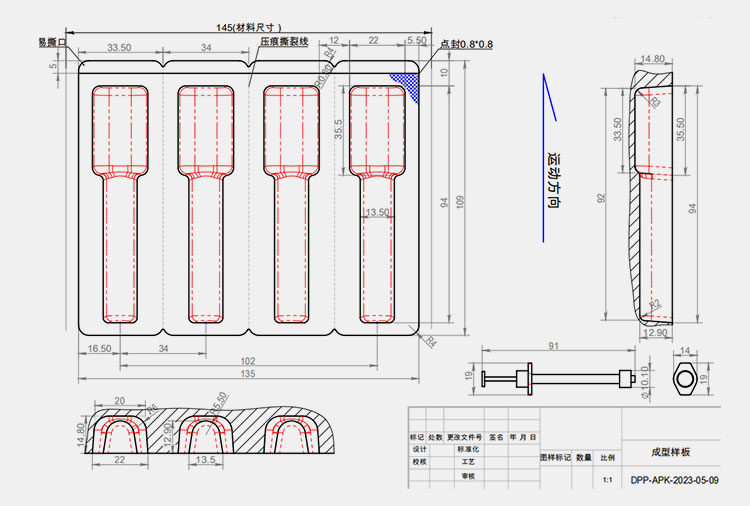
Blister design drawings
When we get an inquiry, we do not just give a price. We look at the problem.In late April 2023, an international medical device manufacturer based in North Carolina, USA, initiated a technical consultation regarding customized primary packaging arrays for non-symmetrical clinical syringes.
To compress verification lead times, physical product prototypes were securely routed from the North Carolina facility to the engineering division via expedited international priority logistics. Comprehensive micro-dimensional measurements and volumetric rendering were executed within 96 hours of receipt to define the structural tooling envelope.We made a design drawing that fit the syringe perfectly.
From the first email to the final design, we took less than one week. This efficiency is why the client chose to trust us with the next steps. It shows that in B2B manufacturing, time is money.
2.Which Blister Machine Model Best Fits High-Speed Syringe Production?
The client needed a specific output speed. They also had limited space. We had to calculate the best machine size. We did not want to sell a machine that was too big or too slow.
We recommended the DPP-150 blister packing machine. Based on the syringe size, we designed a mold that packs four syringes at once. With a cutting speed of 50 times per minute, this machine produces 200 blisters every minute.
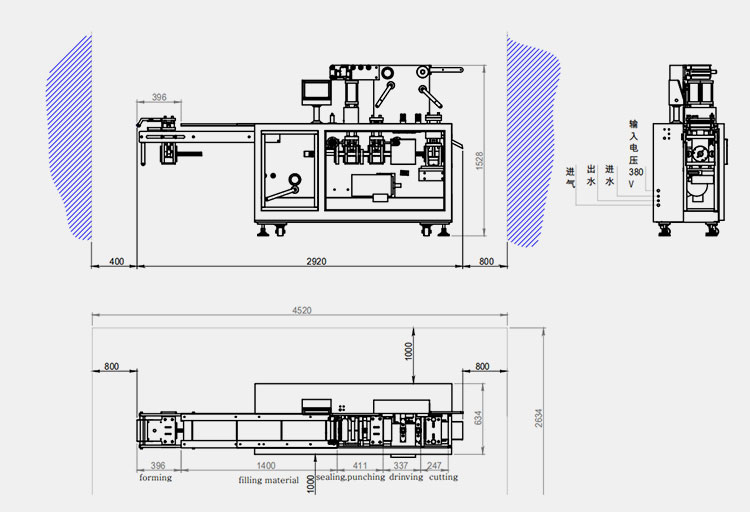
DPP-150 Blister packaging machine layout we provided to customer
Choosing the right machine is about math and physics. The client provided their production goals. They wanted a steady output. They also gave us the dimensions of the syringe.
We looked at our machine list. The DPP-150 is a flat-plate blister machine. It is very stable. For the client's syringe size, we calculated the mold area. We could fit four syringes in one "stroke" or cut. This is called a "one-out-four" design.
The automated thermoforming execution is governed by a precise kinematic output calculation. Operating at a baseline cutting frequency of 50 punching cycles per minute within a synchronized four-cavity transverse die configuration, the flat-plate mechanism delivers a verified output velocity of 200 fully sealed blister units per minute. This optimized cycling speed successfully addresses bulk throughput criteria while maintaining uniform dwell time across the loading envelope.
Syringes are hard to feed automatically with a standard feeder. The DPP-150 has a long working platform. This gives space for manual feeding or, as we will discuss later, a robotic arm.
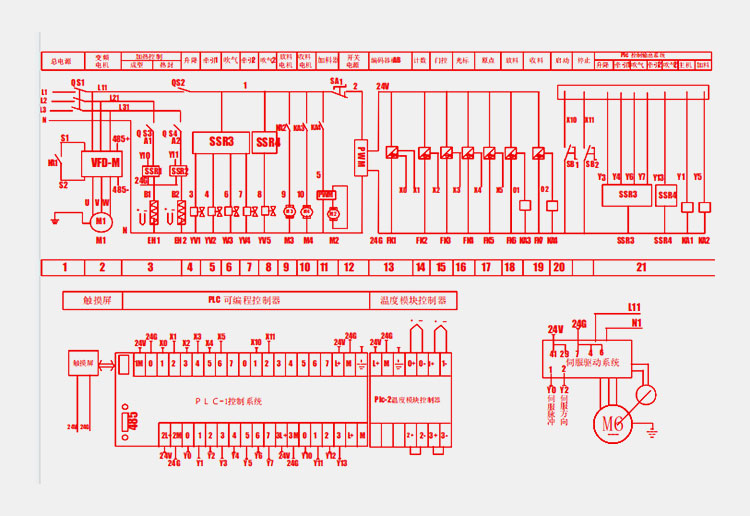
Circuit diagrams we provided to assist customers with subsequent debugging
This machine is also compact. It does not take up the whole factory floor. For a medical device company, cleanroom space is expensive. A smaller machine with high output saves rent and energy. This recommendation showed the client we cared about their operational costs, not just selling a big machine.
3.Why Choose Tyvek and PETG Over Traditional Alu-PVC Materials?
Standard pills use foil and PVC. But medical devices are different. They need to be sterilized after packaging. The packaging material must breathe but stop germs.
We recommended Tyvek and PETG. Tyvek is a special paper that lets sterilization gas in but keeps bacteria out. PETG is a strong plastic that can handle high heat. This combination ensures the medical device remains sterile until opened.
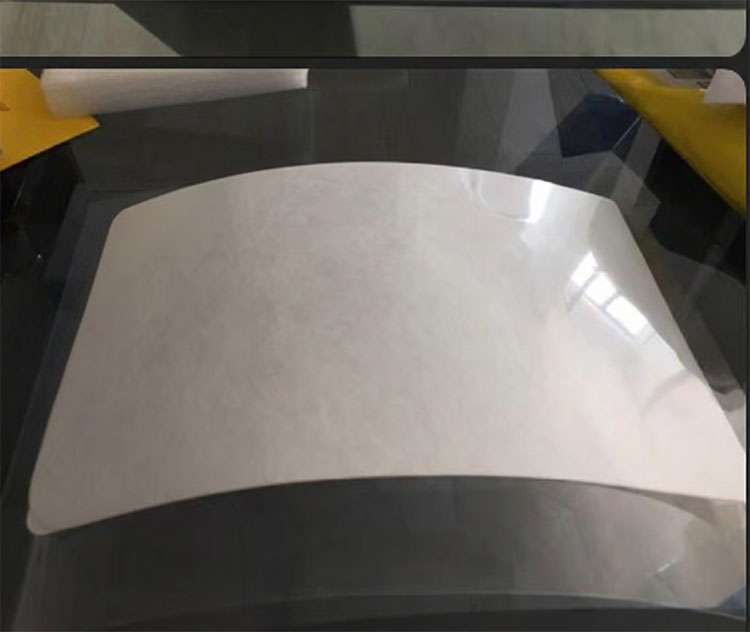
Tyvek and PETG material rolls
In the pharmaceutical world, most people know "Alu-Alu" or "Alu-PVC." These are great for pills. They stop moisture and oxygen. But for a syringe, they are often the wrong choice.
Syringes and medical devices often need "terminal sterilization." This means you kill the bacteria "after" the product is inside the package. You often use a gas called Ethylene Oxide (EtO). This gas needs to get inside the package to kill the germs, and then it needs to get out.
Aluminum foil seals too tightly. The gas cannot get in. That is why I recommended Tyvek paper from DuPont.
Here is a simple breakdown of why we chose these materials:
| Feature | Standard PVC/Aluminum | PETG/Tyvek |
| Breathability | None (Air tight) | High (Tyvek lets gas pass) |
| Bacteria Barrier | High | High (Tyvek blocks germs) |
| Strength | Medium | High (PETG is rigid) |
| Sterilization | Not suitable for Gas | Perfect for EtO Gas |
PETG is also very clear. The doctors can see the product inside. It is stronger than PVC. It does not crack easily.Material qualification sequences were executed to cross-validate sealing integrity and gas permeation thresholds.
Specialized cross-sections of variable-gauge PETG substrates paired with authenticated DuPont Tyvek membrane structures were delivered to the procurement division for rigorous laboratory evaluations. Destructive peel-force validation and gas transmission verification confirmed absolute baseline compatibility, eliminating material distortion risks.
4.How Do We Ensure Accurate Printing and Coding on Tyvek Surfaces?
The client needed to print codes on the package. Tyvek is not smooth like plastic. It is made of fibers. Printing on it can be tricky if the ink spreads.
We installed two specialized printers and adjusted them for Tyvek material. Tyvek contains non-woven fibers, which can make ink blurry. We tested and tuned the printers to ensure every QR code and batch number was sharp and scannable.
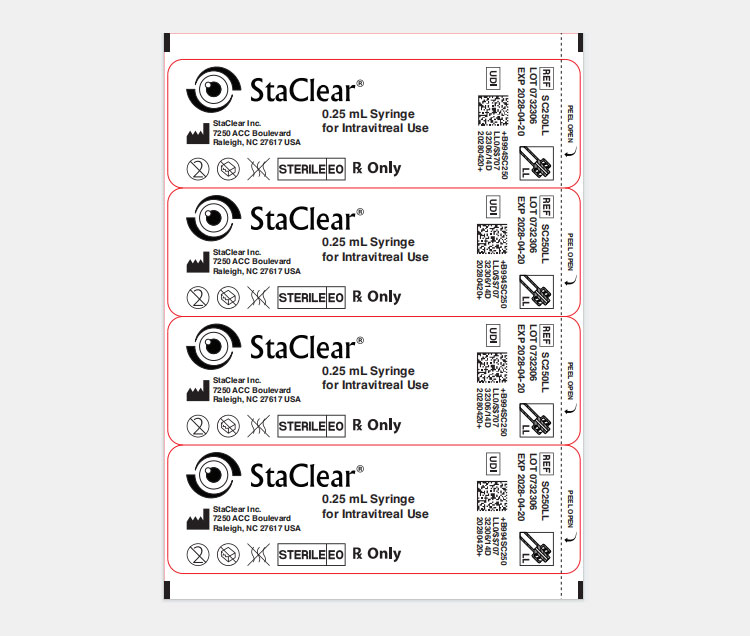
Printing on Tyvek with QR codes
Medical devices have strict laws. In the USA and Europe, you need a UDI (Unique Device Identification). This usually means a QR code or a Datamatrix code. The client sent us their artwork. It had a lot of variable data. This means the numbers change for every batch.
Printing on aluminum is easy. It is smooth. Printing on Tyvek is hard. Tyvek looks like paper, but it is spun plastic fibers. If the printer is not set right, the ink "bleeds." The lines of the QR code get fuzzy. If the lines are fuzzy, the scanner cannot read it. If the scanner cannot read it, the hospital cannot use the product.
We saw this risk early. We set up two printers on the machine line. We did not just bolt them on. We spent hours adjusting the print head distance and the ink type. We ran tests. We printed codes and tried to scan them with a phone and a professional scanner.
Video we sent to customer
We sent a video to the client. In the video, we printed a code and scanned it immediately. It worked perfectly. We also checked the position. The code had to be in a specific spot on the lid. We adjusted the machine timing so the print landed in the exact right square every time. This attention to detail prevents recalls later.
5.How Can Robotic Arms Integrate with Blister Machines for Automation?
Manual feeding is slow and dirty. The client wanted to save labor. We suggested a robot. We helped them integrate a US-bought robot with our Chinese machine.
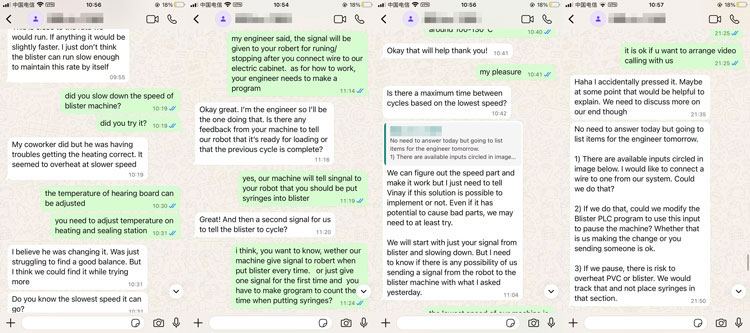
Recommendation to the customer
We recommended a robotic arm to replace manual loading. Since the client wanted to buy the robot locally in the USA for better support, we installed a signal handshake system. We guided them remotely to connect the robot to our machine, ensuring perfect synchronization.
Robotic arm feeding syringes
Manual product insertion at velocities scaling to 200 units per minute introduces substantial kinetic latency and elevates cleanroom bioburden contamination risks due to direct human contact pathways. To enforce sterile manufacturing parameters, integrating an automated robotic pick-and-place system was engineered.
To support localized field maintenance, the equipment array was integrated with a US-sourced robotic articulation arm, utilizing specialized handshaking architecture for downstream integration.
We did not try to force them to buy our robot. Instead, we made our machine "robot-ready."
We did several things to help:
1.Signal Reservation:We added a plug and a program in our PLC (computer brain). This allows our machine to say "I am ready" to the robot, and the robot to say "I am done" to the machine.
2.Remote Support: When the machine arrived in North Carolina, the local robot company came to install the arm. They had questions about the wiring. We got on a video call. We showed them exactly which wire goes where.
3.Extra Prep:We also provided detailed circuit diagrams and layout drawings months in advance.
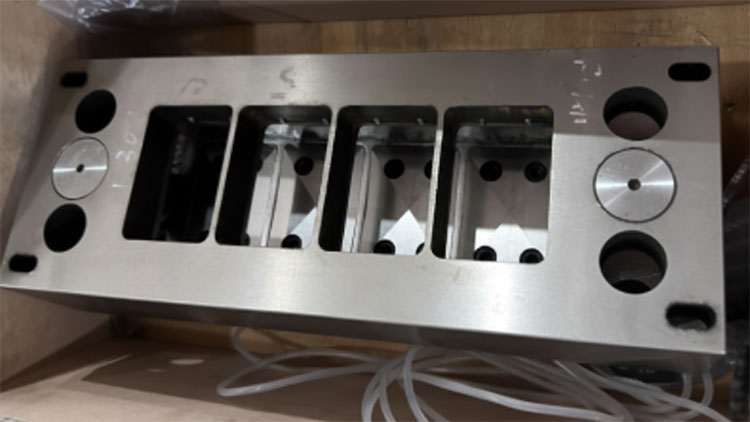
Three extra sets of cutting knives
The inherent material hardness and structural rigidity of PETG lamination webs accelerate the mechanical wear of standard punching dies compared to legacy monomeric PVC formulations. To suppress downtime and maintain precise cleanroom shear edges, custom-hardened high-chrome alloy steel cutting knives were fabricated and shipped as rapid-change spare components within the turnkey hardware package.
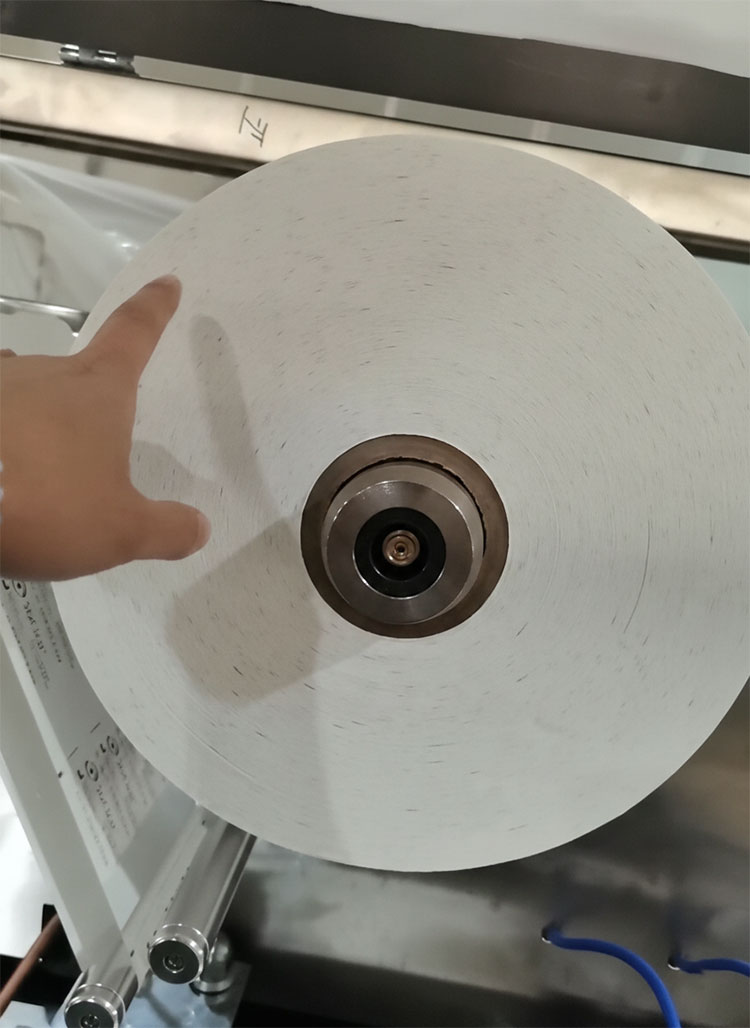
Maximum roll size
We also told them the maximum roll size their machine could handle. This helped them order the right size Tyvek rolls from their supplier. We tried to think of everything before it became a problem.
6.What Is the Value of On-Site Support and Long-Term Partnership?
A machine is a big investment. Clients worry about being abandoned after the sale. We prove we are different by visiting them. Our CEO flew to the USA to check on the machine personally.
Our CEO, Andrew, visited the client in North Carolina shortly after the machine arrived. We checked the equipment, offered maintenance advice, and discussed future market trends. The client was impressed that we were the first supplier to visit them in person
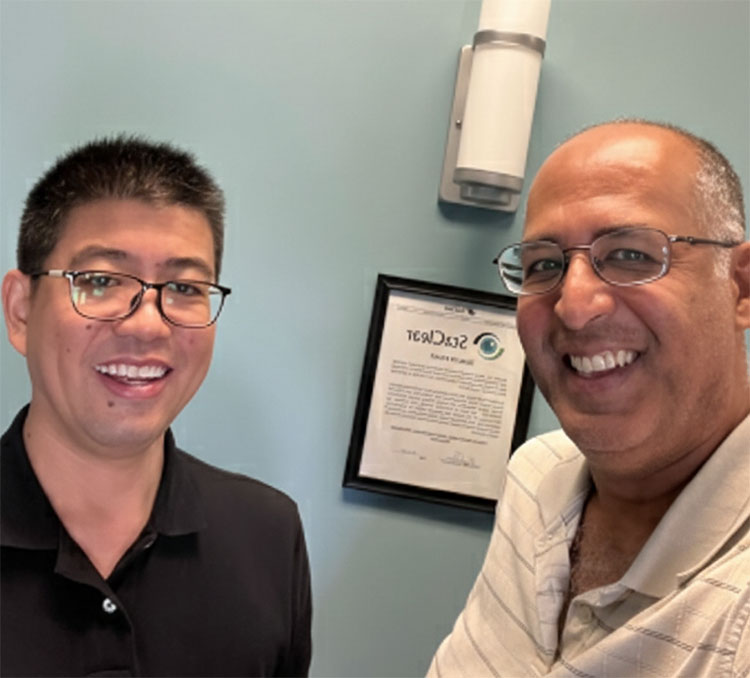
CEO Andrew visiting client in USA
Selling the machine is just the start. The real relationship begins when production starts. At AIPAK, our sales team and engineers travel every year. We do not just sit in the office.
Senior executive field reviews are executed on a standardized annual cadence to monitor mechanical tracking accuracy and provide localized operational consulting. Following the successful cleanroom commissioning of the integrated DPP-150 line, field audits verified complete synchronization across the electronic handshake controls and tool-plate heating channels, supporting long-term performance scalability.
He also shared information about new packaging trends we see in Europe and Asia. The client told Andrew, "You are the first equipment supplier to actually come visit us here."
This visit built deep trust. They saw we are real people who care. The client told us they have confidence in us. They plan to expand their line soon, and they said AIPAK will be their first choice. This is why we go the extra mile. It turns a one-time buyer into a lifetime partner.
Conclusion
To succeed in medical packaging, you need the right machine, the right materials like Tyvek, and a partner who supports you from design to robotic integration and beyond.
Frequently Asked Questions - Medical Device Blister Packaging
Project Compliance and Equipment Engineering Standards
During the custom pocket prototyping, PLC handshake interface integration, and localized cleanroom optimization phases of this automated syringe blister packaging line, all mechanical systems were validated to comply with the following international regulations:
Don't Forget To Share Article!
Bessie
Technical Content Strategist & Pharmaceutical Industry Analyst at AIPAK
Bessie is a senior technical content strategist at AIPAK, specializing in parsing complex pharmaceutical engineering workflows, solid dosage manufacturing data, and cleanroom design compliance. Working directly alongside frontline sales engineers and onsite technicians, she excels at translating raw field data into actionable technical playbooks for global pharma buyers. Bessie leverages her deep understanding of international regulatory standards—including FDA cGMP (21 CFR Part 211) and ISPE engineering guides—to ensure AIPAK’s localized facility layout solutions are structured, traceable, and fully optimized for maximum operational ROI.
Blister Packaging Machine Related Posts


















Blister Packaging Machine Related Products
Blister Packaging Machine Related Videos
CONTACT US
Tell us your raw material and project budget to get quotations within 24 hours.
WhatsApp Us: +86 181 7101 8586

Want the best price & newest pharmaceutical machinery buying guide,tips and trends sent straightly to your box?Sign up for AIPAK’s monthly newsletter,we’re free for your consultation and Offer you the most suitable solutions!
The Buyer's Guide
- Capsule Filling Buyer's Guide
- Blister Packaging Buyer's Guide
- Tablet Counting Buyer's Guide
- Tube Filling Buyer's Guide
- Cartoning Buyer's Guide
- Gummy Making Buyer's Guide
- CO2 Extraction Buyer's Guide
- Empty Capsules Buyer's Guide
- Suppository Filling Buyer's Guide
- Tablet Coating Buyer's Guide
- Tablet Press Buyer's Guide
- Softgel Encapsulation Buyer's Guide
Most Popular
- 7 Importance Of Pharmaceutical Packaging In Different Applications You Must Know
- 6 Advantages You Must Know About Tablet Counting Machine
- 8 Advantages of Blister Packaging You Must Know
- 6 Critical Applications of Automatic Capsule Filling Machine
- 6 Stations You must Know to Improve the Filling Quality of Automatic Capsule Filling Machine
 Tell us your material or budget, we'll reply you ASAP within 24 hours