
The Science of Wet Granulation: Mechanisms of Micro-Structural Evolution Inside High-Shear Mixer Granulator Arrays
Optimizing modern oral solid dosage manufacturing loops mandates a rigorous mechanistic understanding of particle topology transformations, as volatile powder wetting variations and unmanaged binder distribution patterns rapidly ruin downstream compressibility alignment.
To systematically prevent continuous batch failures and eliminate raw material waste under high-velocity processing, pharmaceutical process engineers must map the dynamic equilibrium between capillary nucleating forces and blade shear stress tolerances.
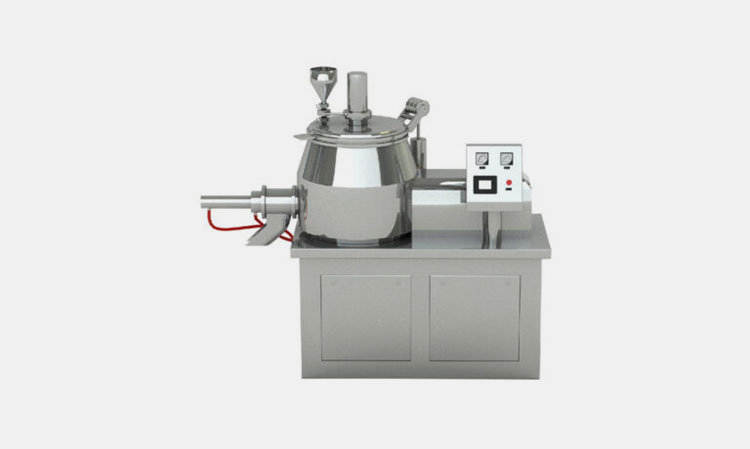
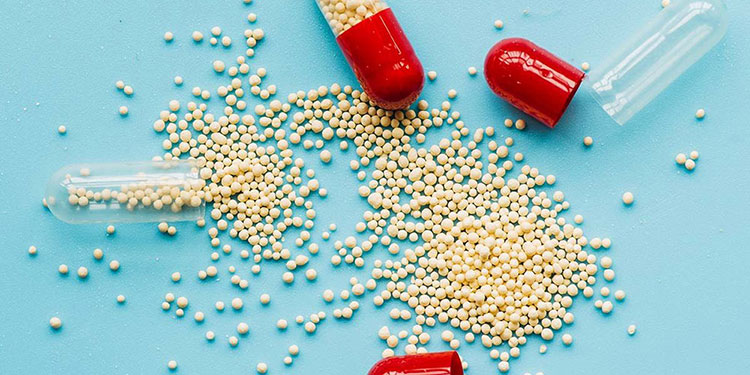
Structural evolution high shear mixer granulator
This processing briefing establishes the advanced micro-kinetics of industrial high-shear mixer granulators, detailing how managing binder droplet physics dictates granule density and secures regulatory cGMP validation.
1.How Does Wetting and Nucleation Start the Granulation Process?
Poor binder spread causes uneven granules. This unevenness leads to weak tablets. I explain a simple method. Controlling drop sinking time and spray speed fixes this first step.
Wetting starts the process. A liquid binder contacts dry powder. This contact forms granule nuclei. The process uses drop-controlled mixing and mechanical mixing. You control the binder drop size and sinking time. You guarantee uniform granule formation in your high-shear mixer.
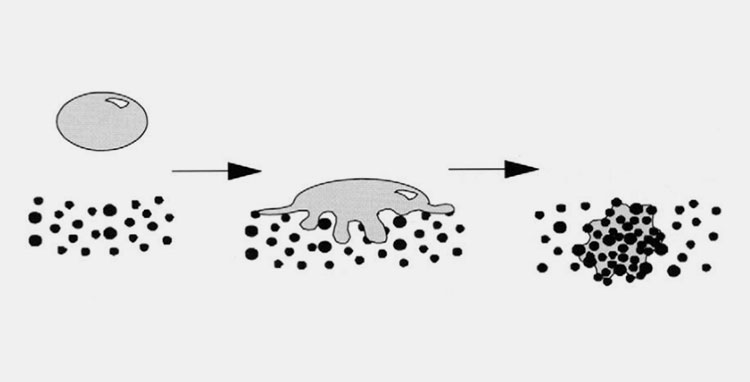
Wetting and nucleation process
The initiation of automated wet granulation relies on the precise synchronization of liquid binder atomization parameters and dynamic powder bed velocity paths.

Different drop size
During the critical nucleation phase, a localized dimensionless spreading number dictates how rapidly the dispersed droplets propagate across the agitated solid matrix; if the droplet-to-powder immersion induction time lags, capillary liquid bridges coalesce prematurely on the surface, inducing catastrophic macro-agglomeration and mass non-uniformity.
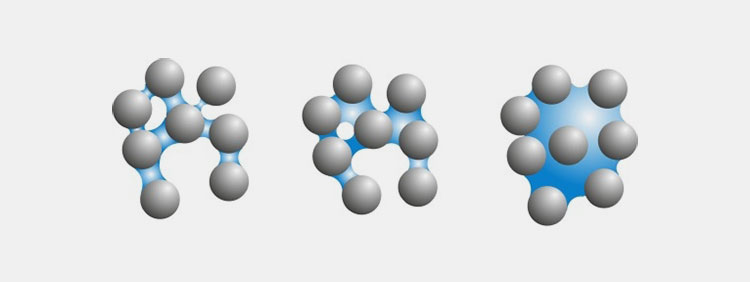
To sustain uniform nuclei sizes inside the processing chamber, processing configurations must combine lower spray delivery rates with high-torque impeller shearing, allowing separate droplets to penetrate the localized powder bed evenly to form stable solid bridge networks post-drying.
2.What Controls Granule Growth and Consolidation in High-Shear Mixers?
Weak granules crumble under pressure. Wild growth creates unusable wet lumps. I will guide you through the growth rules. You will ensure perfect granule building every single time.
Granule growth happens inside the machine. Particles hit each other, the mixer walls, or the blade. Granules experience steady growth or delayed growth. You monitor the liquid fill and bending number. You maintain consistent granule enlargement during the entire process.
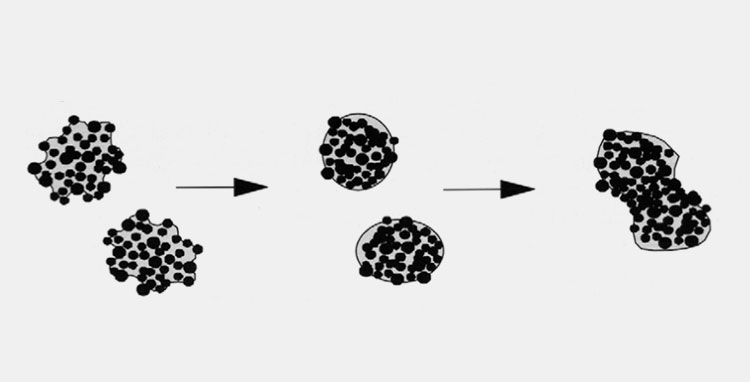
Granule growth and consolidation
Granule consolidation trajectories are systematically quantified via structural growth maps defined by the fluid fractional pore saturation and the mechanical Stokes number (Stv). Transitioning from low-density powder assemblies to dense, spherical granules requires balancing localized kinetic impact forces against the deformation threshold of the wet mass.
Rather than utilizing hazardous manual binder pouring protocols that trigger rapid system over-wetting, process lines deploy precise peristaltic pumping grids to distribute the binder fluid phase homogeneously, enabling controlled delayed growth paths under continuous impeller rotation.
Pumping ensures an even spread. I track the physical changes of the granules. The granules start as rough shapes. They become smoother. They absorb moisture. They become denser. They turn into perfect spheres.
You must track these shape changes. This tracking helps you predict powder flow. It helps you predict powder pressing.
3.Why Does Granule Breakage Occur During High-Shear Wet Granulation?
Unexpected fine powders ruin your formula. Wild breaking destroys your carefully grown granules. I will show you a reliable way. You can predict and stop granule destruction.
Granule breaking happens often. Mechanical stress from the blade beats the physical strength of the granules. Small granules merge together. Large granules break apart. You must balance the blade speed and binder thickness. You control the final size spread of your batch.
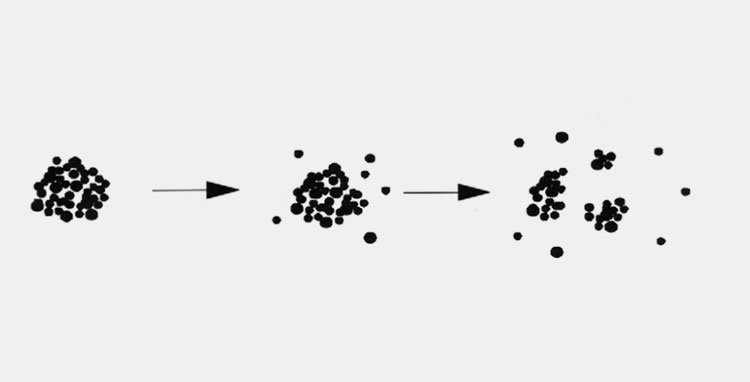
Granule breakage in granulation
I find predicting batch traits difficult. Granule breaking causes this difficulty. Breaking affects the binder spread. It affects the final size spread. I watch small particles merge into large groups. Large groups break down into smaller pieces at the same time.
The blade speed plays a massive role in this stage. I increase the speed at first. This speed helps particles merge. I know a secret. Too much speed shatters the granules. I do not rely on blade speed alone. I cannot predict breaking with just speed.

I use the Stokes number. It is a much better guide.Granules stretch and break. They reach a specific bending limit. I check the moisture amount of the batch constantly. High moisture gives the materials softness.
This softness helps the granules merge. Low moisture makes the granules brittle. Brittle granules shatter easily under stress. The physical strength of your raw materials matters too.
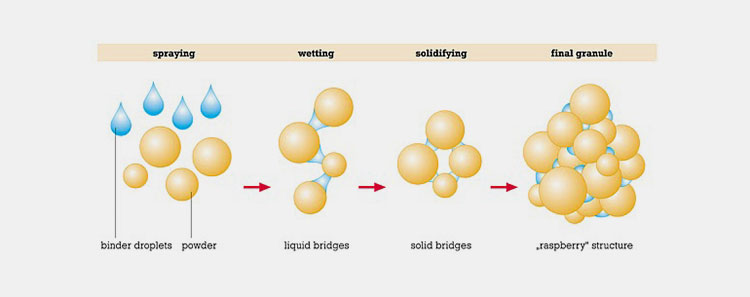
The process of granule merge
Strong materials resist breaking. They stay whole even at very high mixing speeds. I use highly filled binders. I build stronger granules. I use thick binders. I reduce empty spaces inside the granules.
These actions build tough granules. These granules survive the intense mixing forces. You must balance all these rules. You prevent massive granule destruction.
4.How Does Fluid Bed Drying Impact Granule Breakage?
Drying processes often create too much dust. This dust blocks your tablet press machines. I explain a vital step. You can stop granule breaking during the final drying phase.
Granule breaking happens in a fluid bed dryer. Moisture levels drop. Particles become brittle. High air speeds increase hit impacts. These impacts shatter the dry granules into fine dust. You must control the air flow and drying time. You protect your granules.
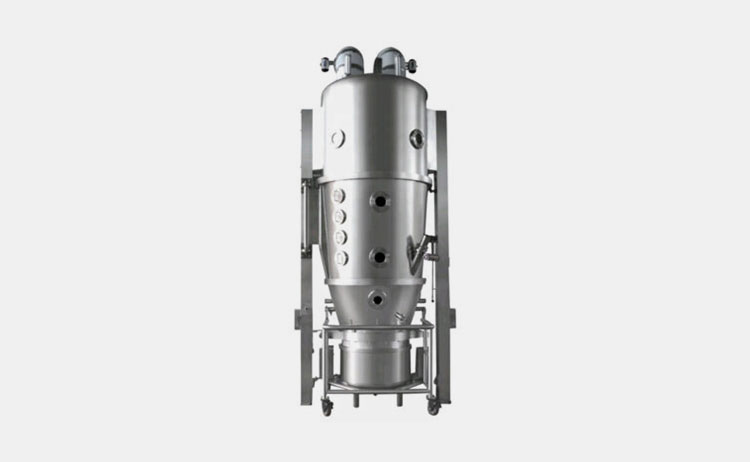
Fluid bed drying breakage
The stabilization of final solid dosages extends beyond the high-shear mixing phase, as subsequent fluid bed drying cycles subject fragile granule structures to intensive pneumatic impact degradation.
As internal moisture content drops toward critical limits near the end of the thermal drying cycle, the granules transition into a highly brittle state, wherein excessive fluidization air velocities generate severe particle-to-wall collisions that shatter dry matrices into fine micro-dust fractions.
Mitigating this material loss requires optimizing initial binder bonding parameters within the granulator bowl to yield tough granular spheres capable of sustaining continuous pneumatic transport paths without downstream breakage.
Granules become weaker. They lose water. Fine powders usually appear near the very end of the drying cycle. The granules become totally dry and brittle.
I control the air speed strictly. A very high air speed dries the batch quickly. It also slams the particles together with great force. Granules break. The hitting force becomes stronger than their physical shape.
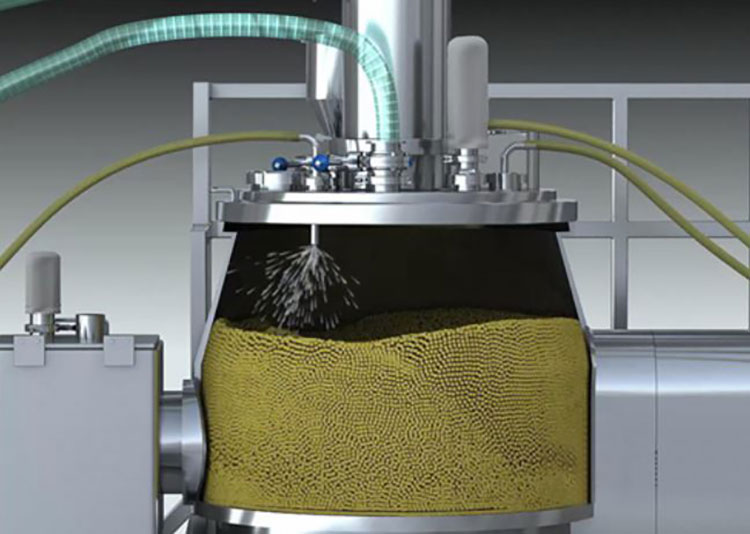
Wet mixing phase in granulator
I prevent this problem. I build strong granules during the first wet mixing phase. I use enough binder liquid. These good granules resist breaking much better in the dryer. I always balance the drying air speed.
I balance the total drying time. I look at the particle size. I look at the physical traits. I combine all these rules. I design a perfect fluid bed drying process. This careful planning stops dust creation. It protects your final product. It ensures smooth running in your tablet press machines.
Conclusion
You must understand structural changes in high-shear granulators. This knowledge ensures perfect tablet production. You control wetting, growth, and breaking. You manufacture high-quality pharmaceutical solid dosage forms consistently. Facing inconsistent granule density or unpredictable breakage in your drying stage? Don't leave your formulation to chance. Click here to consult AIPAK’s granulation experts for a Free Process Simulation and a customized High-Shear Mixer Audit today!
High-Shear Mixer Granulator & Wet Granulation FAQ
References
1.FDA Guidance for Industry: Regulatory Scaling of Oral Solid Dosage Forms via High-Shear Wet Granulation Processes —— U.S. Food and Drug Administration (FDA)
2.ISPE Baseline Pharmaceutical Engineering Guide: Volume 2 - Oral Solid Dosage Production Lines —— International Society for Pharmaceutical Engineering (ISPE)
3.The Physics of Nucleation and Droplet Immersion Dynamics Inside High-Shear Mixer Bowls —— Journal of Pharmaceutical Sciences
4.Micro-Structural Fracture and Consolidation Kinetics of Fragile Spheres Undergoing Fluid Bed Drying Operations —— Advanced Powder Technology Compendium
Don't Forget To Share Article!

Mason
Senior Pharmaceutical Automation Engineer & Fluidic Systems Specialist at AIPAK
Mason brings over a decade of hands-on technical experience in engineering high-containment fluid delivery loops, industrial water purification infrastructure (WFI), and cGMP-compliant sterile packaging lines for international markets. Specializing in the mechanical design of multi-station washing-filling-sealing production matrices, automated high-voltage leak detection (HVLD), and ATEX-certified component isolation, his validation workflows ensure that volatile and light-sensitive chemical formulations achieve complete regulatory harmony across complex ASEAN and European biopharmaceutics logistics sectors.
Granulator Machine Related Products
Granulator Machine Related Posts
















Granulator Machine Related Videos
CONTACT US
Tell us your raw material and project budget to get quotations within 24 hours.
WhatsApp Us: +86 181 7101 8586

Want the best price & newest pharmaceutical machinery buying guide,tips and trends sent straightly to your box? Sign up for AIPAK’s monthly newsletter, we’re free for your consultation and Offer you the most suitable solutions!
The Buyer's Guide
- Capsule Filling Buyer's Guide
- Blister Packaging Buyer's Guide
- Tablet Counting Buyer's Guide
- Tube Filling Buyer's Guide
- Cartoning Buyer's Guide
- Gummy Making Buyer's Guide
- CO2 Extraction Buyer's Guide
- Empty Capsules Buyer's Guide
- Suppository Filling Buyer's Guide
- Tablet Coating Buyer's Guide
- Tablet Press Buyer's Guide
- Softgel Encapsulation Buyer's Guide
Most Popular
- 7 Importance Of Pharmaceutical Packaging In Different Applications You Must Know
- 6 Advantages You Must Know About Tablet Counting Machine
- 8 Advantages of Blister Packaging You Must Know
- 6 Critical Applications of Automatic Capsule Filling Machine
- 6 Stations You must Know to Improve the Filling Quality of Automatic Capsule Filling Machin