
Optimizing Granule Flowability in Solid Dosage Processing: Advanced Engineering Protocols to Suppress Tablet Weight Variation
Are inconsistent tablet weights ruining your production batches? Poor granule flow causes costly downtime and product rejection, but fixing it is easier than you think.
To improve granule flowability and minimize weight variation, you should add glidants like silica gel, control particle size distribution through sieving, optimize particle shape to be more spherical, and maintain specific moisture levels. These steps ensure smooth processing in tablet presses and capsule fillers.
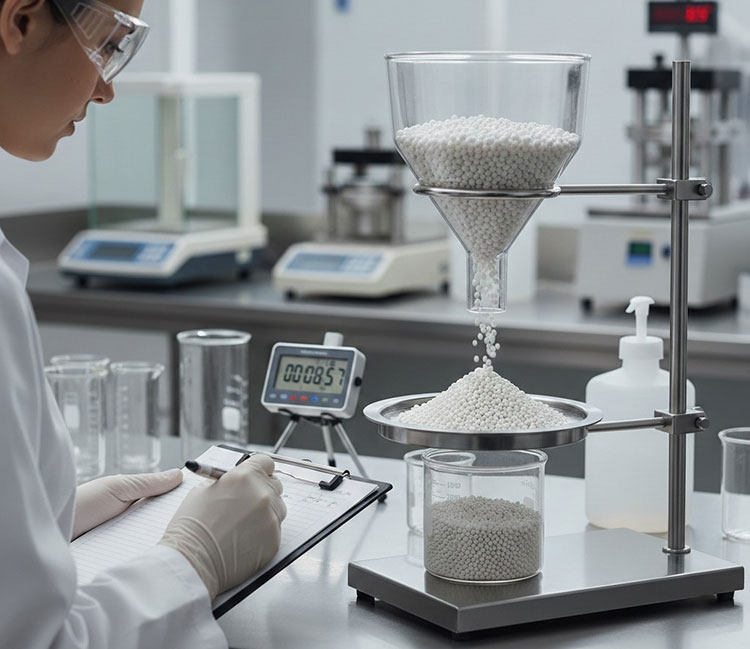
Granule flowability testing
Many manufacturers ignore these basics and suffer later. Read on to master these techniques before your next batch fails.
1.Which Glidants Can Instantly Boost Granule Flow?
Sticky granules clog hoppers and stop machines. Friction is the enemy here. You need a lubricant to keep things moving smoothly.
The most effective method is adding glidants like micronized silica gel or talc. These materials coat the particles to reduce friction and improve surface smoothness.
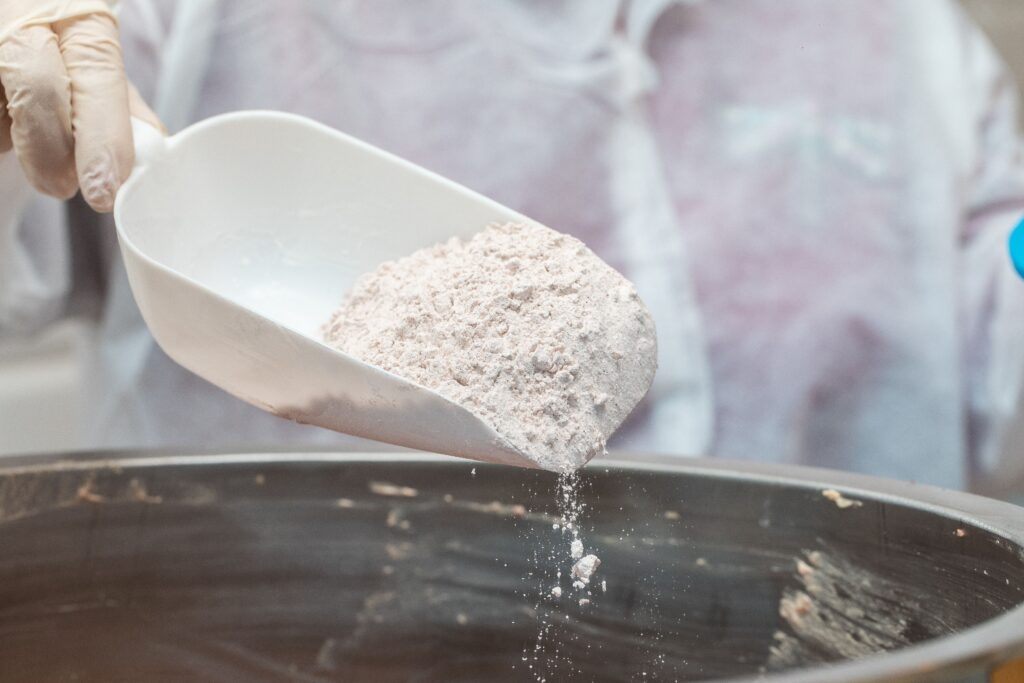
Mixing glidants with powder
The Science and Application of Glidants
Mitigating interparticulate cohesion within sticky or poorly flowing formulations requires a systematic evaluation of specialized glidant distribution. Glidants operate by locating along the micro-irregularities of the primary host particle surfaces. This mechanical structural modification actively minimizes the total true area of contact, significantly lowering both interparticulate friction and terminal drag friction against the internal stainless steel walls of the feed hopper or force feeder channels.
Colloidal Silicon Dioxide (micronized silica gel) serves as a primary, chemically inert glidant vector, ensuring zero chemical reactivity when interfaced with sensitive active pharmaceutical ingredients (APIs).
Optimizing granular flow typically requires exceptionally low concentration thresholds, with standard operating levels calibrated strictly between 0.1% and 0.5% by total batch weight. The exceptional surface area and sub-micron particle distribution profile facilitate high spatial dispersion across the host particles, effectively interrupting capillary and electrostatic cohesion mechanisms.
Purified talc utilizes a crystalline, layered plate-like structure that facilitates low-shear sliding actions between constituent strata to decrease interfacial resistance. Tailoring talc integration up to a 5% maximum mass threshold demands rigorous evaluation to prevent adverse dissolution deceleration.
Achieving uniform particle distribution necessitates processing within high-shear mixer granulators or planetary V-blenders; insufficient blending uniformity creates localized concentration gradients that preserve erratic flow profiles.
2.How Does Particle Size Distribution Affect Flow Consistency?
Uneven granules lead to segregation and weight variance. If your mix separates, your quality control fails immediately.
A narrow particle size distribution prevents segregation. Remove fines that cause static and large chunks that cause bridging. Uniform sizes ensure consistent die filling.
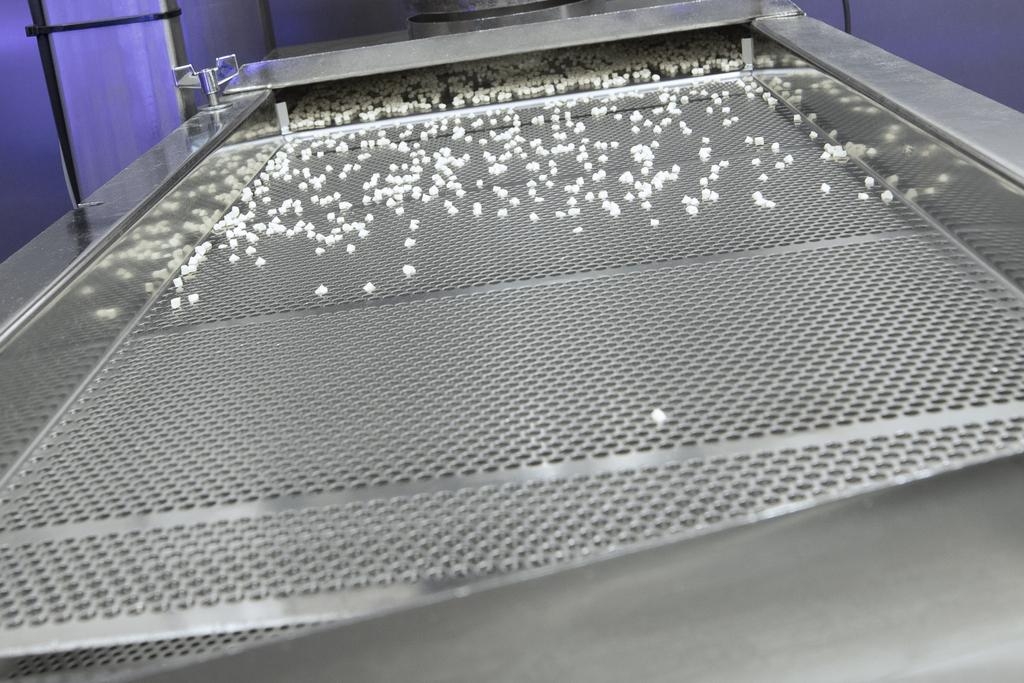
Sieving granules
Controlling Size for Better Flow
Sustaining a narrow particle size distribution (PSD) loop represents a primary engineering parameter to eliminate material segregation. Incorporating high ratios of sub-mesh fines alongside coarse granules provokes severe mass fluidic instability. High surface energy profiles dominant within excessive fine segments accelerate static accumulation and agglomerate clumping, inducing critical volume variances inside the die cavity during high-speed turret rotations.
On the other hand, if particles are too big, they leave large gaps. They can lock together in the hopper, creating a "bridge" or arch that stops flow completely.
To fix this, we use sieving and granulation control. You need to find the "sweet spot" for your specific product. We use oscillating granulators or sizing mills to achieve this. You pass the material through a screen with a specific mesh size. This removes the chunks that are too big and the dust that is too small. The goal is a tight distribution curve.
Furthermore, you must look at your granulation process itself. If you use a wet granulation method, the amount of binder you add is critical. The speed of your chopper and impeller in a high-shear mixer also changes the outcome.
If you mix too fast or too long, you might make rock-hard granules. If you mix too slow, you get fragile granules that turn back into dust. At AIPAK, we help clients set these parameters on our machines. We also use grading techniques. This separates particles by size and then remixes them in the correct ratios. This ensures that the small particles fill the gaps between large ones evenly, rather than separating out during vibration.
3.Why Is Particle Shape Critical for Smooth Processing?
Rough, irregular edges catch on each other like Velcro. This friction slows down production speed significantly.
Spherical particles flow faster than irregular ones because they have less contact surface area and friction. Rounder shapes roll easily into dies.
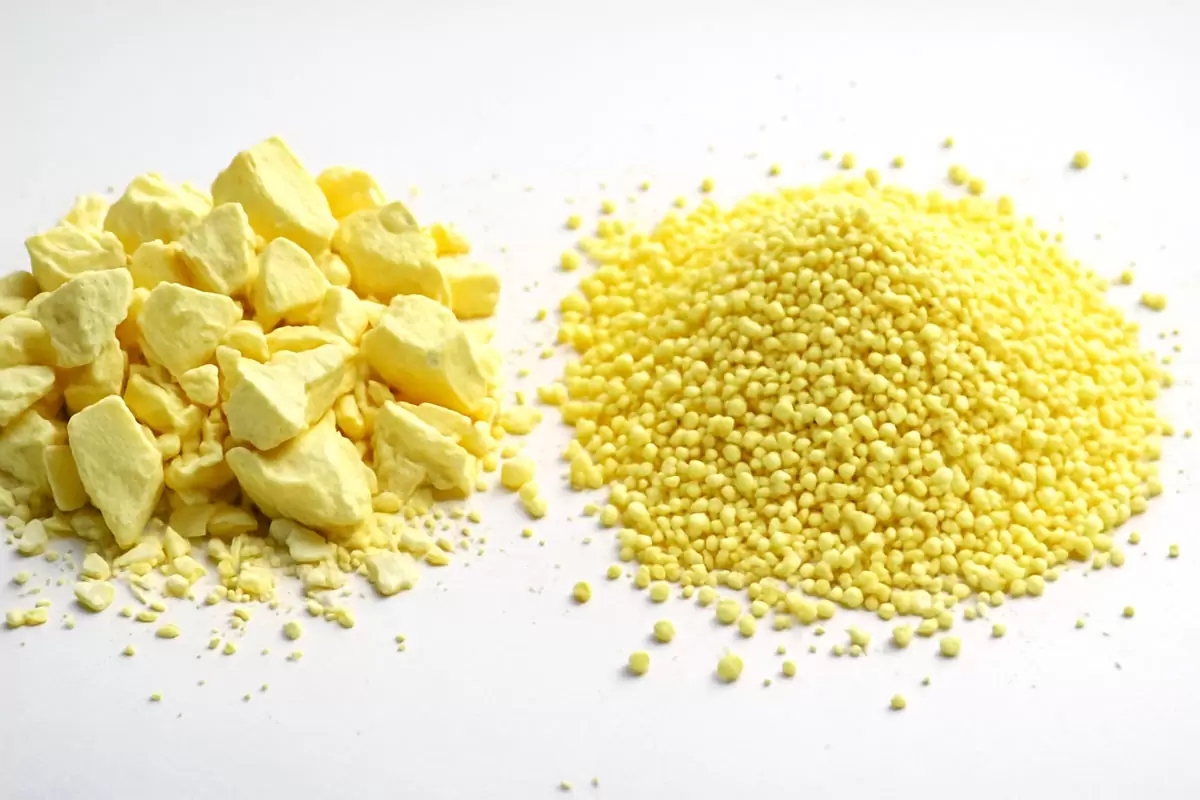
Spherical granules vs irregular granules comparison
Optimizing Shape for Maximum Efficiency
Particulate morphology heavily governs the kinetic velocity profile of the loose powder mass. Spherical geometric configurations minimize the specific surface-area-to-volume ratio, significantly compressing the potential mechanical interlocking vectors common to non-spherical irregular forms.
This surface energy minimization suppresses mechanical drag, optimizing gravity-fed displacement paths during packaging and compression.This means there is less contact area between particles, which results in less friction.
Acicular (needle-like) or tabular (flake-like) crystalline structures resist fluidic transport due to high directional surface contact and spatial interlocking tendencies. Calibrating atomization drying parameters prevents premature skin formation and thermal shriveling during automated spray drying.
For high-density processing, linking an extrusion track directly to an automated spheronizer rounds off sharp particle perimeters through controlled centrifugal mechanical impact against a structured friction plate.
4.Is Improper Moisture Content Ruining Your Material Flow?
Too wet means sticky clumps; too dry means static electricity flying everywhere. Both extremes stop your production line cold.
Optimal moisture creates a lubricating liquid film. Control this by drying wet granules in fluid beds or humidifying overly dry powder to prevent static buildup.
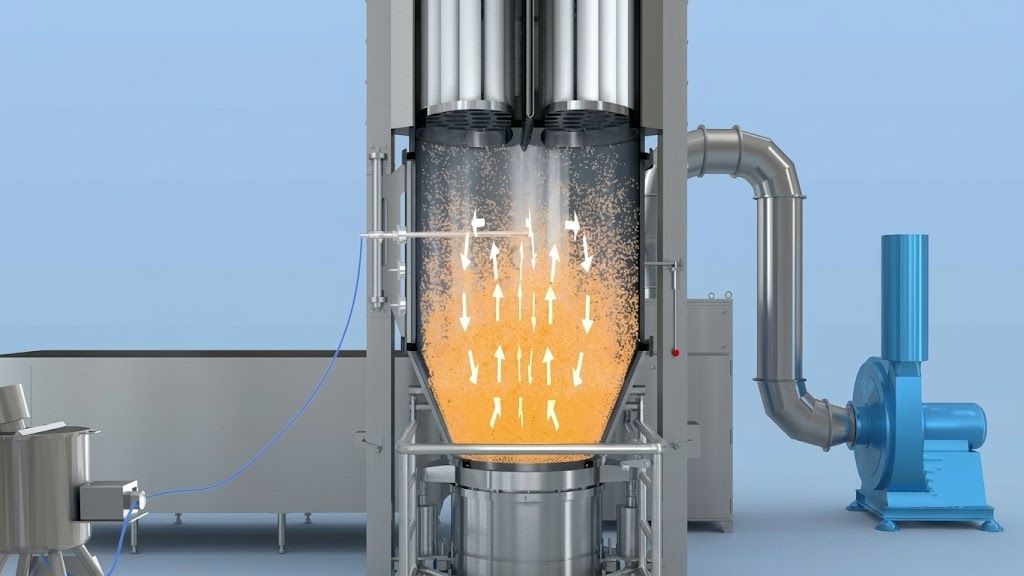
Fluid bed dryer removing moisture from granules
Balancing Moisture for Stability
Residual moisture control acts as a critical thermodynamic modifier, requiring strict process monitoring to prevent manufacturing non-conformance. Optimal micro-moisture adsorption forms an internal boundary lubrication film that facilitates structural particle sliding.
However, exceeding baseline moisture thresholds provokes capillary liquid bridging and massive material accumulation within hoppers, whereas over-drying triggers extensive electrostatic charging across organic substrates. Sustaining this precise moisture ratio is mandatory for continuous, high-velocity tablet press machine performance.
Conclusion
To fix weight variation, you must optimize glidants, particle size, shape, and moisture. These four pillars ensure smooth production. Contact AIPAK today for the equipment to master these variables.
Frequently Asked Questions - Granule Flowability Engineering
References
1.United States Pharmacopeia (USP) Chapter 1174: Powder Flow Characterization and Shear Cell Metrics
2.FDA Guidance for Industry: Quality Metrics for Solid Dosage Manufacturing and Particle Sizing Compliance
3.Journal of Pharmaceutical Sciences: Structural Evaluation of Glidant Mechanics and Interfacial Friction in Automated Dosing Hoppers
4.International Journal of Pharmaceutics: Characterizing Particle Morphology, Spheronization Dynamics, and Mass Transfer Velocity in Granulation Machine Layouts
Don't Forget To Share Article!

Avril
Senior Pharmaceutical Equipment Specialist & Project Consultant at AIPAK
Avril brings deep, multi-year expertise to the pharmaceutical machinery sector, specializing in solid dosage production lines and complex cleanroom layout engineering. As a veteran project consultant at AIPAK, she is known for her hands-on capability to match technical machine parameters with strict global compliance standards. Passionate about driving real business results, Avril works closely with international pharma clients to solve structural bottlenecks—such as facility footprint constraints and material flow optimization—ensuring they receive tailored, highly efficient one-stop turnkey solutions for their production goals.
Bin Mixer Related Posts



















Bin Mixer Related Products
Bin Mixer Related Videos
CONTACT US
Tell us your raw material and project budget to get quotations within 24 hours.
WhatsApp Us: +86 181 7101 8586

Want the best price & newest pharmaceutical machinery buying guide,tips and trends sent straightly to your box?Sign up for AIPAK’s monthly newsletter,we’re free for your consultation and Offer you the most suitable solutions!
The Buyer's Guide
- Capsule Filling Buyer's Guide
- Blister Packaging Buyer's Guide
- Tablet Counting Buyer's Guide
- Tube Filling Buyer's Guide
- Cartoning Buyer's Guide
- Gummy Making Buyer's Guide
- CO2 Extraction Buyer's Guide
- Empty Capsules Buyer's Guide
- Suppository Filling Buyer's Guide
- Tablet Coating Buyer's Guide
- Tablet Press Buyer's Guide
- Softgel Encapsulation Buyer's Guide
Most Popular
- 7 Importance Of Pharmaceutical Packaging In Different Applications You Must Know
- 6 Advantages You Must Know About Tablet Counting Machine
- 8 Advantages of Blister Packaging You Must Know
- 6 Critical Applications of Automatic Capsule Filling Machine
- 6 Stations You must Know to Improve the Filling Quality of Automatic Capsule Filling Machine