
Tablet Counting Machine Line Validation: Why Pre-Shipment Sample Testing Governs Operational Success
Buying machinery from overseas creates anxiety for many business owners. You worry about whether the equipment will actually work with your specific products once it arrives at your facility.
Sample testing is the only way to guarantee your production line works immediately upon arrival. By sending your specific bottles, caps, and labels to the factory before shipping, we configure sensors and guide rails to your exact specifications. This process prevents costly downtime and technical failures during the installation phase.
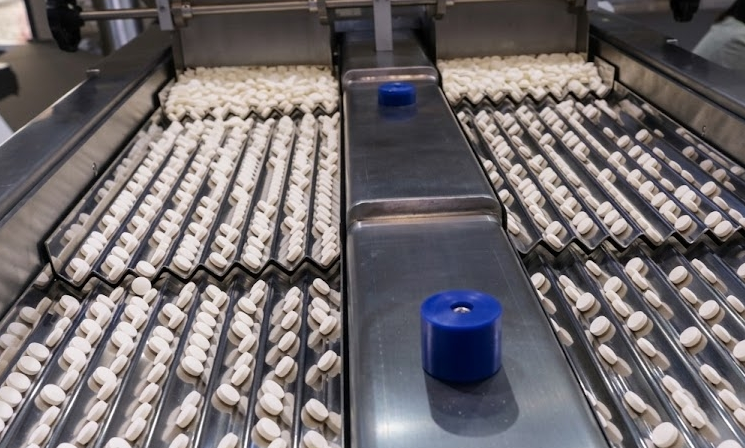
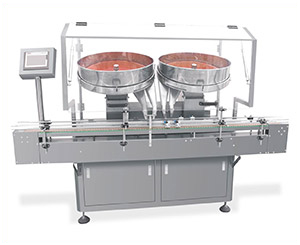
Testing tablet counting machine with client samples
Executing empirical pre-shipment performance qualification (PQ) protocols represents a primary milestone to eliminate commissioning latency and safeguard capital expenditure parameters. Standard secondary solid-dosage packaging lines frequently encounter validation roadblocks upon facility delivery due to uncalibrated material fluidics and optical sensor detection limits.
This technical evaluation documents the precise factory acceptance testing (FAT) executed for an international supplement manufacturer, demonstrating how physical substrate pre-testing pre-empts line failure.
1.How did we configure the right medium-speed line for a Canadian client?
In early 2025, we received an inquiry from a new client in Canada. He needed a reliable solution for counting and bottling his supplement products without breaking his budget.
We analyzed his production speed requirements and bottle sizes. We recommended a complete 16-channel line, including the APC160 Unscrambler, APC16 Counter, and APC902 Capper. This setup offers the best balance between high output and cost-efficiency for growing manufacturers.
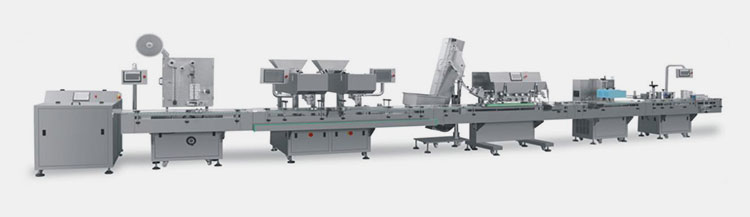
AIPAK complete automatic tablet counting line
Configuring a balanced, medium-speed bottling infrastructure necessitates aligning dynamic container indexing with optimized filling and capping dwell times. For growing dietary supplement brands, integrating a synchronized 16-channel electronic counting matrix delivers the precise throughput capacity required to scale operations without inflating infrastructure overheads.
To ensure zero-defect automation, a standardized linear packaging track was engineered, bridging bottle orientation, material lifting, counting, and capping into a singular, automated control system.
We designed the line with a logical flow. First, the APC160 Bottle Unscrambler organizes the bottles. Then, the bottles move to the APC16 Channel Counting Line, which is the heart of the system. We added an L1 Material Lifter to automatically feed his capsules. After counting, the bottles go to the APC120 Cotton Inserter, followed by the APC902 Capping Machine.
To finish the product, we included an M1 Induction Sealer and the APC T1 Labeling Machine. Finally, the finished bottles collect on an 850mm Turntable. This configuration covers every step of the packaging process. It ensures that the client does not need to buy separate machines from different vendors. Everything talks to each other perfectly.
2.Can a larger bottle hopper really save you labor time?
Standard machines are great, but they do not fit every workflow. During our discussion, the client pointed out a specific problem with the standard bottle feeding system.
The client felt the standard APC160 unscrambler hopper was too small, holding only 1000 bottles. He worried his operators would waste time refilling it. We agreed to build a custom hopper that holds 1500 bottles at no extra cost to solve this pain point.
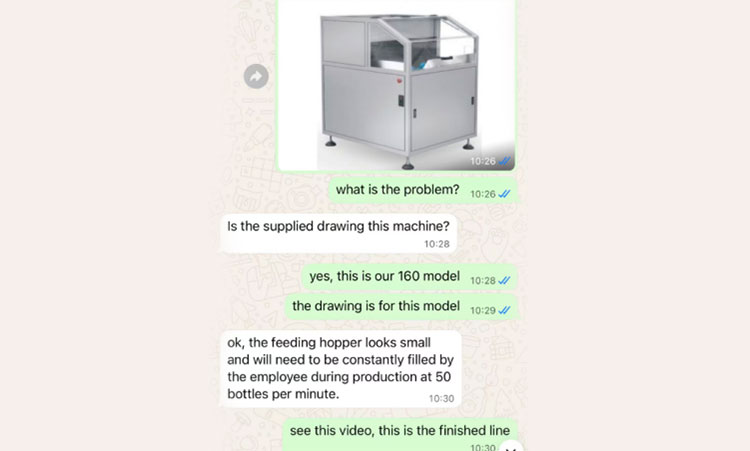
Customized large hopper for bottle unscrambler request from customer
Customizing primary material hopper capacities is critical to optimize operator allocation and maximize overall equipment effectiveness (OEE). While a standard automated bottle unscrambler storage bin accommodates approximately 1,000 containers, operating at continuous line velocities of 50 bottles per minute forces excessive human intervention intervals to restock the line.
To resolve this structural constraint and enhance line autonomy, the structural framework was customized with a heavy-gauge storage bin holding 1,500 containers, expanding physical capacity by 50 percent to streamline plant-floor labor workflows.
This new design holds 1500 bottles. This is a 50% increase in capacity. It allows the machine to run longer without human attention.
The client was very happy with this proposal. We did not charge him extra for this. We view this as part of our service to ensure the machine fits his daily reality, not just the catalog description.
3.How do we handle the difficulty of detecting semi-transparent labels?
Applying semi-transparent or clear lamination labels presents severe indexing detection challenges for standard primary packaging machinery.
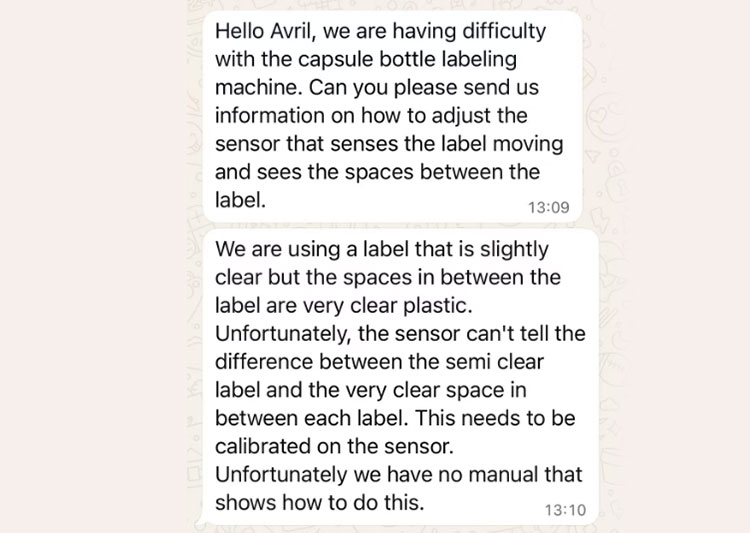
Legacy photoelectric sensors utilize basic light-transmission contrast metrics, which fail to distinguish clear film substrates from the empty spaces on the backing release liner, leading to continuous web tracking failures, skipped containers, and severe adhesive alignment jams.
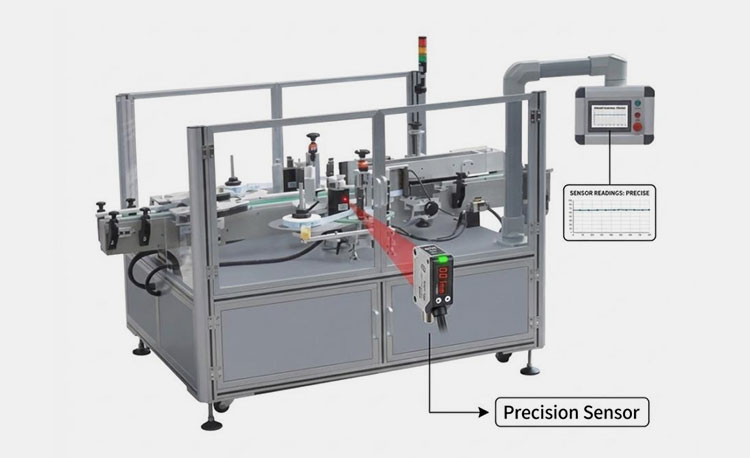
Precision sensor on labeling machine
Resolving clear-on-clear label tracking anomalies necessitates replacing optical eyes with advanced capacitive or ultrasonic sensing modules, sourcing premium precision sensors from Lion Precision (USA). These instrumentation upgrades evaluate dynamic web thickness differentials at high frequency rather than relying on light refraction.
This technological integration secures micro-second cutoff registration, capturing the exact edge of invisible transparent films to ensure continuous scannability across high-output labeling sequences.
4.Why did we insist on receiving physical samples before finalizing the order?
Theory is different from reality. We never rely on drawings alone. We asked the client to send his actual products to our factory in China before we shipped anything.
We required the client to mail us his bottles, caps, capsules, and the tricky semi-transparent labels. We used these raw materials to test the machine physically. This allowed us to calibrate the Lion sensor and the counting channels to his exact product dimensions.
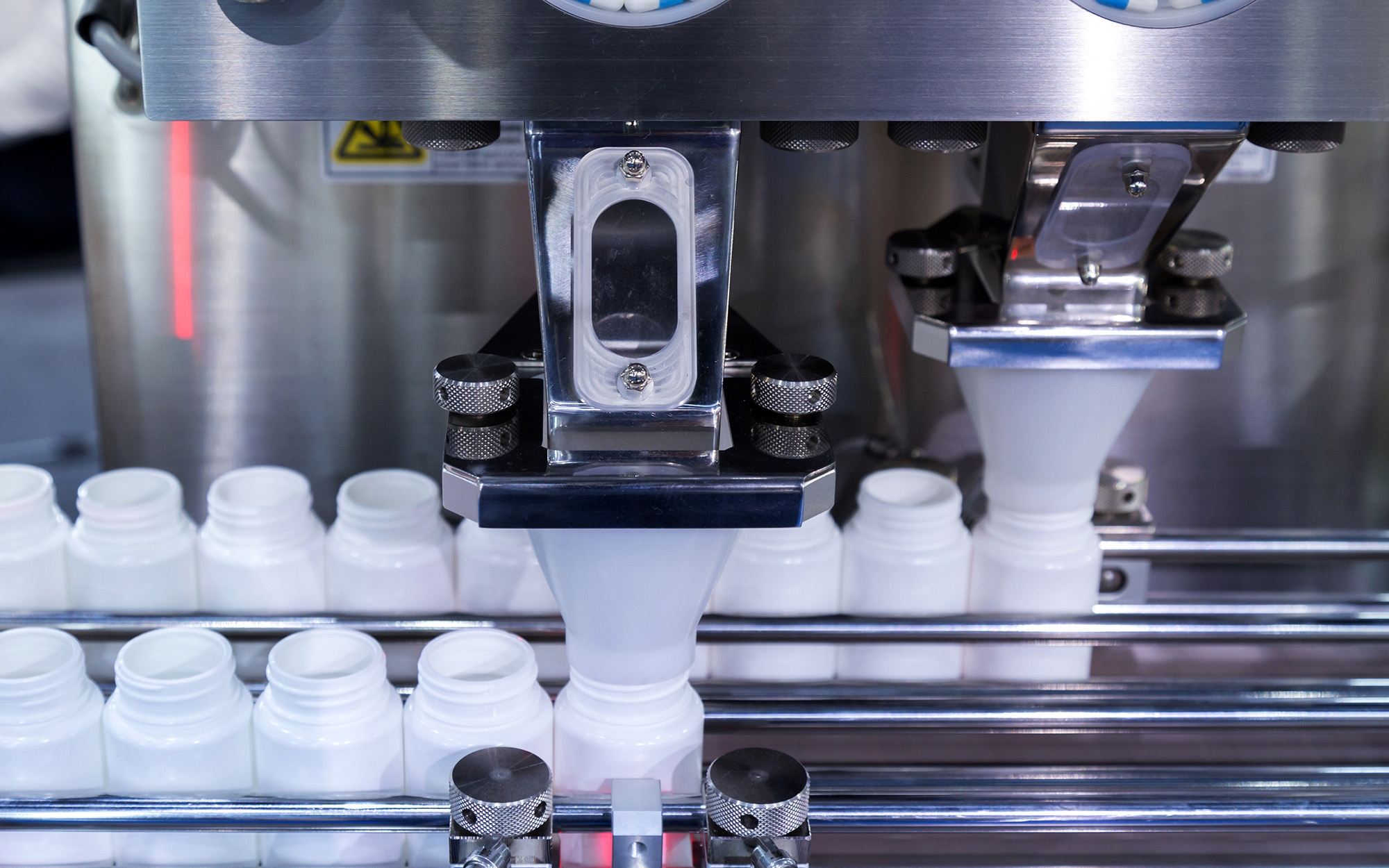
Adjusting machine with client bottles
Physical component pre-validation completely bypasses the limitations of basic 2D drawings or theoretical documentation. Prior to container dispatch, raw packaging substrates and physical active capsule lots must undergo physical testing inside the factory environment.
Technicians deposit the actual product mass across the 16-channel electronic vibration tracks to analyze particle drag coefficients and sticky agglomeration risks. Simultaneously, the labeling feed blocks calibrate the high-end sensor sensitivity to capture the exact geometric boundary of clear lamination layers, generating verified PLC process parameters for the finalized line recipe.
We filmed this process. We sent the video to the client. Only after the machine ran perfectly with ”his”items did we approve the shipment. This eliminates the risk of the machine arriving in Canada and not working.
Conclusion
The client received the machine, and it worked perfectly immediately. His business is now expanding, and he plans to order more equipment from us because we solved his problems before they happened.
Frequently Asked Questions - Pre-Shipment Sample Testing
Project Compliance and Equipment Engineering Standards
During the physical substrate micrometer mapping, multi-channel electronic tracking calibration, and live remote factory acceptance testing (FAT) loops of this automated 16-channel supplement bottling line, all systems were verified to satisfy the following international regulatory standards:
Don't Forget To Share Article!
Avril
Senior Pharmaceutical Equipment Specialist & Project Consultant at AIPAK
Avril brings deep, multi-year expertise to the pharmaceutical machinery sector, specializing in solid dosage production lines and complex cleanroom layout engineering. As a veteran project consultant at AIPAK, she is known for her hands-on capability to match technical machine parameters with strict global compliance standards. Passionate about driving real business results, Avril works closely with international pharma clients to solve structural bottlenecks—such as facility footprint constraints and material flow optimization—ensuring they receive tailored, highly efficient one-stop turnkey solutions for their production goals.
Tablet Counting Machine Related Posts
















Tablet Counting Machine Related Products
Tablet Counting Machine Related Videos
CONTACT US
Tell us your raw material and project budget to get quotations within 24 hours.
WhatsApp Us: +86 181 7101 8586

Want the best price & newest pharmaceutical machinery buying guide,tips and trends sent straightly to your box?Sign up for Aipak’s monthly newsletter,we’re free for your consultation and Offer you the most suitable solutions!
The Buyer's Guide
- Capsule Filling Buyer's Guide
- Blister Packaging Buyer's Guide
- Tablet Counting Buyer's Guide
- Tube Filling Buyer's Guide
- Cartoning Buyer's Guide
- Gummy Making Buyer's Guide
- CO2 Extraction Buyer's Guide
- Empty Capsules Buyer's Guide
- Suppository Filling Buyer's Guide
- Tablet Coating Buyer's Guide
- Tablet Press Buyer's Guide
- Softgel Encapsulation Buyer's Guide
Most Popular
- 7 Importance Of Pharmaceutical Packaging In Different Applications You Must Know
- 6 Advantages You Must Know About Tablet Counting Machine
- 8 Advantages of Blister Packaging You Must Know
- 6 Critical Applications of Automatic Capsule Filling Machine
- 6 Stations You must Know to Improve the Filling Quality of Automatic Capsule Filling Machine