
Tablet Counting Machine Line Customization: Aligning Turnkey OSD Packaging Systems with Rigid URS and cGMP Requirements
A customized tablet counting line is a complete production system designed to meet strict User Requirement Specifications (URS). It handles tablets, capsules, and softgels across various bottle sizes. For new manufacturers, ensuring GMP compliance and providing detailed technical documentation like IQ, OQ, and PQ is essential for regulatory success.
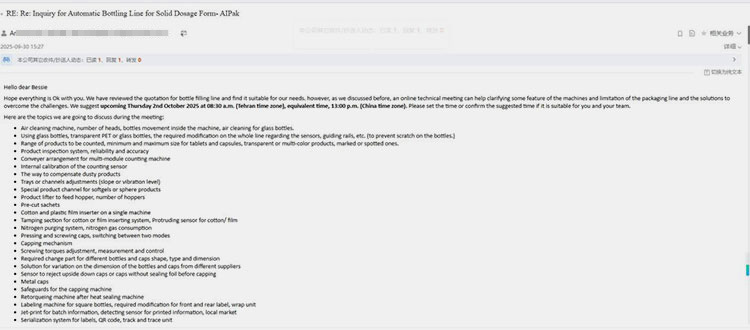
Transitioning an international pharmaceutical and health supplement distributor toward autonomous primary packaging infrastructure requires aligning custom equipment configurations with rigid User Requirement Specifications (URS). 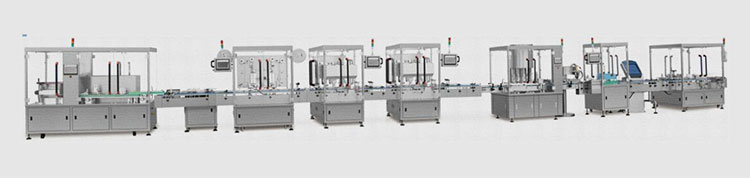
AIPAK Tablet counting line
Establishing a turnkey solid-dosage packaging line for compressed tablets, hard gelatin/HPMC capsules, and variable-geometry softgels demands precise integration across multi-station mechanical blocks. This engineering evaluation outlines the systemic methodology executed to transition an OSD enterprise into a cGMP-compliant manufacturing facility.
1.How Do We Analyze the Initial URS for a Complete Counting Line?
The client sent us a detailed request. They wanted to package tablets, hard capsules, and softgels. They also had specific bottle sizes ranging from 45ml to 200ml.
| Bottle volume | Bottle diameter | Height | Opening diameter | Weight without cap |
| 45 ml | 39 mm | 60 mm | 26 mm | 9.2 g |
| 75 ml | 43 mm | 74 mm | 26 mm | 11.2 g |
| 100 ml | 47 mm | 82 mm | 31 mm | 16.2 g |
| 150 ml | 56 mm | 92 mm | 31 mm | 18.4 g |
| 180 ml | 56 mm | 103 mm | 31 mm | 20.5 g |
| 200 ml | 58 mm | 103 mm | 31 mm | 22.9 g |
| Shape | Dimension (mm) | Thickness (mm) | Weight (mg) |
| Oval | 16*7.5 | 5.0-6.5 | 590-750 |
| 17.5*8.9 | 7.0-8.5 | 740-1200 | |
| 21.1*9.7 | 7.1-7.2 | 1100-1200 | |
| 19*12.2 | 7.1-8.5 | 1200-1400 | |
| 13*8 | 4.6-5.2 | 400 | |
| Round | Ø9 | 2.5-5.0 | 200-400 |
| Ø5 | 3.5 | 70-90 | |
| Ø4.5 | 2.5 | 45-50 | |
| Arc Triangle | 8*8 | 3.2 | 180 |
| Heart Shape | Ø8 | 3.0-4.0 | 200 |
| Modified Capsule | 21.1*9.7 | 7.1-7.2 | 1100-1200 |
| Table 3-Shape and size of softgels | ||||||||||||
| Model | 1 | 2 | 3 | 6 | 7.5 | 10 | 12 | 13 | 16 | 20 | 22 | 24 |
| Round | √ | √ | ||||||||||
| Oval | √ | √ | √ | √ | ||||||||
| Oblong | √ | √ | √ | √ | √ | |||||||
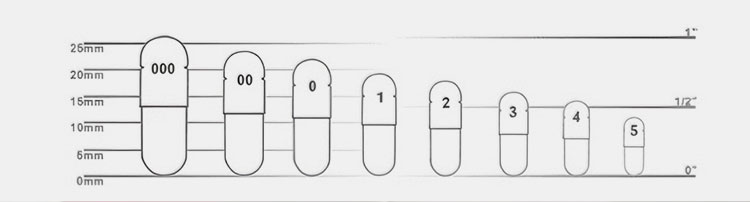
Various bottle sizes request from customer
We analyze the User Requirement Specification (URS) to identify every machine needed for the line. This includes the bottle unscrambler, counter, filler, capper, and labeler. We check the speed requirements and container dimensions to ensure the equipment can handle the full range of the client's products efficiently.
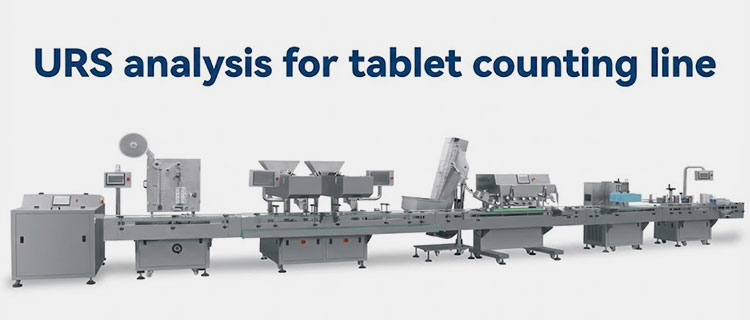
Formulating an automated primary packaging layout necessitates analyzing container dimensional tolerances and product rheology variations at the onset of the design phase.
Divergent solid-dosage shapes—including biconvex round tablets, non-symmetrical heart shapes, and fragile lipophilic softgels—exhibit distinct friction coefficients and vibrational gating profiles across the feeding channels.
To establish an uninterrupted material flow, the custom URS parameters were systematically translated into a synchronized multi-machine equipment matrix.
The complete line included the following components:
| Bottle Unscrambler | To feed the bottles automatically |
| Air Wash | To clean dust from inside the bottles |
| Desiccant Inserter | To keep the product dry |
| Tablet/Capsule Counter | The core machine for precise dosing |
| Cotton Inserter | To protect the tablets during shipping |
| Capping Machine | To seal the bottles tight |
| Induction Sealer | For tamper-evident foil sealing |
| Labeling Machine | To apply their brand visuals |
| Inkjet Coder | For batch numbers and expiry dates |
| Bottle Collector | To gather finished goods |
Synchronizing throughput velocity across separate processing modules—extending from initial container unscrambling to terminal batch collection—is critical to eliminate mechanical bottlenecks.
Operational risk mitigation requires cross-validating tool steel pocket arrays and continuous conveyor speeds against the physical container profiles documented in the URS, preventing cross-station jamming and maximizing long-term capacity stabilization.
2.Why Are Detailed Technical Parameters and GMP Compliance Crucial?
The client's internal technical team reviewed our initial offer. They sent back a new, complex table. They wanted to verify every single technical parameter before moving forward.
Detailed technical parameters ensure equipment longevity and safety. We confirm contact materials, PLC brands like Siemens, and pneumatic standards. We also guarantee GMP compliance by providing IQ, OQ, PQ, DQ documents and FAT reports for validation. This transparency builds trust with the engineering team.
The client sent a spreadsheet that was very detailed. They did not just ask "does it work?" They asked "how does it work?" They listed rows for the material of the parts that touch the medicine and the material of the main machine body. I confirmed that all contact parts are SS316L and the main body is SS304, which is the industry standard for hygiene.
To secure mechanical uptime and simplify international facility maintenance routines, the automated control system integrates premium, globally traceable electronics architecture, standardizing on Siemens PLCs and Schneider automation modules. Utilizing non-proprietary international control components ensures immediate component availability across global logistics channels.
Furthermore, full regulatory data compliance is enforced through the provision of a comprehensive validation documentation package encompassing Design Qualification (DQ), Installation Qualification (IQ), Operational Qualification (OQ), and Performance Qualification (PQ).
The table also covered:
| Requirement | Our Solution |
| Surface Treatment | Polished for easy cleaning and GMP compliance |
| Sensors | High-sensitivity sensors for accurate counting |
| Pneumatics | Reliable cylinders to ensure smooth mechanical motion |
| Noise Level | Kept below standard limits for worker safety |
3.How to Handle Variable Packaging Needs like Desiccants and Bottle Shapes?
During the process, the client changed some requirements. They needed different desiccant types and wanted to run square bottles on the same line as round bottles.
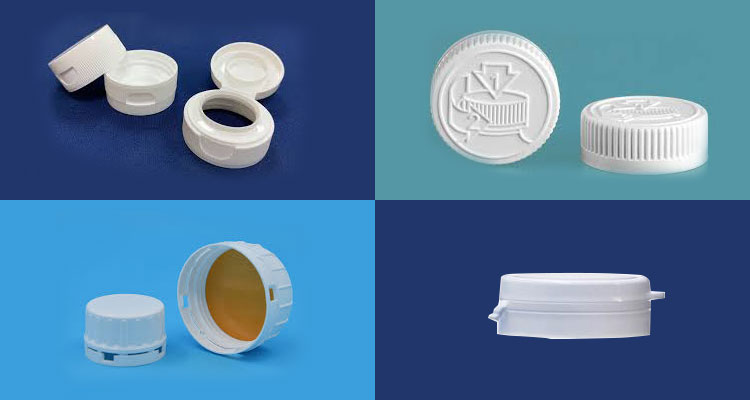
Different bottle types request from customer
Flexible lines must handle different formats. We adjusted the quote to include both sachet and canister desiccant inserters. We also customized the changeover parts to ensure the machine handles both round and square bottles without losing speed or stability. This adaptability is key for contract manufacturers.
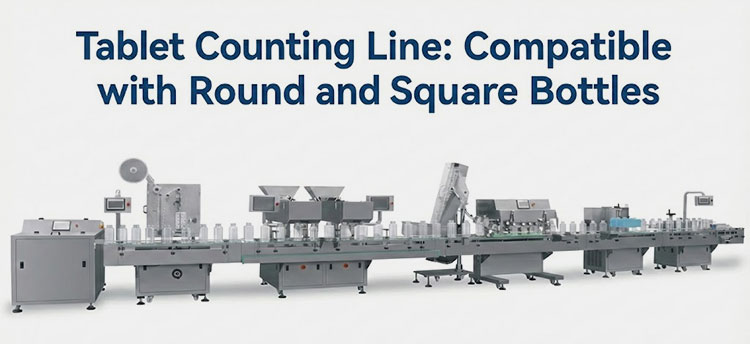
Round and square bottle compatibility
Process adaptability within contract or multi-product facilities demands integration parameters that accommodate variable secondary material substrates.
To address shifting moisture-stabilization protocols, the line architecture was engineered to pivot seamlessly between continuous strip sachet desiccants and rigid barrel-style canister desiccants. Integrating high-accuracy optical tracking sensors ensures precise cutting and target insertion tramping regardless of desiccant structural variations.
Sustaining structural container tracking across asymmetrical square geometries introduces mechanical challenges compared to standard self-centering round bottles. To accommodate dual container formats without degrading linear velocity metrics, custom format change parts were engineered into the transport channels.
This encompasses implementing adjustable dual-track guide rails to secure square container perimeters, custom-milled star wheel geometries to lock non-symmetrical profiles beneath the filling heads, and specialized secondary top-press conveyor belts along the labeling block to prevent air-bubble entrapment during label lamination.
This gave the client confidence that their investment was future-proof.
4.How Does Layout Design Help Clients with Factory Construction?
The client was still building their factory. They were worried about whether the long production line would fit into their planned cleanroom space.
Providing a linear layout drawing with precise dimensions helps new manufacturers plan their facility. We mark the length, width, and height of every machine. This allows the client to construct their cleanroom walls, HVAC systems, and power utilities around the actual equipment footprint, preventing costly construction errors.
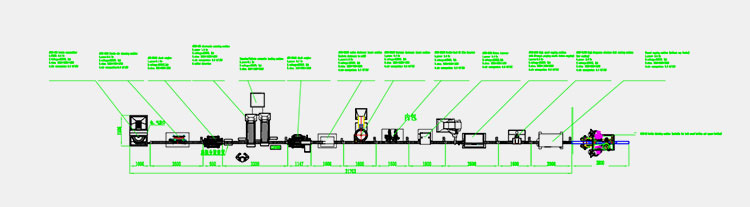
Factory layout design from customer
Coordinating primary machinery footprints with cleanroom architectural construction blueprints is vital to eliminate costly spatial modifications during cleanroom installation.
Delivering high-precision linear CAD layouts detailing exact mechanical heights, spatial clearances, and utility coordinates allows cleanroom contractors to align electrical, compressed air, and localized HVAC trunking nodes around the actual equipment footprint, ensuring full cGMP workflow optimization before hardware delivery.
Conclusion
We successfully designed a versatile tablet counting line that met strict URS, GMP standards, and accommodated square bottles, helping a distributor transition confidently into a professional manufacturer.
Frequently Asked Questions - Tablet Counting Line Integration
Project Compliance and Equipment Engineering Standards
During the initial 2D CAD blueprinting, infrared sensor tuning, and remote URS validation analysis phases of this automated high-precision tablet counting and packaging line, all system architectures were certified to fulfill the following international manufacturing regulations:
Don't Forget To Share Article!

Mason
Senior Pharmaceutical Automation Engineer & Fluidic Systems Specialist at AIPAK
Mason brings over a decade of hands-on technical experience in engineering high-containment fluid delivery loops, industrial water purification infrastructure (WFI), and cGMP-compliant sterile packaging lines for international markets. Specializing in the mechanical design of multi-station washing-filling-sealing production matrices, automated high-voltage leak detection (HVLD), and ATEX-certified component isolation, his validation workflows ensure that volatile and light-sensitive chemical formulations achieve complete regulatory harmony across complex ASEAN and European biopharmaceutics logistics sectors.
Tablet Counting Machine Related Posts












Tablet Counting Machine Related Products
Tablet Counting Machine Related Videos
CONTACT US
Tell us your raw material and project budget to get quotations within 24 hours.
WhatsApp Us: +86 181 7101 8586

Want the best price & newest pharmaceutical machinery buying guide,tips and trends sent straightly to your box?Sign up for Aipak’s monthly newsletter,we’re free for your consultation and Offer you the most suitable solutions!
The Buyer's Guide
- Capsule Filling Buyer's Guide
- Blister Packaging Buyer's Guide
- Tablet Counting Buyer's Guide
- Tube Filling Buyer's Guide
- Cartoning Buyer's Guide
- Gummy Making Buyer's Guide
- CO2 Extraction Buyer's Guide
- Empty Capsules Buyer's Guide
- Suppository Filling Buyer's Guide
- Tablet Coating Buyer's Guide
- Tablet Press Buyer's Guide
- Softgel Encapsulation Buyer's Guide
Most Popular
- 7 Importance Of Pharmaceutical Packaging In Different Applications You Must Know
- 6 Advantages You Must Know About Tablet Counting Machine
- 8 Advantages of Blister Packaging You Must Know
- 6 Critical Applications of Automatic Capsule Filling Machine
- 6 Stations You must Know to Improve the Filling Quality of Automatic Capsule Filling Machine