
Solving Sticking and Non-Uniformity: How Powder Flow Properties Impact Tablet Press Performance
Are you struggling with tablet sticking or poor content uniformity? These issues waste time and money. The root cause often lies in your powder flow properties.
Powder flow properties directly impact tablet press performance by controlling how uniformly materials fill the die cavities. Poor flow causes uneven tablet weights, sticking, and segregation. By optimizing particle size, density, and using the right granulation equipment, you ensure smooth, consistent, and high-quality tablet production.
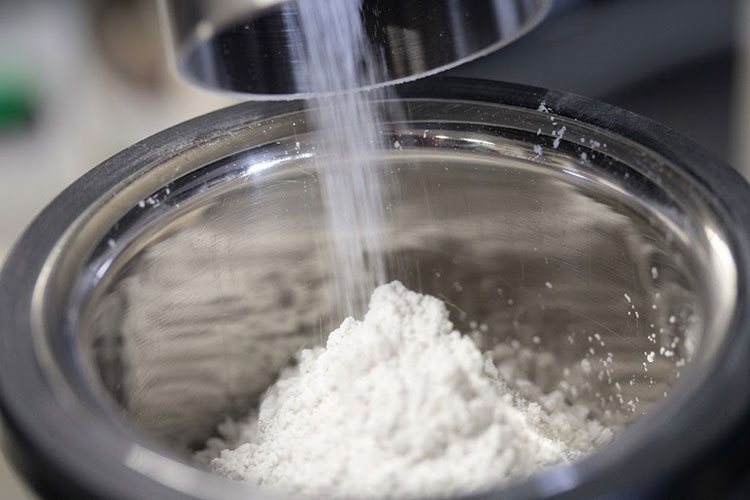
Powder flow properties in tablet press
If you ignore powder behavior, even the best tablet press will fail. Let me show you exactly how to control these variables and fix your production line once and for all.
1.How Can We Accurately Characterize Powder Flow Properties for Solid Dosage Manufacturing?
Do your powder batches behave differently every time? Unpredictable materials cause production stops. You must measure powder properties correctly before they enter your machines.
You can characterize powder flow using the angle of repose, Carr's index, and Hausner ratio. For the most reliable results in daily production, I highly recommend tracking bulk density and tapped density. These metrics directly predict how powders will behave inside mixers and tablet presses.
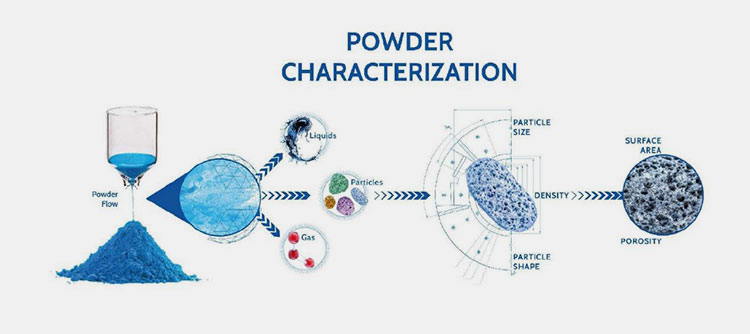
Characterize powder flow properties
Micro and Macro Powder Properties
Powder properties exist on two levels. Micro properties include the size, shape, and surface area of individual particles. Macro properties describe how the whole powder bulk behaves. This includes bulk density, porosity, and flowability. The micro properties always control the macro properties.
I once worked with a client who faced constant machine jams. They only tested the angle of repose. This test relies too much on human observation. We helped them switch to measuring bulk density and tapped density. These tests are simple to repeat. They give clear numbers.
Why Density Matters
When you know the exact density of your powder, you can set your machine parameters correctly. You will know exactly how much powder fits into a capsule or a tablet die.
| Testing Method | What It Measures | Best Use Case |
| Angle of Repose | How powder piles up | Quick visual check |
| Carr's Index | Compressibility | Predicting tablet strength |
| Bulk Density | Weight per volume | Setting machine fill depth |
| Shear Cell | Mechanical friction | Advanced flow analysis |
We always advise our clients to establish clear standards for bulk density. This simple step prevents major feeding problems later in the production line.
2.Why Do API and Excipient Particle Sizes Cause Content Uniformity Issues?
Are your active ingredients failing to blend properly? Uneven mixing leads to failed batch tests. The size of your raw materials is usually the culprit.
When API and excipients have very different particle sizes or densities, they separate during mixing and transfer. Controlling the particle size distribution of raw materials prevents segregation, ensures uniform blending, and guarantees that every tablet contains the exact right dose.
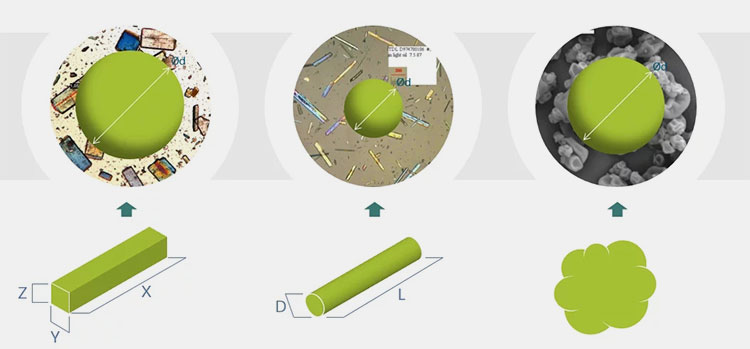
Api and excipient particle size
The Danger of Size Differences
Particle size is a very important property. It changes how a drug dissolves. It changes how the powder flows. Many drug makers grind their Active Pharmaceutical Ingredients (API) into very fine powders. They do this to help the drug dissolve faster in the body.
But fine powders cause big problems. I have seen clients grind their API too much. The fine powder clumped together. It formed hard balls. The drug did not dissolve properly during testing.
Matching Your Ingredients
You must match the particle size of your API with your excipients. Excipients are the fillers and binders in your formula. If the API is tiny and the excipient is large, they will separate. The heavy particles will sink. The light particles will float.
How to Control Particle Size
| Material Type | Common Problem | Production Solution |
| Fine API | Clumping and bad flow | Use precise milling equipment |
| Large Excipients | Separation from API | Match excipient grade to API size |
| Mixed Powders | Poor uniformity | Test particle size before blending |
You must test different batches of raw materials. You must set strict size limits for your suppliers. This ensures your powders mix perfectly in our blending machines.
3.How Does the Granulation Process Fix Poor Powder Flowability?
Is your direct compression powder bridging or rat-holing? Bad flow stops tablet presses fast. Granulation is the best way to fix poor powder mechanics.
Granulation binds fine powders into larger, uniform granules. This process significantly improves powder flowability and prevents material segregation. Whether using wet or dry granulation, larger granules flow easily into the tablet press dies, ensuring consistent tablet weights and preventing sticking issues.
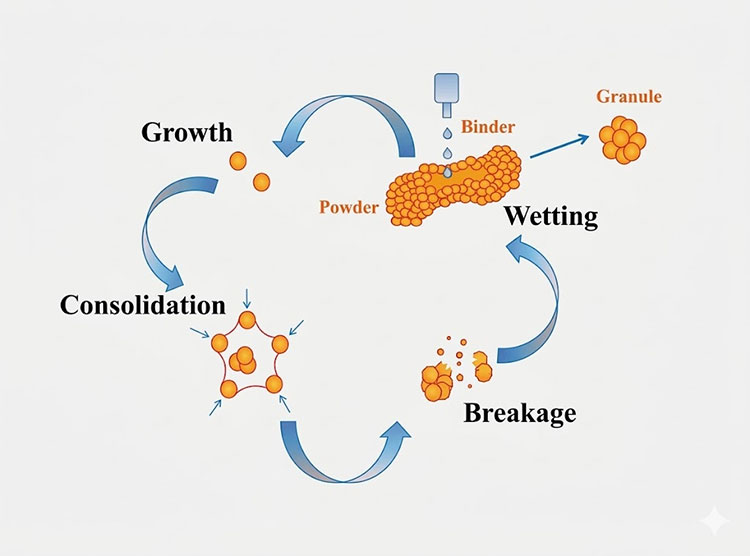
Granulation process powder flow
Wet Granulation Solutions
We use granulation to change the nature of the powder. Wet granulation uses liquid binders. It creates strong, dense granules. These granules flow like water into a tablet press. I remember a client who tried to press a very sticky powder directly.
The powder stuck to the machine punches. We installed a high shear mixer granulator for them. The wet granulation process completely stopped the sticking.
Dry Granulation Risks
Dry granulation uses pressure to form granules. It is great for drugs that cannot touch water. But you must be careful. If you recycle too much fine powder during dry granulation, your final granules will be weak. Weak granules break apart in the tablet press. This causes dust and bad tablet weights.
Controlling the Process
You must control your equipment settings closely.
| Granulation Type | Key Parameters | Impact on Powder |
| Wet Granulation | Blade speed, liquid amount | Creates hard, dense granules |
| Dry Granulation | Roller pressure, speed | Creates flat flakes for milling |
| Fluid Bed | Air flow, spray rate | Creates porous, fast-melting granules |
Always test your granules before pressing them. Check their size and density. Good granules guarantee a smooth tableting process.
4.How Can You Prevent Powder Segregation During the Mixing Process?
Does your powder separate after blending? Segregation ruins your content uniformity. You need to control the mixing process and the environment to keep materials bound together.
You prevent powder segregation by matching the density of your ingredients and optimizing mixer speed and time. Additionally, controlling the room humidity prevents static buildup or moisture clumping. Proper mixing parameters keep the powder blend perfectly uniform before it reaches the tablet press.
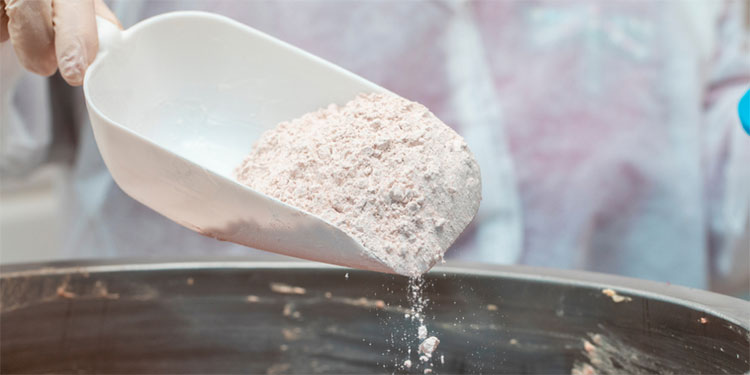
Prevent powder segregation
The Mechanics of Mixing
Mixing is a critical step. If you do not mix well, some tablets will have too much drug. Other tablets will have no drug. The density of your powder matters most here. Heavy particles drop to the bottom of the mixer. Light particles stay at the top.
I once visited a factory where the mixing room was very dry. The humidity was below 30%. The dry air created static electricity. The powder stuck to the walls of the V-blender. They failed their content uniformity tests. We told them to increase the room humidity to 45%. The static disappeared, and the powder mixed perfectly.
Equipment and Environment
You must adjust your mixer speed. If you spin the mixer too fast, you will force the particles to separate. If you spin it too slow, they will never mix.
| Factor | Effect on Mixing | How to Fix It |
| High Humidity | Powder absorbs water and clumps | Use dehumidifiers in the mixing room |
| Low Humidity | Static electricity builds up | Add moisture to the room air |
| Fast Mixer Speed | Powders separate by weight | Lower the RPM of the blender |
| Long Mix Time | Powders get crushed and heat up | Find the exact shortest mixing time |
You must test samples from different parts of the mixer. This proves your powder is truly uniform.
5.What Equipment Adjustments Solve Flow Problems During Tableting and Encapsulation?
Is your tablet press struggling to feed powder? Inconsistent feeding causes weight variations. You must adjust your equipment to match the powder flow.
You can solve feeding problems by using force feeders, optimizing the hopper design, and adjusting the machine speed. These equipment upgrades force poorly flowing powders into the dies evenly. This prevents bridging and ensures high-speed, uniform production for both tablets and capsules.
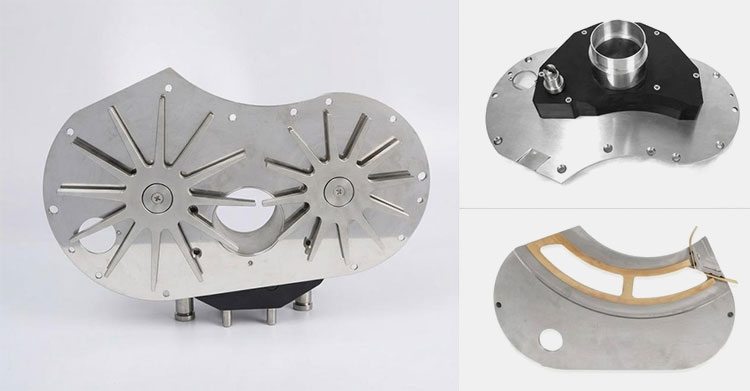
Tablet press force feeder
Moving Powder Safely
The journey from the mixer to the tablet press machine is dangerous for powders. Moving the powder can cause it to separate again. When the powder reaches the hopper of the tablet press, it often stops moving. It forms an arch or a hole. We call this bridging and rat-holing.
I helped a client who wanted to run their tablet press at top speed. Their powder was too light. The powder could not fall into the dies fast enough. The tablets came out too light.
Upgrading the Machine
We solved this by installing a force feeder. A force feeder uses spinning paddles. It pushes the powder down into the machine.
| Machine Part | Common Flow Problem | Equipment Solution |
| Hopper | Powder gets stuck (bridging) | Add a mechanical vibrator |
| Feeder | Powder falls too slowly | Install a paddle force feeder |
| Turret | Dies do not fill completely | Slow down the machine speed |
| Punches | Powder sticks to metal | Polish punches or use coating |
You must match your machine to your powder. If you have bad powder, you need stronger feeding equipment. By adjusting the machine parts, you can force even the worst powders to form perfect tablets.
Conclusion
Powder flow controls your entire solid dosage production. By mastering powder properties and using the right processing equipment, you will achieve perfect uniformity, eliminate sticking, and maximize production efficiency.
Don't forget to share this post!
Tablet Press Machine Related Posts
































Tablet Press Machine Related Products
Tablet Press Machine Related Videos
CONTACT US
Tell us your raw material and project budget to get quotations within 24 hours.
WhatsApp Us: +86 156 0710 8630

Want the best price & newest pharmaceutical machinery buying guide,tips and trends sent straightly to your box?Sign up for AIPAK’s monthly newsletter,we’re free for your consultation and Offer you the most suitable solutions!
The Buyer's Guide
- Capsule Filling Buyer's Guide
- Blister Packaging Buyer's Guide
- Tablet Counting Buyer's Guide
- Tube Filling Buyer's Guide
- Cartoning Buyer's Guide
- Gummy Making Buyer's Guide
- CO2 Extraction Buyer's Guide
- Empty Capsules Buyer's Guide
- Suppository Filling Buyer's Guide
- Tablet Coating Buyer's Guide
- Tablet Press Buyer's Guide
- Softgel Encapsulation Buyer's Guide
Most Popular
- 7 Importance Of Pharmaceutical Packaging In Different Applications You Must Know
- 6 Advantages You Must Know About Tablet Counting Machine
- 8 Advantages of Blister Packaging You Must Know
- 6 Critical Applications of Automatic Capsule Filling Machine
- 6 Stations You must Know to Improve the Filling Quality of Automatic Capsule Filling Machine