
Softgel Encapsulation Machine Line Setup: A cGMP Facility Layout Design and Formulation Guide
Many new manufacturers feel stuck when moving from outsourcing to in-house production. You worry about the lack of formulas, factory layouts, and technical experience. This fear often stops your business growth.
We recently helped a client switch from contract manufacturing to owning their own line for vitamin hair oil. We provided a complete SEM-200 softgel line, a free gelatin formula, and a customized 12m x 4m GMP layout design to ensure they hit a capacity of 25,200 capsules per hour.
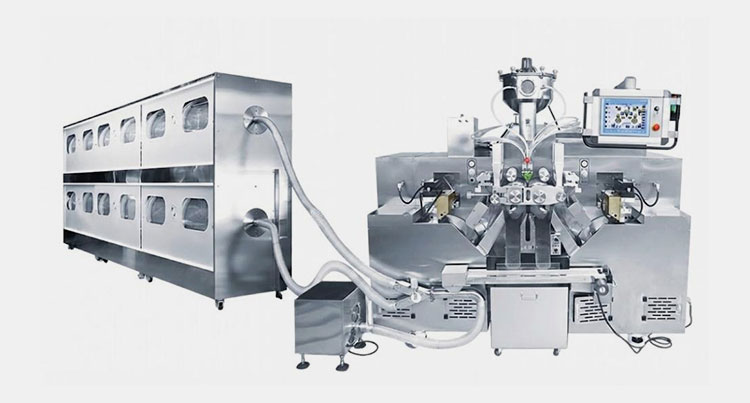
Softgel encapsulation machine production line
Transitioning secondary packaging operations from contract manufacturing organizations (CMOs) to an internal captive facility represents a critical inflection point for scaling brands to maximize operational margins and secure absolute quality control.
Fulfilling this operational pivot introduces complex engineering variables, primarily surrounding cleanroom spatial parameters, compliance documentation, and hot-melt compound formulations. This case study documents the empirical turnkey integration of an automated softgel encapsulation system tailored for a cosmetic encapsulation manufacturer, establishing fully compliant multi-zone cleanroom architectures.
1.Can we match your specific softgel shape and capacity requirements?
Most startups worry that their unique product shape will be hard to manufacture. You might think that standard machines cannot handle your specific design or volume needs.
We confirmed the client's 1ml vitamin hair oil shape was perfectly compatible with our equipment. We provided a full solution including the melting system, mixing tanks, encapsulation machine, tumble dryer, and recycling system to meet the 20,000-30,000/hour target.
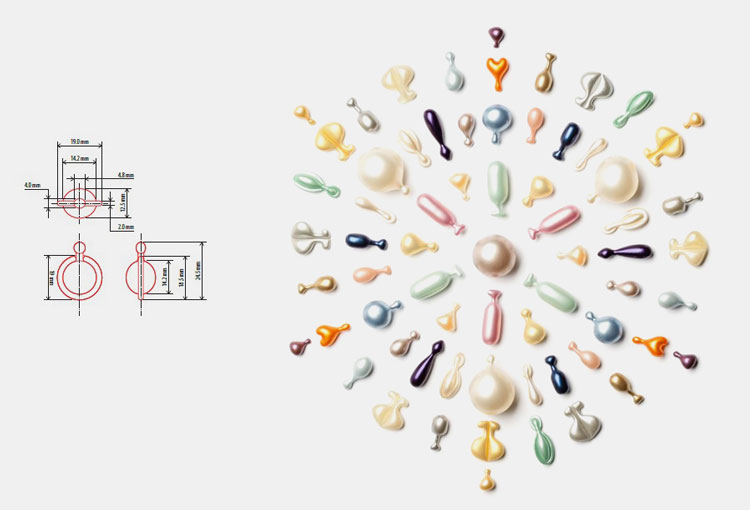
Customer softgel die roll and sample shape
When this client contacted us, they sent a specific design drawing. It was a 1ml softgel for hair care. It looked like a small bead with a twist-off top. They asked a critical question immediately. They wanted to know if we could make this specific shape.
I told them, "Yes, absolutely." We have manufactured this exact shape many times before. To prove it, I sent them a video. It showed our machine running a test with that exact mold. This gave them confidence right away.
turnkey equipment provisioning is mandatory to assist manufacturers navigating initial entry into solid-dosage encapsulation operations. The engineering solution extends beyond independent hardware, integrating a continuous macro-system loop.
This encompasses a dedicated vacuum gelatin melting assembly for shell polymer preparation, multi-jacketed liquid preparation vessels to homogenize lipophilic fills, and multi-stage rotary tumble dryers to control moisture desorption. This integrated process approach eliminates multi-vendor integration alignment errors, converting theoretical capacity metrics into verified line yields.
For a client moving from outsourcing to in-house work, this "turnkey" approach is vital. They do not have to shop around for five different suppliers. We handle the integration of the chemical mixing and the mechanical pressing. This ensures the capacity target of 20,000 to 30,000 pills per hour is not just a theoretical number, but a reality.
2.How do you fit a GMP-compliant line into a small 12x4 meter room?
Space is often the biggest constraint for new factories. You might believe your current workshop is too small to host a professional, GMP-standard pharmaceutical production line.
We designed a linear layout specifically for the client's 12-meter by 4-meter room. We advised separating the melting, encapsulation, and drying areas with independent doors to strictly control temperature and humidity for GMP compliance.
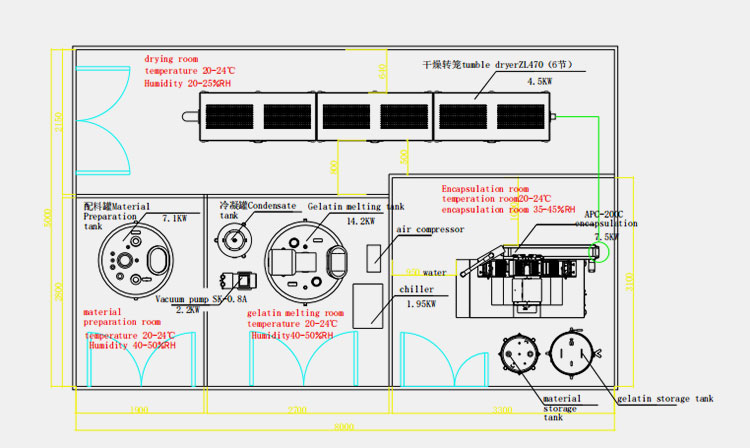
Factory layout design for softgel line
I The client had a big concern. They had a room, but it was not a huge warehouse. It was 12 meters long and 4 meters wide. They asked me, "Is this enough?"
I looked at the dimensions. It is tight, but it is possible. I drew up a "Linear Layout" for them. This means the machines are arranged in a straight line to save width. However, simply fitting the machines in is not enough. You must think about the environment.
Isolating divergent thermodynamic process loops is standardly required to prevent environmental parameter collapse inside compact manufacturing cells. The gelatin melting phase releases intense latent heat and ambient moisture vapor, whereas the subsequent capsule tumble drying phase necessitates high-velocity chilled, dehydrated airflow.
Placing these processes inside an unpartitioned space ruins shell crystallization kinetics. To enforce compliance, strict structural separation using insulated modular partition walls was engineered, splitting the 12m × 4m blueprint into independent, door-controlled melting, encapsulation, and desiccant drying zones to maintain independent cleanroom HVAC air-handling controls and prevent systemic environmental cross-contamination.
It also allows you to control the air conditioning in each room separately. We marked the specific temperature and humidity requirements on the blueprint for them.
| Room Type | Temperature Requirement | Humidity Requirement | Reason |
| Melting Room | 60°C - 80°C (In Tank) | Standard | High heat needed to melt gelatin powder |
| Encapsulation Room | 20°C - 24°C | 40% - 50% RH | Gelatin ribbon must be cool to form the shell |
| Drying Room | 20°C - 22°C | 20% - 30% RH | Low humidity is critical to remove moisture |
The client was very happy with this. They used my drawing to renovate their room. It saved them from making expensive construction mistakes.
3.How do we calculate production speed and why use servo motors?
New producers often struggle to calculate exact output and choose the right motor technology. You need to know exactly how many pills you can sell and ensure the machine runs smoothly.
We calculated that with an 84-cavity mold running at 5 RPM, the output is 25,200 caps/hour. We recommended servo motors for the main drive and die rolls to ensure precise speed control and easier operation.
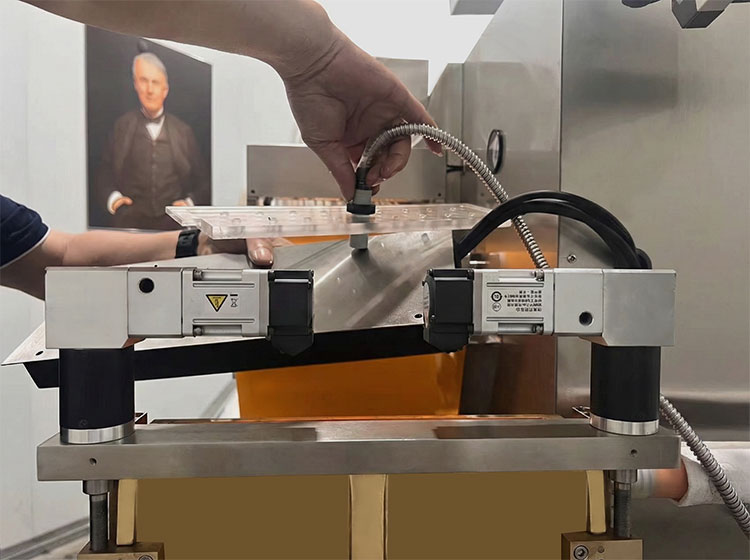
Servo motor configuration on softgel machine
The client looked at the layout and asked, "Okay, but how much can I actually make?" They needed to plan their sales.
Throughput quantification correlates directly with mold die roll geometries and synchronized rotational velocities. Utilizing the standard SEM-200 framework tailored for 1ml spherical cosmetic profiles, the mathematical yield formula is structured below:
Hourly Throughput=Die Cavity Count (84)}xRotary Velocity
Initial commissioning protocols require running the system at a reduced mechanical velocity of 3 RPM during the preliminary operational break-in period. This managed deceleration facilitates optimal tool steel thermal wear-in parameters and permits staff familiarization with the digital control interface before advancing to maximum high-speed processing loads.
Then we discussed the motor.Legacy encapsulation machinery utilizing common induction motors paired with mechanical gear trains introduces geometric alignment drifts over prolonged operating shifts.
Transitioning the line architecture to independent, multi-axis servo motor drive systems achieves electronic gear-shaping synchronization between the counter-rotating die rolls.
This digital alignment control suppresses mechanical wear, while permitting operators to adjust critical liquid injection wedge timing parameters dynamically via the centralized HMI touchscreen interface, eliminating manual mechanical calibration latency.
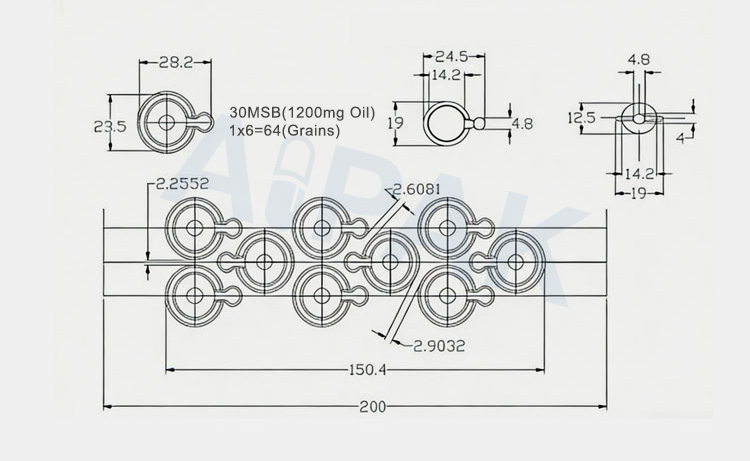
New softgel size
The client accepted this advice immediately. They understood that ease of use was worth the small extra cost. This decision will save them hours of setup time in the future.
4.Why is visual inspection of the tanks and tooling essential before buying?
Buying expensive machinery from overseas requires trust in the material quality. You need to verify that the equipment meets sanitary standards and that the supplier understands the process.
We hosted a video conference to show the actual encapsulation process, the tumble dryer, and the 3-layer SUS316L mixing tanks. This confirmed the equipment quality and GMP compliance, leading to the final purchase order.
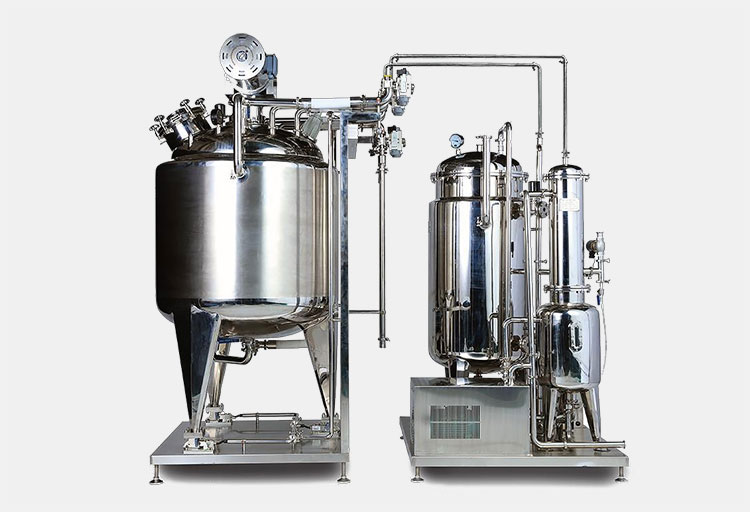
Stainless steel mixing tanks
The final step was a video call. The client wanted to see the "real thing." We set up a meeting to show them our factory floor.
Factory validation was conducted via live remote engineering video inspection to audit component metal specifications and structural welding profiles before oceanic transit. Technical teardowns verified that all primary product preparation and transfer vessels utilize an advanced three-layer jacketed configuration, incorporating an inner contact layer fabricated exclusively from mirror-polished, certified SUS316L stainless steel.
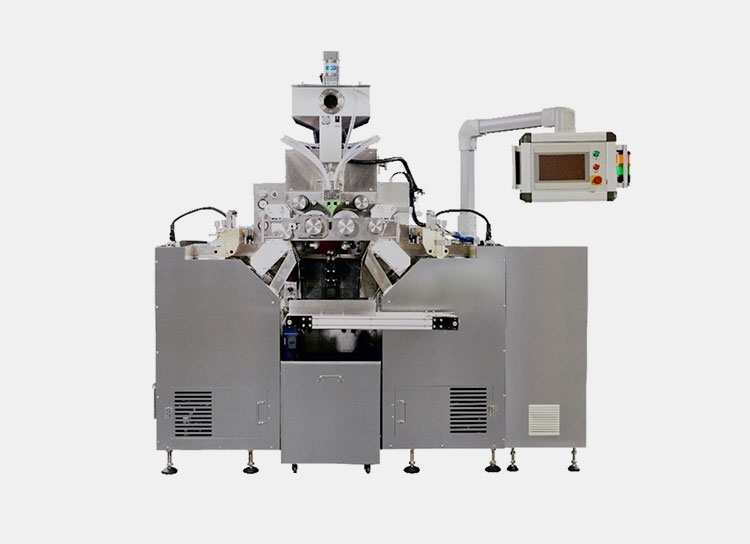
AIPAK softgel encapsulation machine
This premium metallurgy offers superior chemical resistance against acidic or saline active formulations relative to generic SUS304 grades, satisfying strict compliance criteria for high-purity product distribution.It is the only way to meet GMP standards.
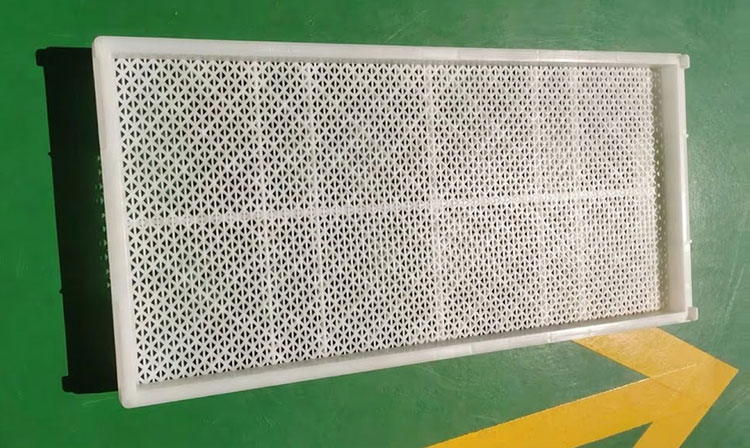
PVC Tray
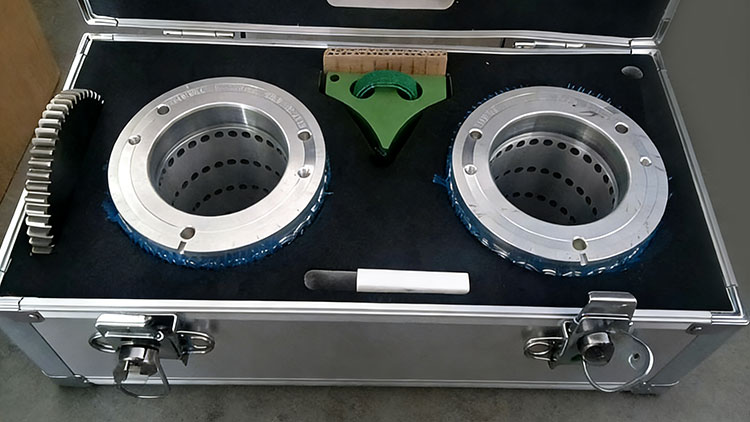
Die roll
Then I showed them the tumble dryer. I spun them by hand so they could see the smooth movement. I showed them the die rolls (the molds) and how shiny and sharp they were.
The client was previously a bit nervous because they had no experience. But seeing the machine, the tanks, and the layout gave them peace of mind. They realized we were not just selling a machine; we were teaching them how to use it.
They saw that we had the formula (which we gave for free), the layout plan, and the high-quality hardware. That video call was the turning point. Shortly after, they started the internal order process and sent the PO.
Conclusion
Starting softgel production requires more than just buying a machine; it requires formulas, GMP layouts, and capacity planning. We provide all of this to ensure your success.
Frequently Asked Questions - Softgel Line Startup
Project Compliance and Equipment Engineering Standards
During the initial 2D cleanroom spatial blue-printing, multi-axis servo synchronization, and remote video factory acceptance runs of this automated SEM-200 softgel encapsulation line, all component systems were validated to meet the following manufacturing standards:
Don't Forget To Share Article!
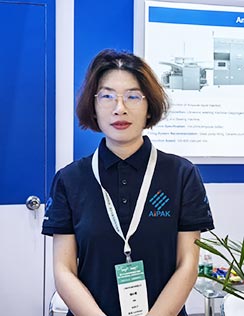
Bessie
Technical Content Strategist & Pharmaceutical Industry Analyst at AIPAK
Bessie is a senior technical content strategist at AIPAK, specializing in parsing complex pharmaceutical engineering workflows, solid dosage manufacturing data, and cleanroom design compliance. Working directly alongside frontline sales engineers and onsite technicians, she excels at translating raw field data into actionable technical playbooks for global pharma buyers. Bessie leverages her deep understanding of international regulatory standards—including FDA cGMP (21 CFR Part 211) and ISPE engineering guides—to ensure AIPAK’s localized facility layout solutions are structured, traceable, and fully optimized for maximum operational ROI.
Softgel Encapsulation Machine Related Posts













Softgel Encapsulation Machine Related Products
Softgel Encapsulation Machine Related Videos
CONTACT US
Tell us your raw material and project budget to get quotations within 24 hours.
WhatsApp Us: +86 181 7101 8586

Want the best price & newest pharmaceutical machinery buying guide,tips and trends sent straightly to your box?Sign up for Aipak’s monthly newsletter,we’re free for your consultation and Offer you the most suitable solutions!
The Buyer's Guide
- Capsule Filling Buyer's Guide
- Blister Packaging Buyer's Guide
- Tablet Counting Buyer's Guide
- Tube Filling Buyer's Guide
- Cartoning Buyer's Guide
- Gummy Making Buyer's Guide
- CO2 Extraction Buyer's Guide
- Empty Capsules Buyer's Guide
- Suppository Filling Buyer's Guide
- Tablet Coating Buyer's Guide
- Tablet Press Buyer's Guide
- Softgel Encapsulation Buyer's Guide
Most Popular
- 7 Importance Of Pharmaceutical Packaging In Different Applications You Must Know
- 6 Advantages You Must Know About Tablet Counting Machine
- 8 Advantages of Blister Packaging You Must Know
- 6 Critical Applications of Automatic Capsule Filling Machine
- 6 Stations You must Know to Improve the Filling Quality of Automatic Capsule Filling Machine