Particle Design Strategies in TCM Direct Compression: Revolutionizing Powder Flow and Compressibility for Herbal Solids
Traditional Chinese Medicine (TCM) powders stick, clump, and flow poorly. This stops you from making tablets efficiently. I will show you how particle design solves these exact direct compression problems.
Direct compression for TCM powders requires improving their flow and compressibility. You can achieve this by using single modified excipients, developing co-processed functional excipients, and applying particle design techniques like porous or core-shell structures to make herbal solids ready for continuous tableting.
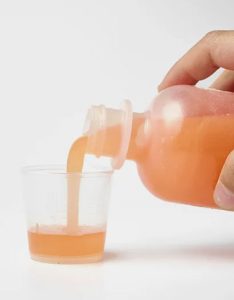
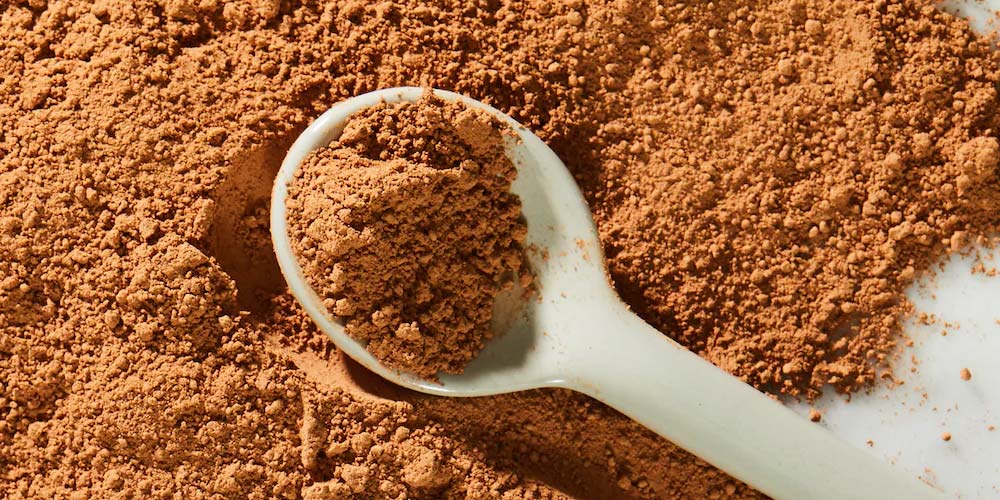
TCM powder direct compression strategies
Many manufacturers give up on direct compression for herbal products. They go back to slow, old wet granulation methods. But I want you to keep reading because modern particle engineering completely changes this reality.
1.What Are The Main Challenges of Direct Compression in TCM Powders?
Herbal extracts hold too much moisture and fiber. Your tablet press will jam, and your tablets will break. We must understand these flaws before we can fix them.
TCM powders have high viscosity, strong moisture absorption, poor flowability, and complex ingredients. These traits cause capping, sticking, and weight variations during direct compression. You need advanced excipients and particle engineering to overcome these natural material limits before using any tablet press machine.
TCM powder tableting challenges
I see many clients struggle when they switch from chemical drugs to herbal solids. Chemical powders usually have neat crystal shapes. They flow well. TCM powders are completely different. They contain plant fibers, sticky extracts, and natural oils.
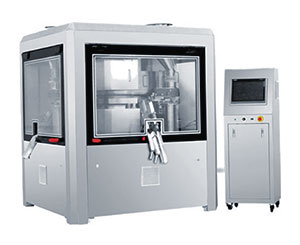
AIPAK’s rotary tablet press machine
When you put them in a standard rotary tablet press machine without preparation, the powder separates in the hopper. The heavy parts fall fast, and the light parts stay on top. This ruins your dose accuracy.
Also, herbal extracts pull water from the air very fast. This makes the powder stick to the machine punches and dies.
We can break down these problems into three main areas.
| Problem Area | Cause | Result in Production |
| Powder Flow | High moisture and plant fibers | Uneven tablet weight and machine jams |
| Compressibility | Lack of plastic deformation | Tablets break or cap easily |
| Blending | Density differences between herb and excipient | Active ingredients separate in the hopper |
You cannot just push harder with the machine to fix this. You must change the powder itself. Our engineering team always looks at the material properties first before we recommend any solid processing equipment. You have to fix the flow before you can press the tablet.
2.How Can Excipient Engineering Fix TCM Powder Issues?
Raw herbal powders cannot form tablets alone. If you use cheap, basic binders, your tablets will fail quality tests. Smart excipient choices save your production line.
You can use single modified excipients like spray-dried lactose or microcrystalline cellulose to improve flow and binding. For better results, you should use co-processed excipients.
These combine brittle and plastic materials to stop moisture absorption and increase the drug load capacity of your tablets.
Co-processed excipients for TCM
I always tell my clients that excipients are just as important as the active herbs. Single modified excipients are a good starting point for your formulation.
For example, spray-dried lactose has large, round particles. It flows very well and blocks moisture. Microcrystalline cellulose (MCC) acts like a sponge. It bends under pressure and holds the herbal particles together without breaking.
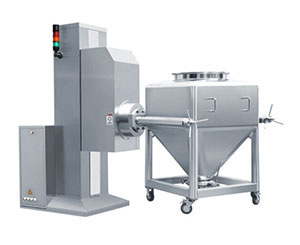
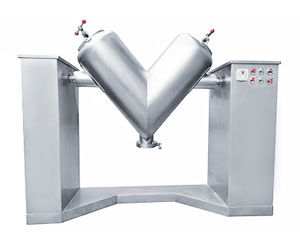
AIPAK’s V-blender machine
We often see clients use a V-blender or ribbon mixer to combine these basic excipients.
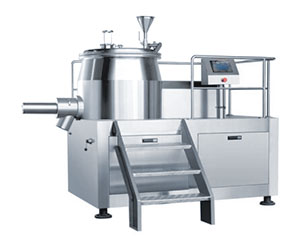
But TCM powders are too complex for just one basic excipient. This is why we use co-processed excipients. A co-processed excipient mixes two or more materials at a microscopic level. We use spray drying or hot melting to combine them. This creates a new material that is better than a simple mix.
| Excipient Type | Examples | Best Use Case |
| Single Modified | Spray-dried lactose, MCC | Basic moisture control and flow |
| Co-processed (Starch-based) | StarLac, StarCap 1500 | Fast disintegration and good binding |
| Co-processed (Lactose-based) | Ludipress | High flowability for sticky extracts |
These advanced mixtures stop the powder from separating in the machine. They allow you to put more herbal extract into a single tablet. This means the patient takes fewer pills.
3.What Are Particle Design Strategies Like Core-Shell and Porous Particles?
Adding too many excipients makes your herbal pills too large to swallow. Patients hate huge pills. Particle design changes the herb itself so you need fewer additives.
Particle design alters the physical structure of the powder. Core-shell particles wrap the sticky herb inside a smooth outer layer to improve flow. Porous particles have tiny holes that increase compression space and help the tablet dissolve much faster in the body.
Core-shell and porous particle design
Particle design is a brilliant way to solve TCM direct compression problems. Instead of mixing the herb with other powders, we change the shape of the herb particle itself. Core-shell design is very popular right now.
We take the sticky, bad-flowing herbal extract and make it the "core". Then we coat it with a "shell" made of a smooth material like silicon dioxide. This hides the bad properties of the herb. The powder flows smoothly into the tablet press machine.
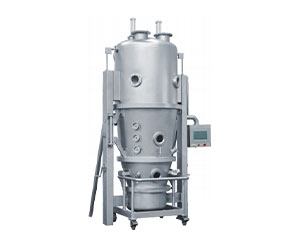
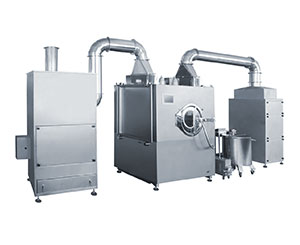
AIPAK’s Fluid bed dryer machine
Porous particles are another great option. We use special agents that create tiny bubbles inside the particle during the drying process. We often use fluid bed dryers to create these porous structures safely.
| Particle Structure | How It Works | Main Benefit |
| Core-Shell | Coats sticky herbs with a smooth shell | Stops machine sticking and improves flow |
| Porous | Creates microscopic holes in the powder | Speeds up dissolving and boosts tablet strength |
| Porous Core-Shell | Combines coating and holes | Gives perfect flow and instant disintegration |
When you use porous particles, the water enters the holes quickly when the patient takes the pill. This makes the tablet break apart fast. I have seen this technology save many slow-dissolving herbal formulas from failing quality tests.
4.How Do We Combine TCM Direct Compression with Continuous Manufacturing?
Batch production is slow and wastes money. But putting sticky TCM herbs into a continuous line often causes total system failure. You need the right equipment and sensors.
Continuous Direct Compression (CDC) for TCM requires particle-engineered powders and advanced Process Analytical Technology (PAT).
By using modified powders and real-time sensors like Near-Infrared (NIR) spectroscopy, you can constantly monitor moisture and active ingredients without stopping the tablet press.
Continuous manufacturing for TCM tablets
Continuous manufacturing is the future of the pharmaceutical industry. Chemical drugs use this method easily today. But TCM powders are wild and unpredictable.
If you put raw TCM powder into a continuous blender, it will clog the feeding tubes. This is why you must use the particle design methods I mentioned earlier first. You must fix the powder before you upgrade the machine.
Once the powder flows well, we need smart machines. At AIPAK, we know that standard equipment is not enough for continuous lines. You need Process Analytical Technology (PAT) built right into the line.
| PAT Tool | What It Measures | Why It Matters for TCM |
| Near-Infrared (NIR) | Moisture and active ingredients | Spots bad batches instantly |
| Raman Spectroscopy | Chemical composition | Ensures the herbal mix is correct |
| Focused Beam Reflectance | Particle size | Keeps tablet weight stable |
These sensors act like eyes inside the machine. They check the powder every second. If the moisture is too high, the system adjusts itself. We do not have to wait for the batch to finish to test it.
This saves time and guarantees every herbal tablet meets strict GMP standards. Our downstream equipment, like blister packing machines and cartoning machines, depends on perfect tablets coming out of the press.
Conclusion
Mastering Particle Design is the definitive breakthrough for bringing Traditional Chinese Medicine into the era of Direct Compression. By transitioning from simple physical mixing to advanced particle engineering—such as constructing porous core-shell structures or applying nano-silica coating—manufacturers can finally overcome the inherent challenges of high hygroscopicity, poor flowability, and low compressibility. These strategies not only reduce the need for excessive excipients but also pave the way for high-dosage, stable, and high-quality herbal tablets. At AIPAK, we bridge the gap between complex botanical properties and streamlined industrial efficiency, ensuring your TCM products are as scientifically robust as they are effective.
Don't forget to share this post!
Tablet Press Machine Related Posts
Tablet Press Machine Related Products
Tablet Press Machine Related Videos
CONTACT US
Tell us your raw material and project budget to get quotations within 24 hours.
WhatsApp Us: +86 181 7101 8586
Want the best price & newest pharmaceutical machinery buying guide,tips and trends sent straightly to your box?Sign up for AIPAK’s monthly newsletter,we’re free for your consultation and Offer you the most suitable solutions!
The Buyer's Guide
- Capsule Filling Buyer's Guide
- Blister Packaging Buyer's Guide
- Tablet Counting Buyer's Guide
- Tube Filling Buyer's Guide
- Cartoning Buyer's Guide
- Gummy Making Buyer's Guide
- CO2 Extraction Buyer's Guide
- Empty Capsules Buyer's Guide
- Suppository Filling Buyer's Guide
- Tablet Coating Buyer's Guide
- Tablet Press Buyer's Guide
- Softgel Encapsulation Buyer's Guide
Most Popular
- 7 Importance Of Pharmaceutical Packaging In Different Applications You Must Know
- 6 Advantages You Must Know About Tablet Counting Machine
- 8 Advantages of Blister Packaging You Must Know
- 6 Critical Applications of Automatic Capsule Filling Machine
- 6 Stations You must Know to Improve the Filling Quality of Automatic Capsule Filling Machine