
Semi-Auto vs. Full-Auto Encapsulation: Resolving Sticky Powder Fill Weight Deviations
In solid dosage production, handling hygroscopic, cohesive, or highly viscous formulations introduces severe processing challenges that standard automatic tamping-pin or dosator setups fail to mitigate. While fully automatic capsule fillers deliver unparalleled throughput for free-flowing granulates, their rapid, enclosed mechanical cycles inherently struggle under the stress of powder bridging and mechanical clogging.
This technical evaluation contrasts high-speed automatic dosing matrices with the operational dynamics of a Double-Head Semi-Automatic Capsule Filling Machine, demonstrating why a flexible, operator-assisted interface provides superior control over fill weight stability, tamping compaction, and zero-residue tool cleaning when processing difficult, sticky materials.
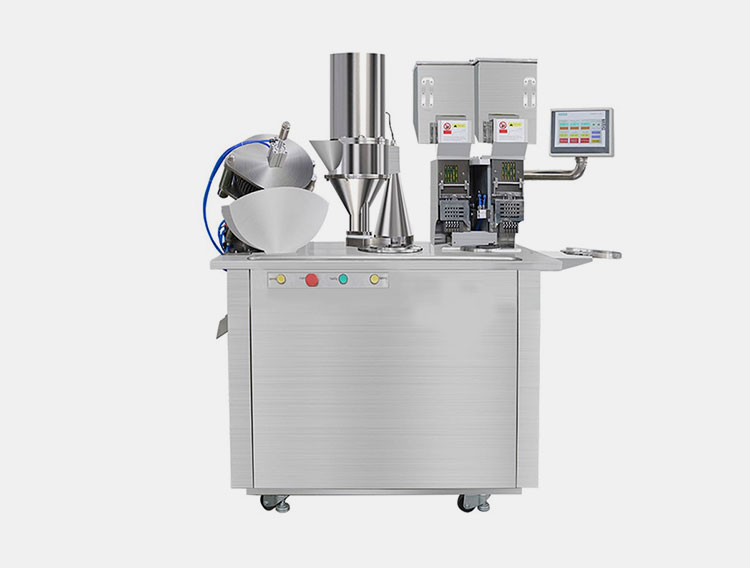
Double-head semi-auto capsule filling machine for sticky powders
1.How to fill capsules with powder that's sticky?
You put sticky powder into an automatic machine. The powder clumps fast. The machine stops working and wastes your time. You must know why this happens.
Fully automatic capsule filling machines run at high speeds with automatic feeding. Sticky powder adheres to the hopper and feeds unevenly. The powder forms hard clumps. These clumps block the dosing holes. This causes unstable fill weights, many empty capsules, and frequent machine shutdowns.
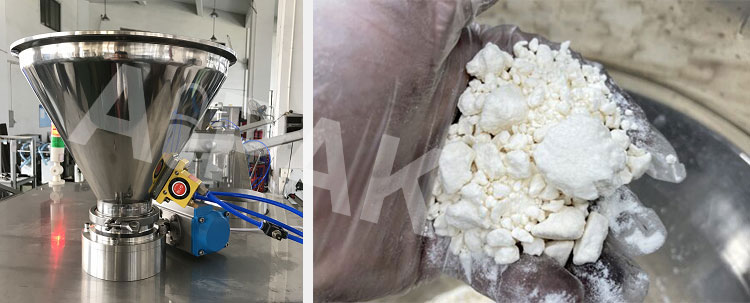
Fully automatic machine powder hopper issues
High Speed Causes Problems
A customer recently asked me for a fully automatic machine. They wanted to make 20,000 capsules per hour. They needed to fill size 00 and size 1 capsules. I asked them about their powder.
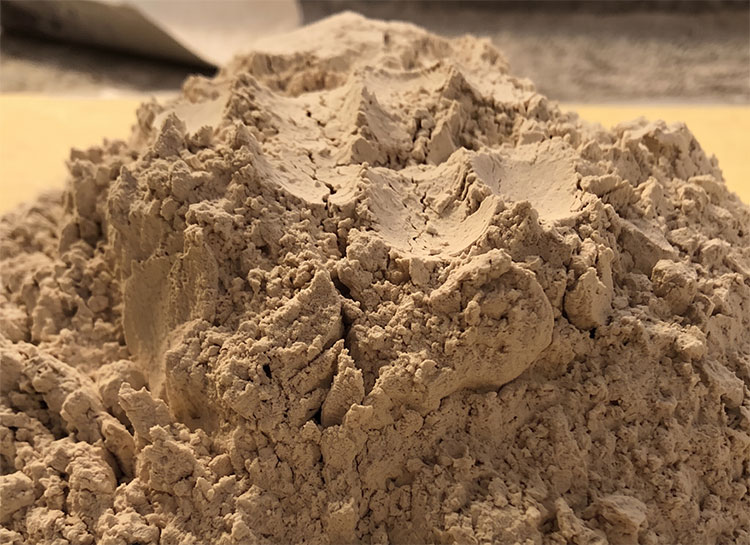
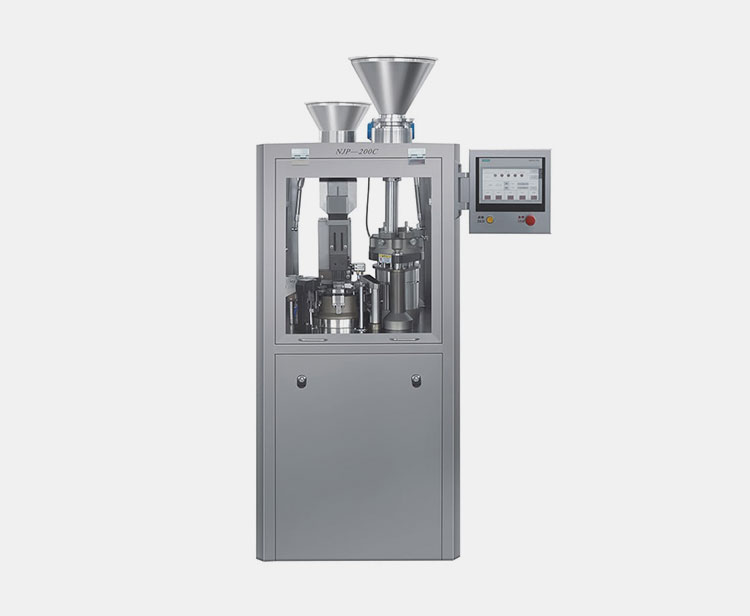
They told me the powder was very sticky. I knew a fully automatic machine like the NJP-400C would have trouble. Fully automatic machines run very fast. They do not stop to check the powder. They keep pushing the powder into the holes. This speed is bad for sticky materials.
The Hopper Issue
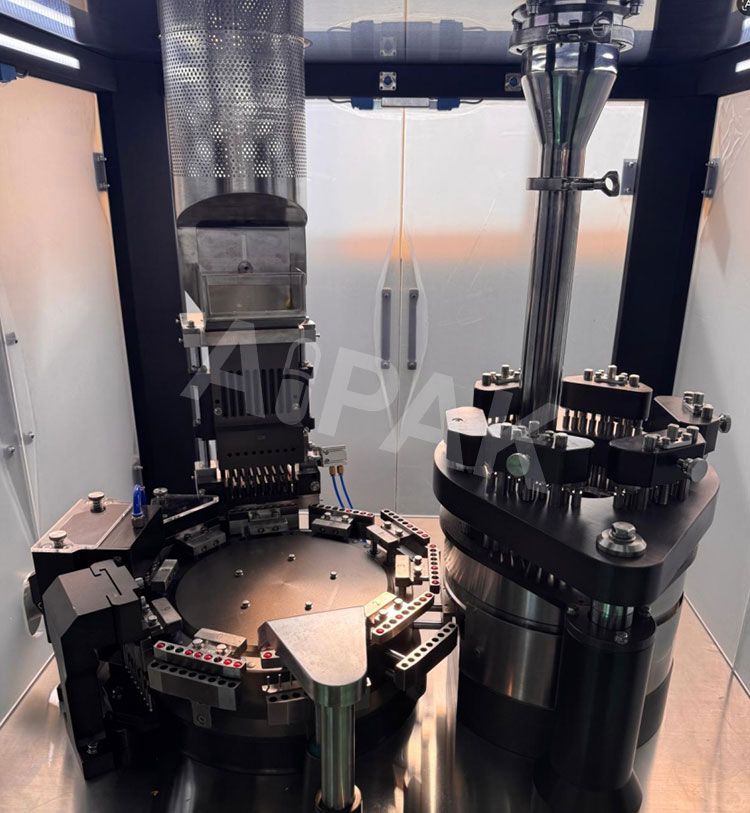
Sticky powder sticks to the metal walls of the hopper. Gravity cannot pull it down evenly. The machine keeps running. No powder goes into the capsules. You get empty capsules. You lose money. I explained this risk to my customer. I told them they would waste a lot of expensive powder.
Dosing Hole Blockage
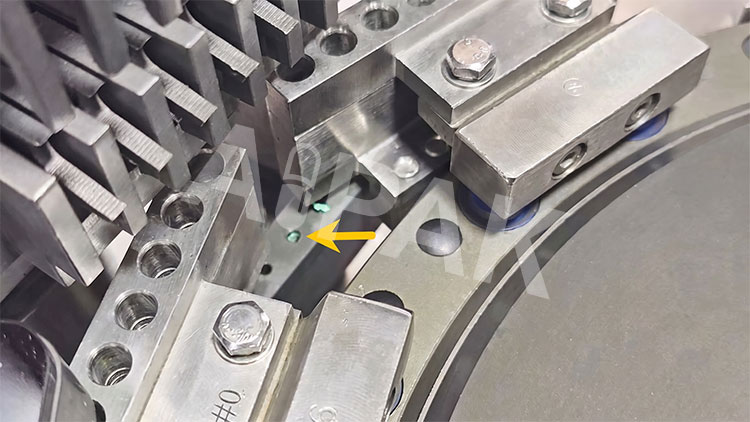
The dosing holes on an automatic machine are small. Sticky powder clumps together inside these holes. The tamping pins push the powder. The clumps get very hard. The machine jams. You must stop the machine. You must clean the holes one by one. This takes hours of work.
| Problem | Cause | Result |
| Uneven Feeding | Powder sticks to hopper | Empty capsules |
| Hard Clumps | Powder binds together | Bad fill weight |
| Machine Jams | Blocked dosing holes | Lost production time |
2.How does a double-head semi-auto capsule filling machine solve the sticky powder problem?
Machine jams ruin your daily plan. You lose powder and capsules. A semi-auto capsule filling machine gives you control. You can fix problems before they stop the machine.
A semi-auto capsule filling machine lets you correct issues during production. An operator can spread the powder manually. The operator watches the powder layer closely. You can adjust the tamping force easily. This manual control makes it the best choice for handling very sticky powders.
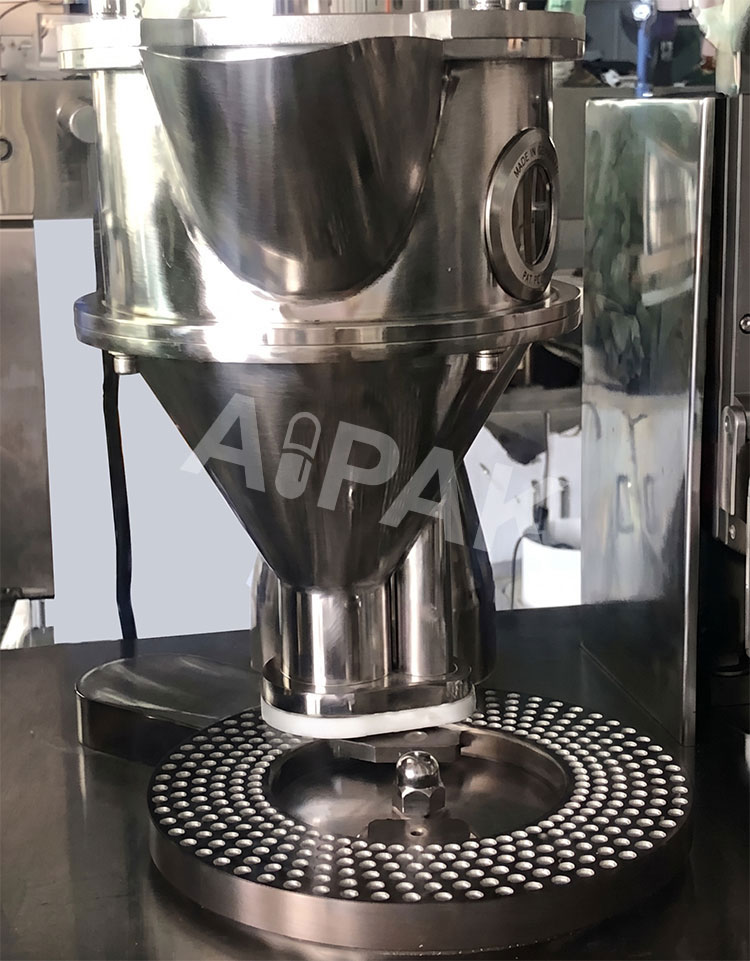
Operator using semi-auto capsule filler
Manual Powder Spreading
I recommended a double-head semi-auto capsule filler to my customer. The main reason was the manual control.
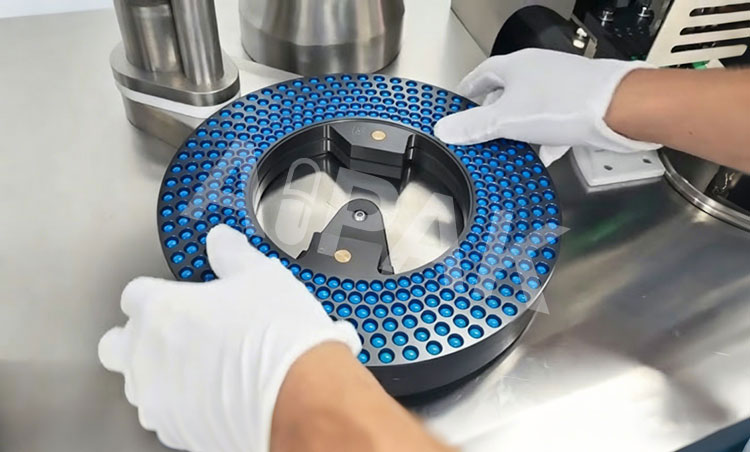
With a semi-auto machine, a worker spreads the powder. The worker uses a tool to push the sticky powder into the holes. The worker makes sure every hole is full. An automatic machine cannot do this. The worker controls the flow of the powder. This stops the powder from clumping.
Real-Time Observation
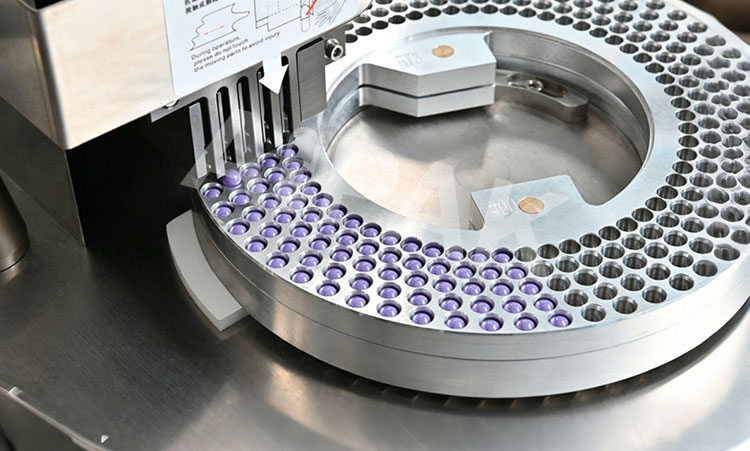
You can look at the powder layer while the semi-auto machine works. If the powder looks too sticky, the worker can slow down. The worker can break the powder clumps by hand. You fix the problem right away. You do not wait for the machine to break. You do not get empty capsules.
Adjustable Tamping Force
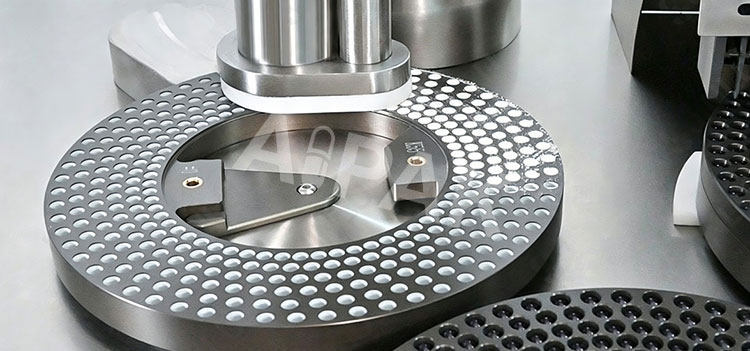
Managing the low flowability of sticky active ingredients requires real-time adjustment of volumetric displacement and compaction strain.
AIPAK’s double-head semi-automatic architecture decouples the primary filling sequence from automated high-speed compression loops. Operators can visually monitor the powder bed thickness across the mold tracks and manipulate the independent pneumatic or mechanical tamping assembly instantaneously.
This real-time micro-adjustment counteracts localized density variations within the hopper, compressing sticky formulations with highly uniform force to eliminate empty capsules and secure rigorous fill weight uniformity across the entire production run.
| Machine Feature | Benefit for Sticky Powder |
| Manual Spreading | Fills every hole evenly |
| Visual Check | Stops bad capsules early |
| Changeable Pressure | Keeps capsule weight exact |
By empowering operators to execute instantaneous adjustments to the compaction pressure and powder distribution, the dual-station layout mitigates localized bulk density fluctuations.
This operational safety margin allows standard contract packagers to easily satisfy the strict weight variation limits and content uniformity thresholds governed by the United States Pharmacopeia (USP) General Chapter <905> Uniformity of Dosage Units, making it a highly reliable asset for handling complex, difficult-to-feed formulations.
3.Can a semi-auto machine meet a 20,000 capsules per hour capacity?
You worry a semi-auto machine is too slow. You need to meet your buyer orders fast. Our double-head machine is very fast and meets your high capacity needs easily.
Yes, a double-head semi-auto machine can easily produce over 20,000 capsules per hour. It has two heads to fill capsules. For size 00 capsules, it produces 36,000 capsules per hour. For size 1 capsules, it produces even more. It easily matches the speed of many automatic machines.
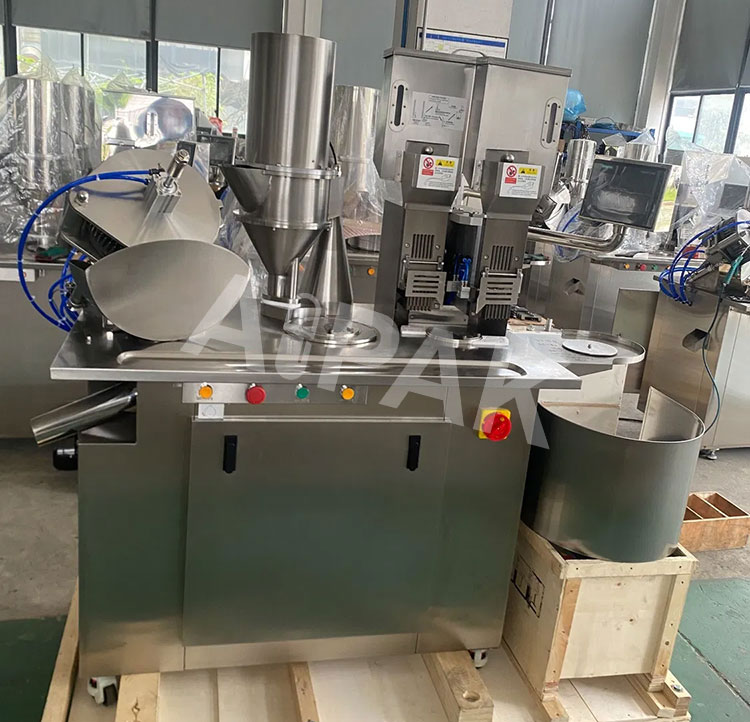
Double head semi auto machine with two heads
Understanding the Math
My customer needed 20,000 capsules per hour. They thought only an automatic machine could do this. I showed them the math for our double-head semi-auto machine.
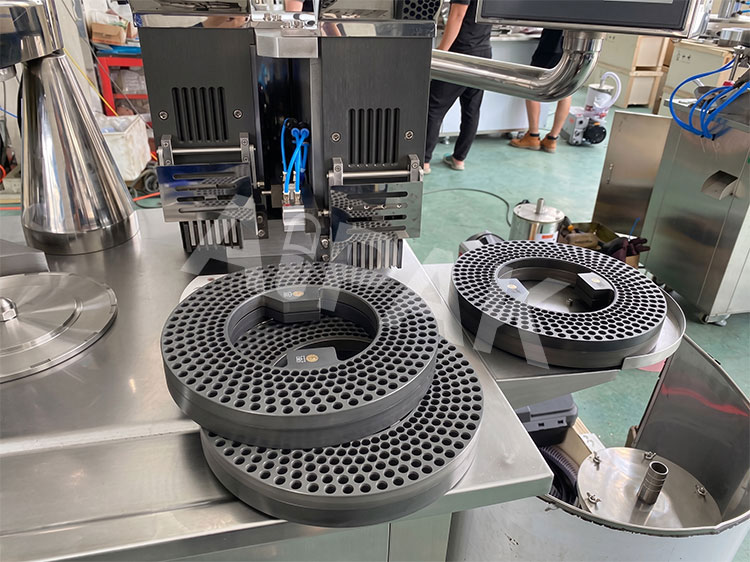
It has two working stations. Two workers can operate it at the same time. This doubles the speed. It makes the semi-auto machine very competitive.
Size 00 Capsule Capacity
Let us look at size 00 capsules. The mold for size 00 has 5 rows. This gives a total of 300 holes. The turntable speed can reach 60 times per minute. We multiply 300 holes by 60 minutes. We get 18,000. Then we multiply by 2 because it is a double-head machine. The final capacity is 36,000 capsules per hour. This is much more than 20,000.
Size 1 Capsule Capacity
For size 1 capsules, the mold has 6 rows. This gives 360 holes. The turntable speed is the same. We multiply 360 holes by 60 minutes. We get 21,600. Then we multiply by 2. The capacity is 43,200 capsules per hour.
| Capsule Size | Holes per Mold | Turntable Speed | Total Hourly Capacity |
| Size 00 | 300 | 60 / minute | 36,000 pcs / hour |
| Size 1 | 360 | 60 / minute | 43,200 pcs / hour |
4.Are there other benefits to choosing a double-head semi-auto machine?
Machines cost a lot of money. Hard maintenance takes away your profit. You want a machine that saves money and is easy to use. The semi-auto machine does exactly this.
A double-head semi-auto machine is cheaper than a fully automatic NJP-400C. It is much easier to operate and maintain. Mold changes are faster. Our machine also features an automatic separation system. This system saves time and increases overall production capacity without extra manual effort.
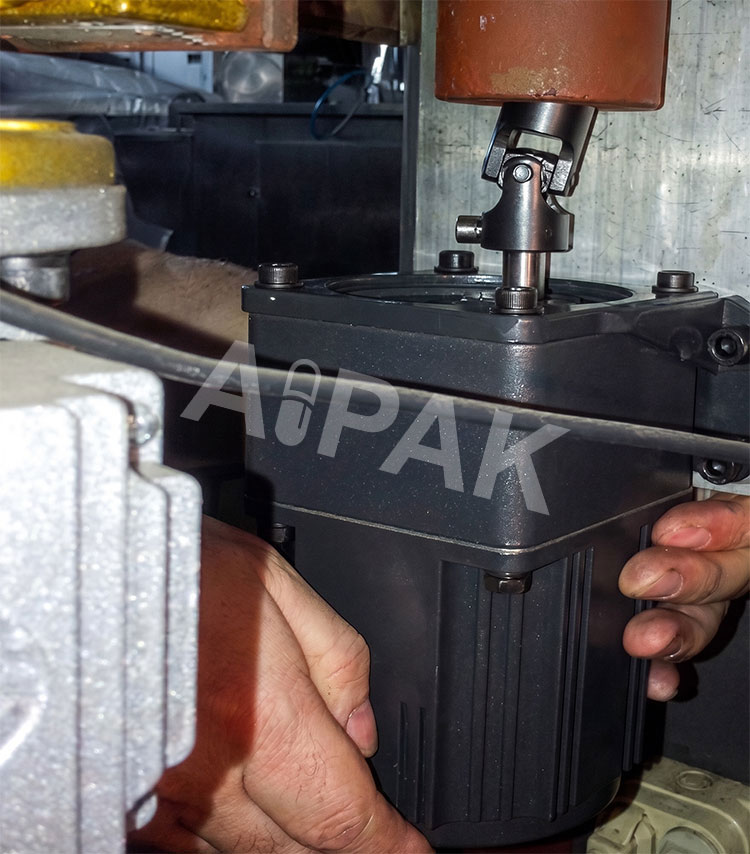
Capsule filling machine mold change
Better Price
I gave my customer two price quotes. I quoted the NJP-400C fully automatic machine. I also quoted the double-head semi-automatic machine. The semi-auto machine was much cheaper. It saves money on the first purchase. You can use this extra money for other business needs. The repair parts are also cheaper.
Easy Mold Changes
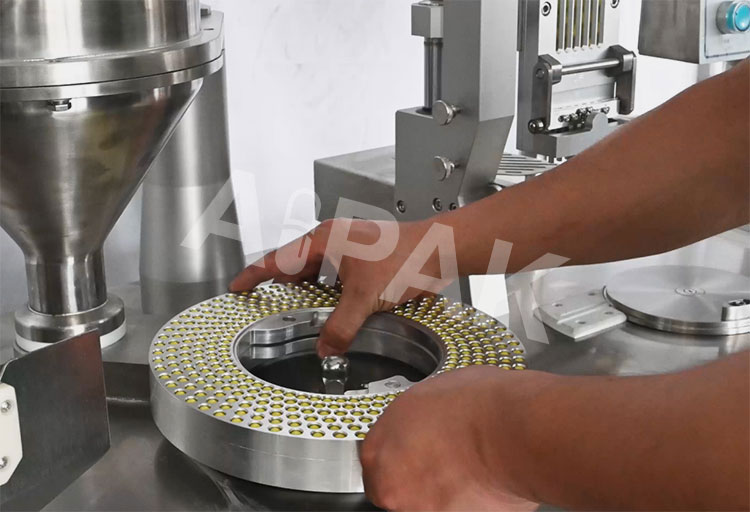
The customer needed to use size 00 and size 1 capsules. This means they must change the molds often. Changing molds on an automatic machine takes a long time. It requires special tools. Changing molds on a semi-auto machine is very fast and easy. The workers like it much more. Anyone can learn how to do it quickly.
New Separation Technology
Our semi-auto machine has a special feature. Old machines make you turn the mold 2 or 3 times by hand to separate the capsules. We changed this. After the sowing tray finishes one round, the separation motor runs automatically under vacuum suction.
You can set the running parameters. This achieves complete separation automatically. It saves worker time and makes the machine run faster.
| Feature | Fully Auto (NJP-400C) | Double-Head Semi-Auto |
| Machine Price | High | Low |
| Mold Change | Hard and slow | Easy and fast |
| Capsule Separation | Automatic | Upgraded Auto Vacuum |
Conclusion
Sticky powders need manual control. A double-head semi-auto machine offers fast production, easy maintenance, and lower costs. It is the best choice for sticky materials and high capacity needs.
FAQ
References
1.USP General Chapter <905> Uniformity of Dosage Units —— United States Pharmacopeia (USP)
2.Capsule Filling Mechanics: Comparative Analysis of Tamping-Pin and Dosator Technologies —— ScienceDirect / International Journal of Pharmaceutics
3.Powder Rheology and Flowability Characterization in Pharmaceutical Solid Dosage Manufacturing —— Pharmaceutical Technology Journal
4.A Study on the Scaling Bottlenecks and Weight Deviations of Intermittent Rotary Encapsulation Equipment —— Powder Technology Magazine
5.Optimizing Tooling Turnover and CIP Cleanability Profiles in Modular Semi-Automatic Processing Hardware —— Journal of Pharmaceutical Engineering and Design
Don't Forget To Share Article!
Bessie
Technical Content Strategist & Pharmaceutical Industry Analyst at AIPAK
Bessie is a senior technical content strategist at AIPAK, specializing in parsing complex pharmaceutical engineering workflows, solid dosage manufacturing data, and cleanroom design compliance. Working directly alongside frontline sales engineers and onsite technicians, she excels at translating raw field data into actionable technical playbooks for global pharma buyers. Bessie leverages her deep understanding of international regulatory standards—including FDA cGMP (21 CFR Part 211) and ISPE engineering guides—to ensure AIPAK’s localized facility layout solutions are structured, traceable, and fully optimized for maximum operational ROI.
Capsule Filling Machine Related Posts




























Capsule Filling Machine Related Products
Capsule Filling Machine Related Videos
CONTACT US
Tell us your raw material and project budget to get quotations within 24 hours.
WhatsApp Us: +86 181 7101 8586

Want the best price & newest pharmaceutical machinery buying guide,tips and trends sent straightly to your box?Sign up for AIPAK’s monthly newsletter,we’re free for your consultation and Offer you the most suitable solutions!
The Buyer's Guide
- Capsule Filling Buyer's Guide
- Blister Packaging Buyer's Guide
- Tablet Counting Buyer's Guide
- Tube Filling Buyer's Guide
- Cartoning Buyer's Guide
- Gummy Making Buyer's Guide
- CO2 Extraction Buyer's Guide
- Empty Capsules Buyer's Guide
- Suppository Filling Buyer's Guide
- Tablet Coating Buyer's Guide
- Tablet Press Buyer's Guide
- Softgel Encapsulation Buyer's Guide
Most Popular
- 7 Importance Of Pharmaceutical Packaging In Different Applications You Must Know
- 6 Advantages You Must Know About Tablet Counting Machine
- 8 Advantages of Blister Packaging You Must Know
- 6 Critical Applications of Automatic Capsule Filling Machine
- 6 Stations You must Know to Improve the Filling Quality of Automatic Capsule Filling Machine
 Tell us your material or budget,we'll reply you ASAP within 24 hours