
NJP-1200D Automatic Capsule Filling Machine Case Study: Scaling Processing Capacity for Pharmaceutical OEM Compliance
In the highly regulated world of pharmaceutical manufacturing, the leap from a small-scale laboratory to a high-volume production facility is the most dangerous phase for any business. Many startups fail during this transition due to equipment mismatch or lack of technical expertise.
Recently, we had the privilege of supporting a client in Slovenia through this exact journey. This case study details how they evolved from a startup using entry-level manual processes to becoming a trusted OEM partner for a local pharmaceutical giant using our NJP-1200D fully automatic capsule filling machine. Beyond just hardware, this is a story of how technical partnership overcomes mechanical barriers.
Phase 1: The Startup Reality – Why We Started with Semi-Automatic
In early 2023, a botanical therapeutics startup based in Slovenia initiated a processing scale-up project to address accelerating regional market distribution mandates. Transitioning from entry-level processing environments introduces localized capitalization and alignment challenges.
A technical application assessment recommended a semi-automatic capsule filling line configuration as a capital-efficient strategic foundation. This deployment limits preliminary capital expenditures (CAPEX), permitting operations personnel to map powder cohesive variables and shell closing dynamics before implementing fully synchronized automated systems.

Zoom meeting with this Slovenia customer
The Support Ecosystem: For 18 months, we acted as their remote engineering department. Through Zoom-based technical training, we taught their operators how to calibrate the feeding hopper and maintain the vacuum segments.
At the same time, we also shipped some required parts to the customer.

Shipping tracking number for parts
This phase was crucial; it built the client’s confidence and ensured that when the big order finally came, they were ready for the next level.
Phase 2: The Industrial Leap – Entering the "Big Pharma" League
By mid-2025, the facility successfully secured a long-term commercial contract with a multinational pharmaceutical enterprise requiring sustained production velocities scaling past 500,000 capsule units per operating week.
Manual and semi-automated production lines were no longer compatible with the required throughput parameters. To meet this volumetric quota, the manufacturing facility implemented an automated NJP-1200D capsule filling system, engineered to provide high-precision volumetric tamping alongside an enclosed continuous transport platform.
It requires a sophisticated understanding of mechanical timing and material science.
Detailed Technical Analysis: NJP-1200D Features for Scale-Up
The Enclosed Rotary Turret: Unlike many entry-level automatic machines, the NJP-1200D features a fully enclosed 10-station rotary turret. This is vital for GMP compliance. It prevents dust from entering the internal mechanical drive, which reduces wear and prevents cross-contamination—a non-negotiable requirement for the Slovenian client’s new pharma partner.
Vacuum Segment Cleaning: High-speed filling creates dust. Our system includes an automatic vacuum cleaning station that clears the segments in every cycle, ensuring the next capsule is seated perfectly.
Advanced PLC Integration: We utilized the Siemens PLC system to pre-program the client's specific formulas. This "recipe management" allowed them to switch between different products in under 60 minutes.
Phase 3: Deep-Dive Problem Solving (Expertise in Action)
Even with the best machinery, real-world variables like humidity and material texture can create challenges. Here is how we solved two advanced technical issues for the Slovenian facility.
Challenge A: Bridging the Gap in Weight Consistency
To meet their massive deadline, the client ran their old semi-auto machine alongside the new NJP-1200D. However, the client noticed a variance: the semi-auto capsules were slightly heavier.
The Technical Breakdown: Semi-auto machines often rely on gravity and light vibration.The NJP-1200D integrates an advanced five-stage continuous tamping mechanism that condenses loose powder into a uniform material slug before mechanical insertion into the capsule body.
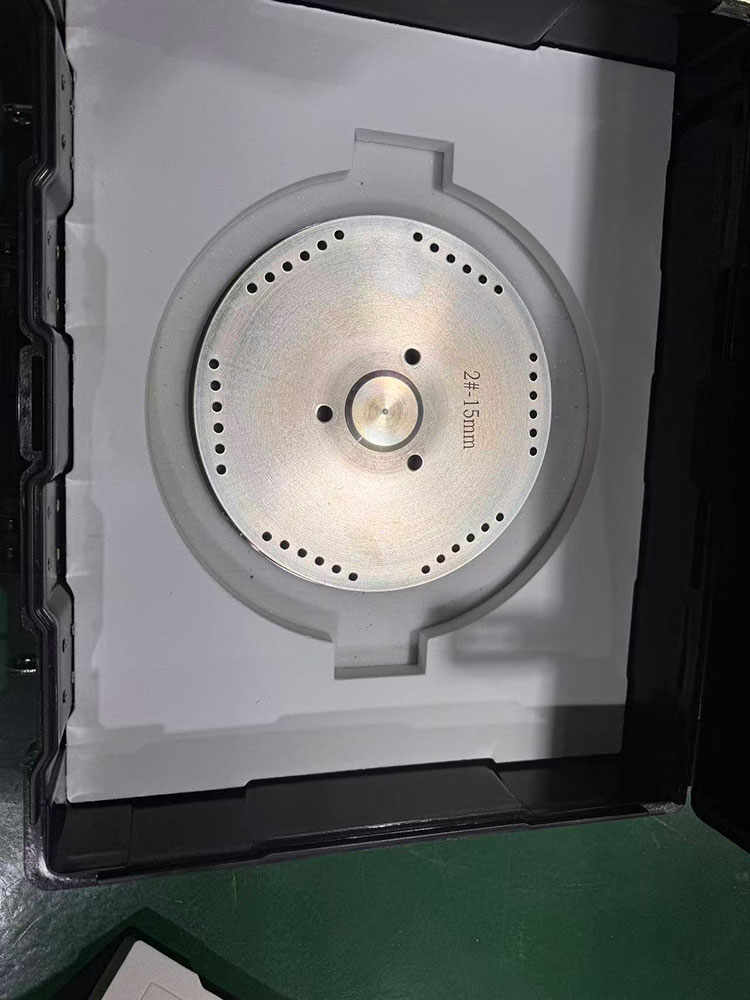
New dosage disc
The high density achieved via automated compression alters the volumetric displacement required to meet target fill weights relative to legacy gravitational filling tracks.
To secure target consistency metrics, custom tooling engineering re-machined the multi-bore dosage disc thickness parameter, micro-deepening the bore cavities to match the bulk density profile of the fluffy botanical matrix, successfully stabilizing batch weight variation margins within a strict ±2% validation threshold.
Challenge B: Material Science – The HPMC "Denting" Issue
Transitioning from standard mammalian gelatin to hydroxypropyl methylcellulose (HPMC) plant-derived shells introduces distinct polymer elasticity challenges during high-speed closure mechanical sequences.
Standard gelatin formulations possess an inherent equilibrium moisture profile of 13% to 16%, exhibiting robust elastic recovery under directional structural load conditions.

Conversely, HPMC membranes carry compressed moisture metrics restricted to 4% to 8%, presenting elevated material stiffness and a brittle stress-strain profile. Consequently, the concentrated downward impact velocity applied by generic, narrow capsule-locking pusher pins provokes localized mechanical deformation and surface dimpling defects at the capsule base.
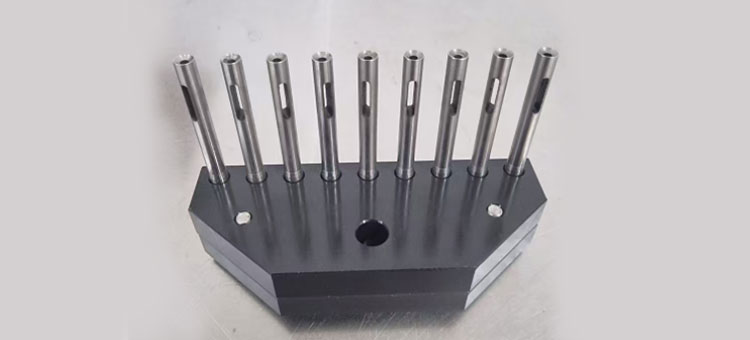
The new pusher pins received
To address this polymer non-conformance, custom pusher pin profiles were engineered using precise CNC surface optimization. The contact tip geometry was re-machined into an expanded, contoured concave head that mathematically reflects the exact exterior spherical radius of the Size 0 capsule dome.
This structural adaptation increased the effective load-bearing contact plane by 40 percent, distributing the pneumatic locking force evenly across the surface to completely eliminate shell buckling and compress production rejection rates from 5.0% down to under 0.1%.

Capsules well locked after using the new pusher pins
Phase 4: Comparative ROI – Why Automation Wins
For businesses still on the fence, let’s look at the hard data comparing the two phases of our client's growth:
| Feature | Semi-Automatic (Phase 1) | NJP-1200D (Phase 2) |
| Throughput (per shift) | ~80,000 - 100,000 capsules | Up to 576,000 capsules |
| Labor Requirement | 3 Workers (Loading, Filling, Locking) | 1 Supervisor |
| Material Yield | 95% (Due to dust/spillage) | 99.5% (Enclosed recovery) |
| Consistency | Human dependent | PLC Controlled (Fixed) |
| Compliance | Basic Health Standards | Big Pharma / GMP Ready |
Phase 5: Prevention & Maintenance – Lessons for the Industry
To help other manufacturers, we asked our engineers to list the Top 3 Preventative Measures based on the Slovenia case:
Humidity Control: For HPMC capsules, maintain facility humidity between 35-55%. Too dry, and capsules become brittle; too wet, and they become sticky.
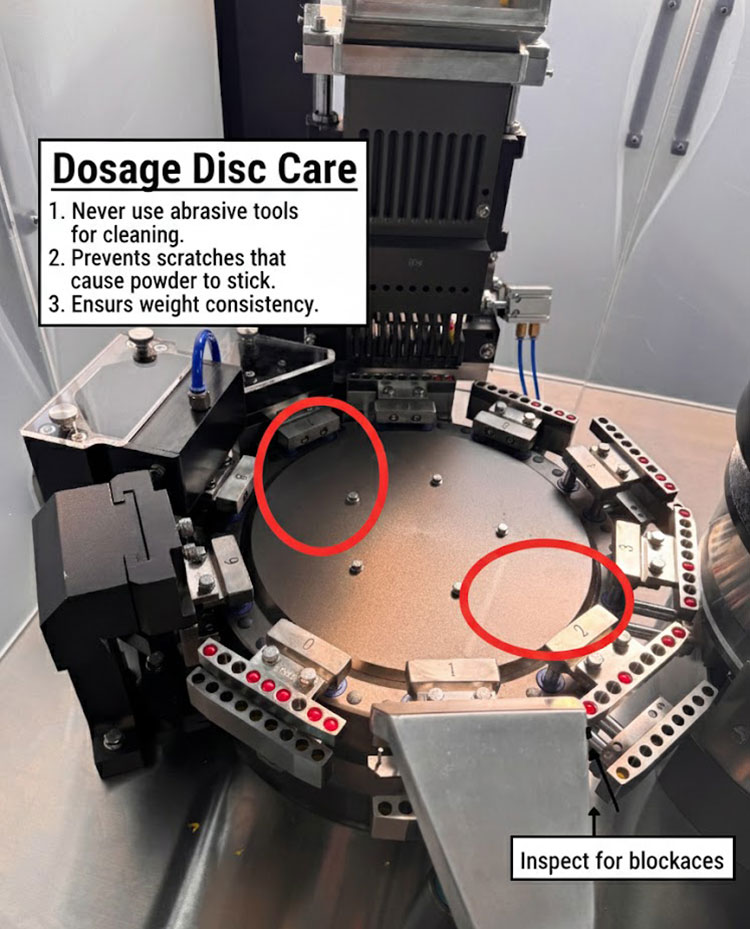
Dosage Disc Care: Never use abrasive tools to clean the dosing disc. Even a microscopic scratch can cause powder to "stick," leading to weight fluctuations.
Vacuum Strength: Regularly check the vacuum pump filters. A weak vacuum is the #1 cause of "non-separated" capsules in automatic machines.
Conclusion: Your Growth is Our Success
The journey of our Slovenian client highlights a vital truth in the pharmaceutical industry: The machine is just the beginning; the engineering support is what guarantees success. From providing a simple semi-auto filler for a startup to customizing high-precision components for a pharma OEM, we stay with our clients at every stage.
Frequently Asked Questions - Scaling with Automated Capsule Fillers
Project Compliance and Equipment Engineering Standards
During the physical micrometer prototype testing, five-stage tamping parameter optimization, and remote Factory Acceptance Testing (FAT) loops of this integrated NJP-1200D automatic capsule filling machine project for Slovenia, all mechanical architectures were certified to fulfill the following regulatory standards:
Don't Forget To Share Article!
Bessie
Technical Content Strategist & Pharmaceutical Industry Analyst at AIPAK
Bessie is a senior technical content strategist at AIPAK, specializing in parsing complex pharmaceutical engineering workflows, solid dosage manufacturing data, and cleanroom design compliance. Working directly alongside frontline sales engineers and onsite technicians, she excels at translating raw field data into actionable technical playbooks for global pharma buyers. Bessie leverages her deep understanding of international regulatory standards—including FDA cGMP (21 CFR Part 211) and ISPE engineering guides—to ensure AIPAK’s localized facility layout solutions are structured, traceable, and fully optimized for maximum operational ROI.
Capsule Filling Machine Related Posts






























Capsule Filling Machine Related Products
Capsule Filling Machine Related Videos
CONTACT US
Tell us your raw material and project budget to get quotations within 24 hours.
WhatsApp Us: +86 181 7101 8586

Want the best price & newest pharmaceutical machinery buying guide,tips and trends sent straightly to your box?Sign up for AIPAK’s monthly newsletter,we’re free for your consultation and Offer you the most suitable solutions!
The Buyer's Guide
- Capsule Filling Buyer's Guide
- Blister Packaging Buyer's Guide
- Tablet Counting Buyer's Guide
- Tube Filling Buyer's Guide
- Cartoning Buyer's Guide
- Gummy Making Buyer's Guide
- CO2 Extraction Buyer's Guide
- Empty Capsules Buyer's Guide
- Suppository Filling Buyer's Guide
- Tablet Coating Buyer's Guide
- Tablet Press Buyer's Guide
- Softgel Encapsulation Buyer's Guide
Most Popular
- 7 Importance Of Pharmaceutical Packaging In Different Applications You Must Know
- 6 Advantages You Must Know About Tablet Counting Machine
- 8 Advantages of Blister Packaging You Must Know
- 6 Critical Applications of Automatic Capsule Filling Machine
- 6 Stations You must Know to Improve the Filling Quality of Automatic Capsule Filling Machine