
Powder Filling Machine Line Layout: Engineering Engineering Solutions for Compact Cleanroom Facilities
Starting a new manufacturing business is hard, especially when you have limited space and need professional equipment. You might worry that industrial machines simply won't fit in your small factory.
We solved this exact problem for an Australian startup by creating a custom layout and modifying our powder filling machines to fit under low doors while handling a wide range of bottle sizes.**
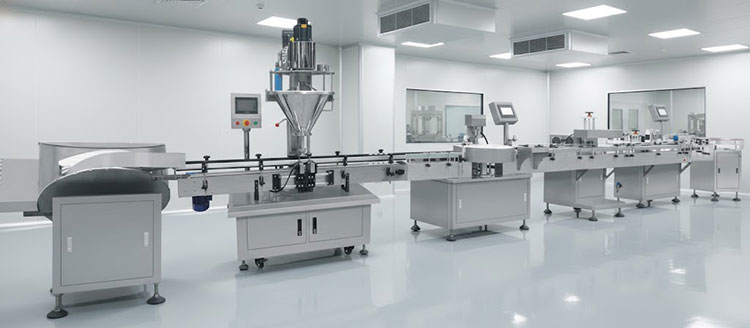
Powder filling machine in a clean room facility
Spatial limitations and restrictive spatial footprints present critical operational barriers when transitioning from manual batch handling to automated primary packaging blocks. Cleanrooms managing structural headroom limits or narrow entry corridors frequently reject standard rotary packaging layouts due to infrastructure mismatch.
Overcoming these ceiling tolerances demands flexible, low-profile modular machinery integration designed to maintain strict cGMP throughput without scaling facility footprints.
1.How Do We Ensure the Right Equipment Fit for Your Needs?
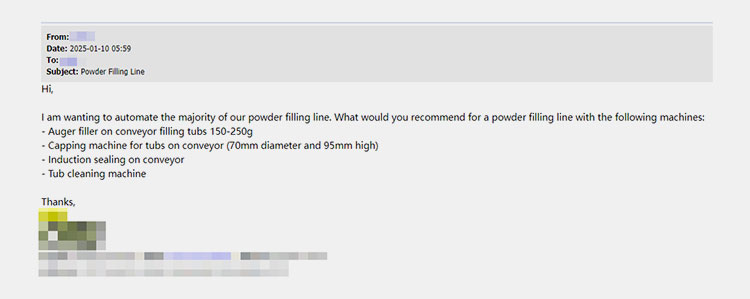
Powder filling inquiry from customer
In early 2025, we received an inquiry from a health supplement company in Australia looking for a powder filling line.
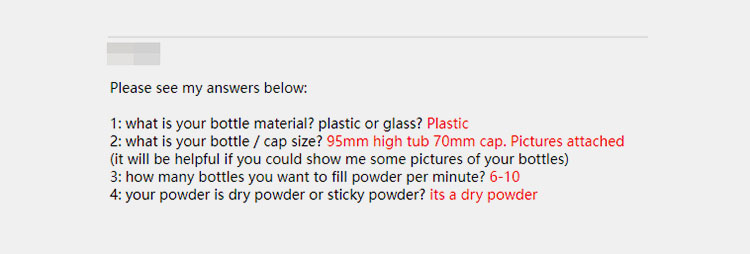
Details from customer
We immediately asked for details on bottles, caps, powder type, and target speed to ensure we could actually build what they needed.
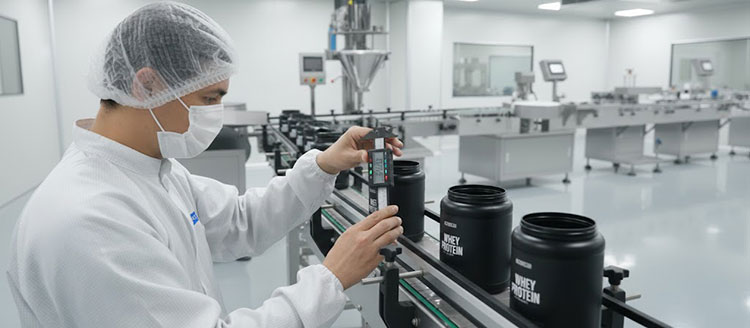
Engineer checking technical specifications
In early 2025, an Australian nutraceutical enterprise managing rigid cleanroom constraints initiated a technical optimization project to automate their powder dosing line, handling targeted container fill weights from 150g to 250g.
Executing a professional application assessment requires evaluating the specific bulk density, flow elasticity, and cohesiveness of the material matrix before finalizing equipment specifications. This initial verification phase established clear cross-border technical alignment regarding container geometries and closure parameters.
This step is vital. Many suppliers skip this. They just want to sell a machine. But at AIPAK, we know that powder varies. Some powder is sticky. Some is free-flowing. The machine must match the material. The client told me later that this level of detail made them trust us.
They saw we were professionals who cared about the result, not just the sale. We cleared up all the technical needs in the first few emails. This prevented any confusion later on. It laid a strong foundation for the project.
2.What If Your Factory Space Is Extremely Limited?
The client hesitated because they were a startup with a very small factory and low door frames.
We requested their floor plan and drew a complete machine layout to prove that our equipment would fit perfectly in their specific space.
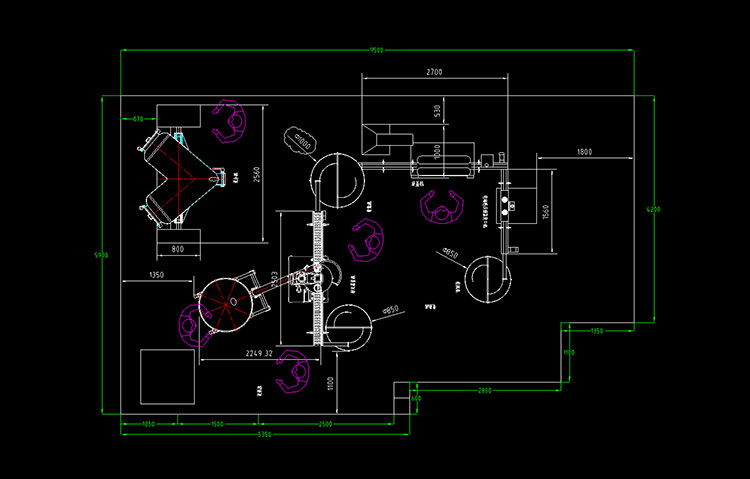
2D CAD layout of a packaging line
To mitigate facility layout conflicts, the processing facility's architectural spatial data was imported into 2D CAD simulation software. Engineering divisions mapped the linear conveyor footprints, capping modules, and induction sealing clearances to absolute scale within the client's localized floor plan.
This technical layout mapping verified optimal operator clearance paths, raw material staging coordinates, and cleanroom maintenance accessibility, eliminating structural interference risks before manufacturing authorization.They could see it with their own eyes. This visual proof was the turning point. It gave them the confidence to say yes.
3.How Can Machinery Adapt to Low Door Heights and Mobility Needs?
The client’s facility doors were only just over 2 meters high, which is shorter than many standard industrial hoppers.
We customized the powder filler with a manual lifting column to lower the height below 2 meters and added castors for easy movement.
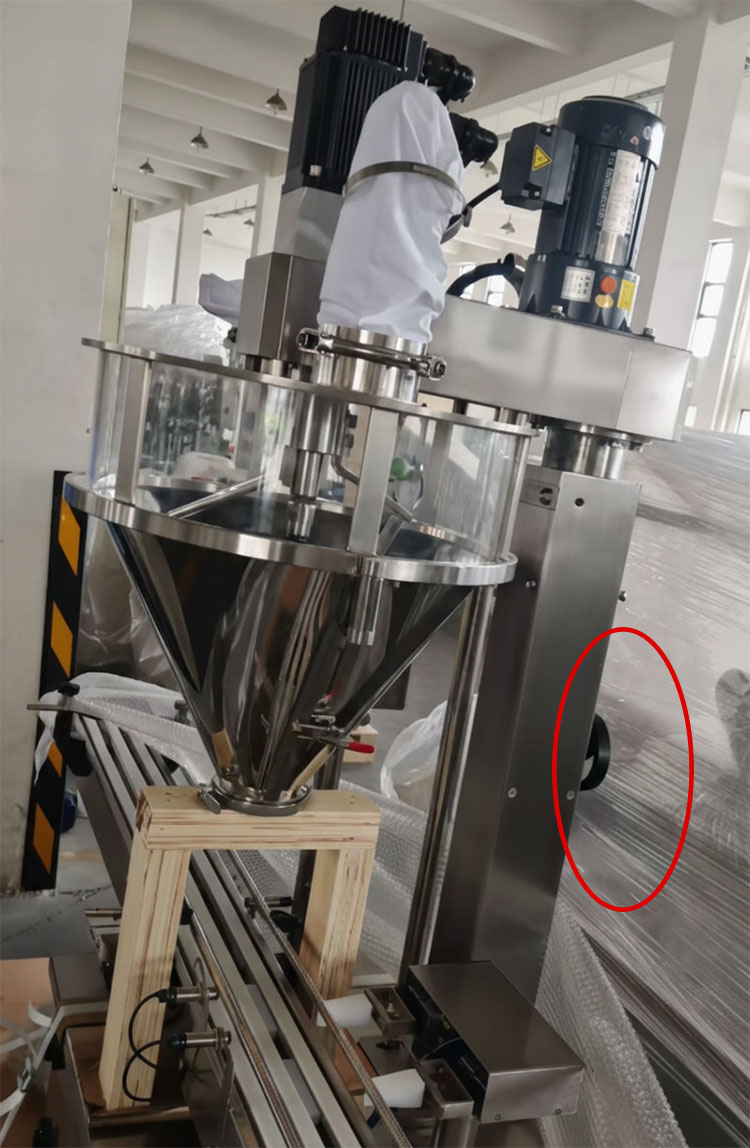
Customized powder filler with lifting column
Standard machines are often tall. They rely on gravity and large hoppers. But this client had a strict limit. Their door height was just over 2 meters. A standard machine would get stuck at the entrance. We had to innovate. We did not ask the client to rebuild their factory. We changed the machine.
Here is how we customized the solution for practicality:
| Feature | Customization Detail | Benefit to Client |
| Height Control | Manual lifting column on the filler | The machine height can be adjusted to under 2m to fit through doors |
| Cleaning | Detachable machine head | Operators can take the head off easily to wash it without ladders |
| Mobility | Heavy-duty castors on all units | The client can roll the machines aside when not in use to save space |
| Dust Control | Anti-leak and vacuum design | Keeps the small room clean and meets GMP standards without expensive HVAC |
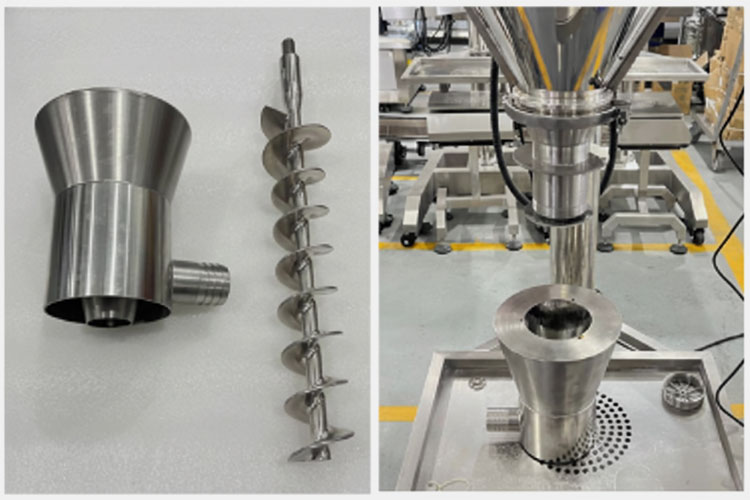
Leak-proof and dust-proof design
Integrating modular mechanical lifts allows the primary auger dosing head to adjust vertically, descending smoothly below the 2-meter threshold to facilitate safe movement through standard cleanroom doorways.
Furthermore, the integration of heavy-duty, cleanroom-certified swiveling castors ensures multi-directional line mobility, allowing operators to rapidly alter production line sequences or temporarily relocate hardware modules to optimize physical cleanroom footprints during non-operational clean down shifts.
4.How to Handle Multiple Bottle Sizes Without Changing Molds?
The client had a huge range of bottle sizes, from small 60mm jars to large 200mm containers.
We built a versatile capping machine with adjustable height and rail width so they can switch sizes without buying new parts.
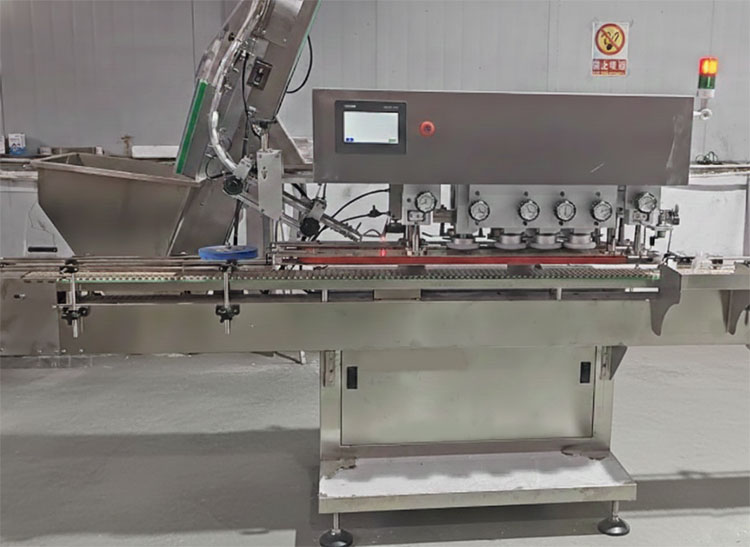
Adjustable capping machine for different bottle sizes
Startups often have many products. They test the market. This client had bottles with diameters from 60mm to 200mm. The heights ranged from 50mm to 200mm. The caps were 50mm to 120mm. In a standard setup, you might need different "star wheels" or molds for every size. That is expensive. It also takes a long time to change.
I proposed a different approach. We customized a capping machine that does not use fixed molds.The automated capping module utilizes an advanced linear belt capping structure rather than single-size indexing star wheels, securing high versatility for variable container capacities.
Operational format switchovers are executed via manual hand wheels connected to integrated screw jacks, expanding or narrowing the stabilizing guide tracks and vertically adjusting the torque head height within minutes.
This tool-less adjustment protocol completely suppresses changeover latency and eliminates the capital expenditures standardly required to fabricate separate format change parts.For a small team, saving setup time is the same as saving money. This machine grows with them.
5.Why Is Pre-Shipment Testing with Real Samples Crucial?
Before shipping, we asked the client to send us 100 samples of their largest and smallest bottles.
We used these samples to set all the machine parameters in our factory, ensuring the equipment was "plug and play" upon arrival.
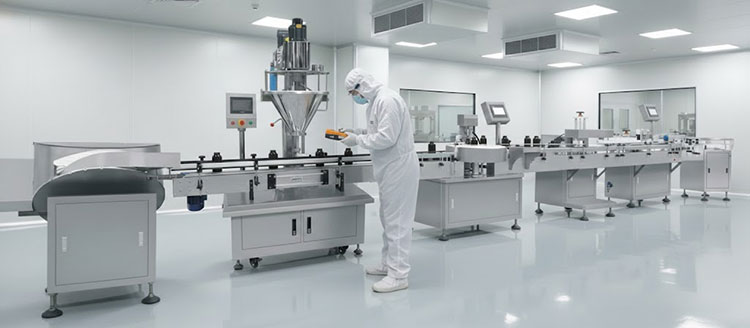
Technician testing bottles on the conveyor line
I never like to guess when it comes to final settings.Pre-shipment qualification testing was executed utilizing actual container samples delivered directly from the Australian production plant. Technicians calibrated the bulk dosing parameters, linear container timing tracks, and closure application torques using a compliant placebo powder matrix.
All structural dimensions and digital servo recipe parameters were mapped, verified, and locked inside the central control system to establish an immediate "plug-and-play" installation cycle upon arrival at the destination facility.
The client did not have to hire an expensive local engineer to figure it out. They just had to plug it in and load the recipe we created. This is part of our service. We take the risk out of the installation.
6.How Do We Solve Common Induction Sealing Issues Like Wrinkled Foil?
After the machine arrived, the client noticed wrinkles in the aluminum foil seal and worried about overheating.
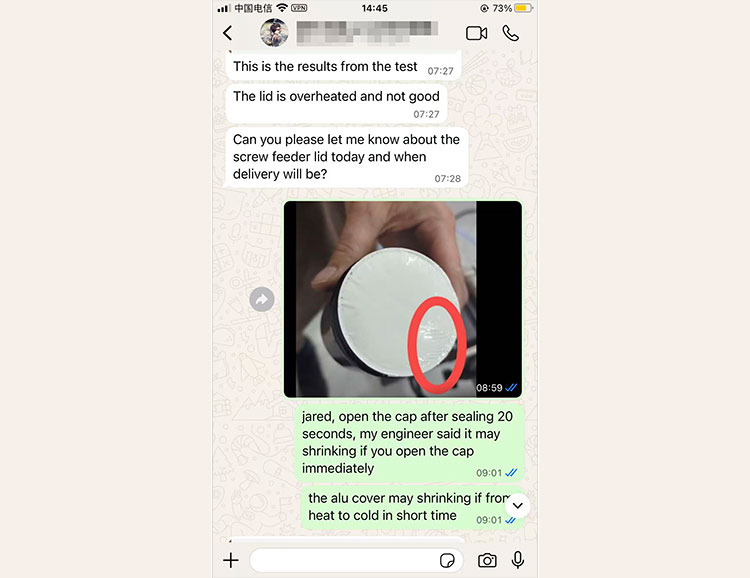
Our engineer advised adjusting the cooling time and temperature, explaining that thermal expansion causes wrinkles if the cap is opened too soon.
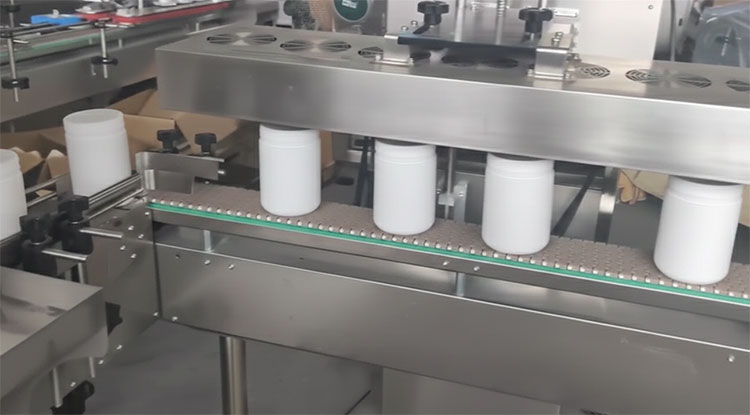
Induction sealing machine process
Even with the best testing, questions arise during actual production. The client contacted me shortly after they started running. They were using the induction sealer. They found that the aluminum foil looked wrinkled after sealing. They were worried. They thought the machine was getting too hot and burning the liner.
During post-delivery validation running, localized aluminum seal deformations or structural foil wrinkling anomalies were isolated downstream from the electromagnetic induction sealing station.
Thermodynamic analysis indicated that high-frequency eddy currents cause micro-expansion within the laminated foil; immediate closure removal before complete thermal stabilization causes abrupt exposure to ambient temperatures, leading to localized non-uniform contraction.
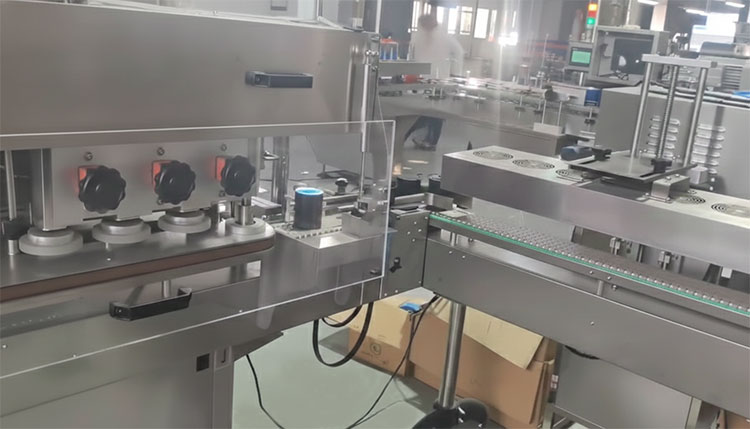
Wrinkled Foil issue solving when production running on customer site
Corrective protocols required micro-adjusting the line conveyor velocity to optimize dwell time thresholds alongside modifying downstream quality sampling SOPs to permit adequate cooling stabilization within the closed cap, yielding unassailable hermetic seals.
Let it cool for a few seconds. The client followed this advice. The wrinkles disappeared. The seal was perfect. This quick support solved a panic moment and got them back to production instantly.
Conclusion
By customizing dimensions, ensuring flexibility, and providing real-time support, we helped an Australian startup fit a professional production line into a small space.
Frequently Asked Questions - Compact Facility Line Layouts
Project Compliance and Equipment Engineering Standards
During the initial 2D architectural blueprinting, manual lifting column optimization, and remote field troubleshooting phases of this automated compact powder filling line for Australia, all component systems were validated to meet the following manufacturing standards:
Don't Forget To Share Article!
Avril
Senior Pharmaceutical Equipment Specialist & Project Consultant at AIPAK
Avril brings deep, multi-year expertise to the pharmaceutical machinery sector, specializing in solid dosage production lines and complex cleanroom layout engineering. As a veteran project consultant at AIPAK, she is known for her hands-on capability to match technical machine parameters with strict global compliance standards. Passionate about driving real business results, Avril works closely with international pharma clients to solve structural bottlenecks—such as facility footprint constraints and material flow optimization—ensuring they receive tailored, highly efficient one-stop turnkey solutions for their production goals.
Powder Filling Machine Related Products
Powder Filling Machine Related Posts






























Powder Filling Machine Related Videos
CONTACT US
Tell us your raw material and project budget to get quotations within 24 hours.
WhatsApp Us: +86 181 7101 8586

Want the best price & newest pharmaceutical machinery buying guide,tips and trends sent straightly to your box?Sign up for AIPAK’s monthly newsletter,we’re free for your consultation and Offer you the most suitable solutions!
The Buyer's Guide
- Capsule Filling Buyer's Guide
- Blister Packaging Buyer's Guide
- Tablet Counting Buyer's Guide
- Tube Filling Buyer's Guide
- Cartoning Buyer's Guide
- Gummy Making Buyer's Guide
- CO2 Extraction Buyer's Guide
- Empty Capsules Buyer's Guide
- Suppository Filling Buyer's Guide
- Tablet Coating Buyer's Guide
- Tablet Press Buyer's Guide
- Softgel Encapsulation Buyer's Guide
Most Popular
- 7 Importance Of Pharmaceutical Packaging In Different Applications You Must Know
- 6 Advantages You Must Know About Tablet Counting Machine
- 8 Advantages of Blister Packaging You Must Know
- 6 Critical Applications of Automatic Capsule Filling Machine
- 6 Stations You must Know to Improve the Filling Quality of Automatic Capsule Filling Machine
References
1.British Pharmacopoeia (BP) Standard Guidelines for Powder Fineness and Sieving Metrics —— Medicines and Healthcare products Regulatory Agency (MHRA)
2.Remington: The Science and Practice of Pharmacy —— Solid Dosage Compounding and Formulation Mechanics —— Academic Press
3.Powder Technology in Pharma: Characterizing Bulk Density Variations and Material Segregation Loops —— ScienceDirect / Powder Technology Journal
4.Ansel's Pharmaceutical Dosage Forms and Drug Delivery Systems —— Comparative Analysis of Oral Granulates —— Lippincott Williams & Wilkins
5.Eutectic Inversion Dynamics and Thermal Phase Transitions in Binary Organic Powder Blends —— International Journal of Pharmaceutics