

Scalable Encapsulation Mastery: Modular Tooling and Size Versatility for 00 to 000 Capsule Lines
In pharmaceutical and nutraceutical production, the greatest operational contradiction when managing multi-SKU lines is that frequent specification changes lead to excessive downtime, and inaccurate mold adjustments during changeovers often result in capsule deformation or poor sealing.
To remain agile in a shifting market, facilities must rely on modular encapsulation platforms capable of rapid Quick-Change Tooling (QCT).
This handbook guides engineering teams through efficiently managing production transitions from size 00 to 000, while explaining how modular design enables a seamless transition from R&D-scale semi-automatic units to industrial-grade, fully automatic production lines.
1: How Does Modular QCT Design Ensure Rapid Size Transitions from 00 to 000 Without Downtime?

AIPAK new modular filing unit vs traditional one
In high-volume pharmaceutical production, the greatest operational contradiction when managing multi-SKU lines is that frequent specification changes typically lead to excessive downtime. To remain agile, our encapsulation platforms are designed with Quick-Change Tooling (QCT) modularity, allowing your engineering team to perform size transitions from size 00 to 000 with maximum efficiency.
We describe this process as "giving the machine a new outfit." Just as you would swap clothing to suit a different environment, our QCT design allows operators to rapidly exchange the complete set of matching mold toolings, ensuring the machine is perfectly calibrated for the new capsule size within minutes rather than hours.
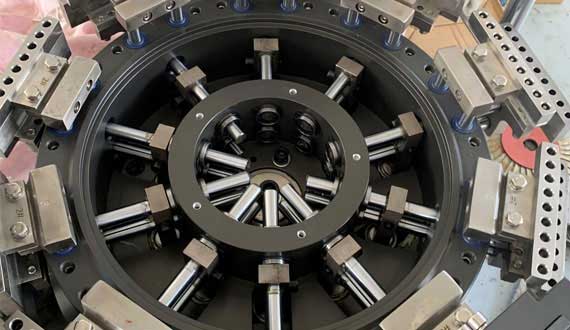
To achieve this rapid transition, the tooling changeover involves replacing the entire set of precision components, including:
| Changeover Aspect | Traditional Manual Adjustment | AIPAK Modular QCT Design |
| Downtime | Often lasts for hours | Completed within minutes |
| Tooling Method | Complex manual assembly | Rapid, module-based exchange |
| Precision | Relies on manual experience | High-precision alignment components |
| Production Impact | Significant line stoppage | High-speed throughput maintained |
- Upper and Lower Modules: These provide the structural foundation for the specific capsule size being run.
- Dosing Discs: These are swapped to match the physical volume requirements of the new capsule format.
- Tamping Pins: Precision pins are replaced to ensure consistent powder compression within the new capsule dimensions.
- Capsule-feeding Tubes, Alignment Combs, and Alignment Bars: These critical orientation components are exchanged to ensure every capsule is handled flawlessly from feeding to locking.
By standardizing these modular components, the QCT design eliminates the need for complex, manual mechanical adjustments, allowing your production line to maintain its high-speed throughput regardless of how many times you change your product specifications during a shift
2: What Are the Technical Advantages of Upgrading to a Model D Dry Vacuum Pump System?
For pharmaceutical manufacturers, the vacuum system is a critical component for ensuring both capsule separation and cleanroom cleanliness. The NJP-1200D Model D represents a significant technical leap forward by replacing outdated vacuum technology with a premium Japanese dry vacuum pump system.
| Feature | Traditional Liquid-Ring Pump | AIPAK Japanese Dry Vacuum Pump |
| Water Usage | Requires constant water supply | Zero water usage |
| Contamination Risk | Risk of oil/water contamination | 100% Oil-free & water-free |
| Maintenance | Frequent cleaning of scale/deposits | Lifetime maintenance-free |
| Operational State | High maintenance demand | Self-sustaining & reliable |
The technical advantages of this upgrade include:
- Zero Water Usage: Unlike Model C units, which come standard with traditional liquid-ring water vacuum pumps that require constant manual water refilling, the Model D's dry system operates entirely without water.
- Pristine Cleanliness: Traditional liquid-ring pumps are prone to limescale buildup and potential oil contamination, whereas the Japanese dry vacuum pump provides a completely oil-free and water-free environment.
- Lifetime Maintenance-Free Performance: This advanced system is engineered to provide reliable vacuum pressure throughout the machine's life cycle, eliminating the frequent maintenance associated with traditional water-based pumps.
- Enhanced Operational Efficiency: By adopting a capsule machine vacuum pump that is both clean and self-sustaining, operators can focus on production throughput rather than the routine upkeep of the vacuum system.
By choosing the Model D configuration, facilities achieve absolute purity and reliability, making it the superior choice for high-compliance manufacturing environments where water or oil contamination cannot be tolerated.
3: How Do Horizontal/Vertical Polisher-Sorters Ensure Final Capsule Quality and Automated Rejection?
AIPAK horizontal and vertical polisher and sorter
For any high-output pharmaceutical facility, the final stage of production is critical to ensuring only perfect products reach the consumer. Our capsule polishing machine and capsule sorting machine solutions are engineered to provide more than just surface cleanliness; they serve as a rigorous final quality gate for your entire encapsulation line.
These systems ensure quality through the following technical advantages:
- Integrated Quality Control: Beyond efficiently polishing excess powder from the capsule surface, these units feature a specialized, built-in sorting device.
- Automated Online Rejection: The sorting mechanism is engineered to automatically and instantly detect and reject empty capsules, capsules with separated bodies and caps, and capsule fragments, all while the machine is running online.
- Universal Compatibility: Designed for flexible factory layouts, these auxiliaries feature reserved equipment sockets and protocols that are universally compatible with our core encapsulation lines.
- Flexible Footprint Options: Whether utilizing our horizontal polisher for standard applications or the vertical sorter-polisher for space-constrained workshops, you receive the same high-efficiency performance and robust, automated defect rejection.
By integrating these intelligent polishing and sorting auxiliaries, you effectively automate your quality assurance process, ensuring that every capsule entering your collection container is perfectly filled, polished, and free of defects.
4: How Does Proper Tooling Maintenance Extend the Operational Life of Your Capsule Filling Equipment?
Proactive maintenance of your tooling is the most effective strategy to ensure the long-term reliability and performance of your capsule filling machine 00 or 000 capsule filling machine. When tooling is neglected, mechanical strain increases, leading to premature wear on core components and potential compromises in final product quality.
A critical component in your maintenance regimen is the regular inspection of the "slot-type" capsule locking plate. This component is essential for precision, and maintaining it offers several operational benefits:
- Ensuring Perfect Sealing: The slot-type locking plate features excellent flexible adjustability, allowing operators to make on-the-line micro-adjustments via the station tie-rods.
- Precision Alignment: By regularly inspecting and adjusting these plates, you ensure that the capsule caps and bodies are perfectly aligned during the locking process, preventing mechanical stress and deformation.
- Preventing Fatigue: Proactive checks prevent the buildup of minor misalignments that can lead to larger, more expensive mechanical failures over time.
- Extending Equipment Life: Consistent, small-scale adjustments protect the integrity of the locking mechanism, ensuring that the machine continues to produce flawless, secure capsules throughout its entire operational life.
By making tooling maintenance a standard part of your facility's routine, you transition from reactive repairs to a culture of operational excellence, ensuring that your equipment remains a reliable asset for high-speed manufacturing.
Conclusion
Ultimately, the scalability of your encapsulation line depends on your ability to manage multi-SKU demands through rapid, modular tool changes without sacrificing dosing accuracy. By standardizing your facility’s approach to mold management and size transition protocols, you can transform your encapsulation line into a highly agile, industrial-grade asset capable of meeting diverse market requirements. For facilities looking to optimize their changeover efficiency and scale their production capacity from R&D to full-scale manufacturing, our engineers are ready to provide a customized equipment specification and support roadmap.
Don't Forget To Share Article!
Avril
Senior Pharmaceutical Equipment Specialist & Project Consultant at AIPAK
Avril brings deep, multi-year expertise to the pharmaceutical machinery sector, specializing in solid dosage production lines and complex cleanroom layout engineering. As a veteran project consultant at AIPAK, she is known for her hands-on capability to match technical machine parameters with strict global compliance standards. Passionate about driving real business results, Bessie works closely with international pharma clients to solve structural bottlenecks—such as facility footprint constraints and material flow optimization—ensuring they receive tailored, highly efficient one-stop turnkey solutions for their production goals.
Capsule Filling Machine Related Posts
Capsule Filling Machine Related Products
Capsule Filling Machine Related Videos
CONTACT US
Tell us your raw material and project budget to get quotations within 24 hours.
WhatsApp Us: +86 181 7101 8586

Want the best price & newest pharmaceutical machinery buying guide,tips and trends sent straightly to your box?Sign up for AIPAK’s monthly newsletter,we’re free for your consultation and Offer you the most suitable solutions!
The Buyer's Guide
- Capsule Filling Buyer's Guide
- Blister Packaging Buyer's Guide
- Tablet Counting Buyer's Guide
- Tube Filling Buyer's Guide
- Cartoning Buyer's Guide
- Gummy Making Buyer's Guide
- CO2 Extraction Buyer's Guide
- Empty Capsules Buyer's Guide
- Suppository Filling Buyer's Guide
- Tablet Coating Buyer's Guide
- Tablet Press Buyer's Guide
- Softgel Encapsulation Buyer's Guide
Most Popular
- 7 Importance Of Pharmaceutical Packaging In Different Applications You Must Know
- 6 Advantages You Must Know About Tablet Counting Machine
- 8 Advantages of Blister Packaging You Must Know
- 6 Critical Applications of Automatic Capsule Filling Machine
- 6 Stations You must Know to Improve the Filling Quality of Automatic Capsule Filling Machine